Are Silverback Gorillas Dangerous? | Shocking Facts Tourists Must Know 2025 – 2026
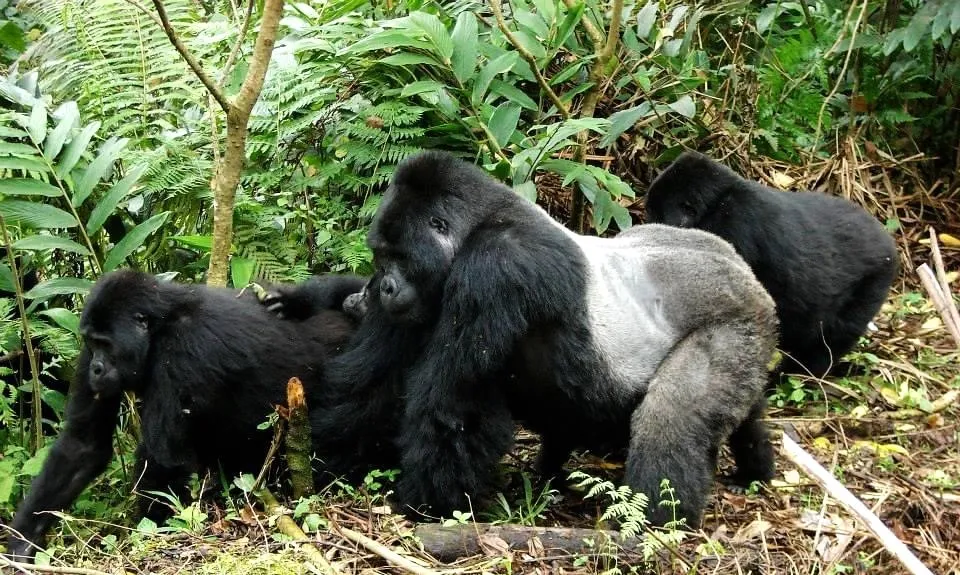
Silverback gorillas are not naturally dangerous to humans but can become aggressive when they feel threatened, protecting their family group.
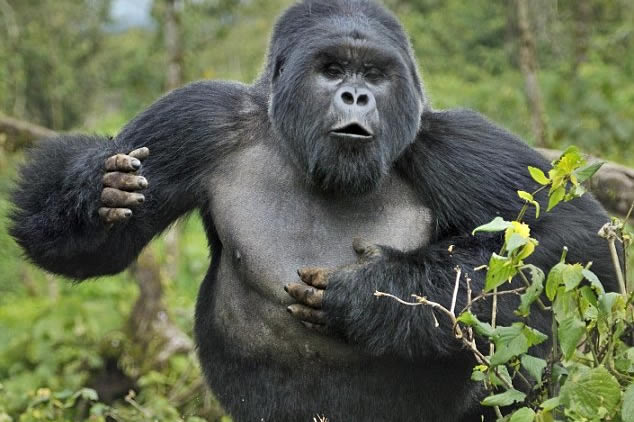
As dominant leaders, they charge, beat their chests, and display with vegetation tearing to intimidate intruders—99% of charges are bluffs to allow retreat.
True attacks are extremely rare.
Silverback Gorillas are peaceful herbivores with complex social structures, preferring avoidance over violence.
They pose risks only if provoked by sudden movements, eye contact, or invading their space during trekking.
In over 50 years of habituated gorilla tourism in Uganda and Rwanda, no tourist fatalities have occurred when following guides.
Silverbacks attack rivals for dominance or females, using immense strength (10x human) and canines, but habituated groups accustomed to humans remain calm.
During safaris, stay 7 meters away, crouch submissively if charged, and avoid flash photography.
Wild gorillas prioritize family safety over unprovoked aggression, making responsible trekking safe.
Their “dangerous” reputation stems from Hollywood myths, not reality.
Book guided Bwindi treks confidently—guides ensure safety.
This guide explores everything you need to know about silverback gorillas.
From their behavior and daily life to what makes them tick and how to stay safe in their presence, we cover the facts behind the myths.
By the end, you’ll understand that these animals are both powerful and intelligent, capable of gentleness as well as formidable defense.
Whether you’re a wildlife enthusiast, a safari-goer, or simply curious, this article provides a comprehensive look at silverbacks—revealing why respect, not fear, is the best approach when facing these incredible apes.
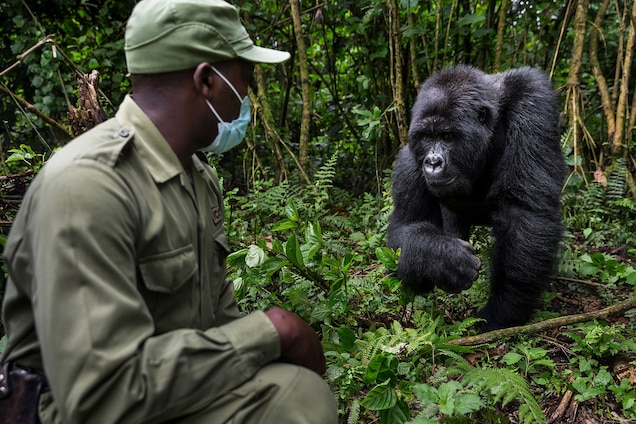
Physical Characteristics of Silverback Gorillas
Silverback gorillas are among the most iconic and physically impressive animals on Earth.
Their size, strength, and unique features not only make them fascinating to observe but also play key roles in social dominance and troop protection.
Understanding their physical characteristics helps debunk common myths about their danger to humans.
Size and Strength Stats
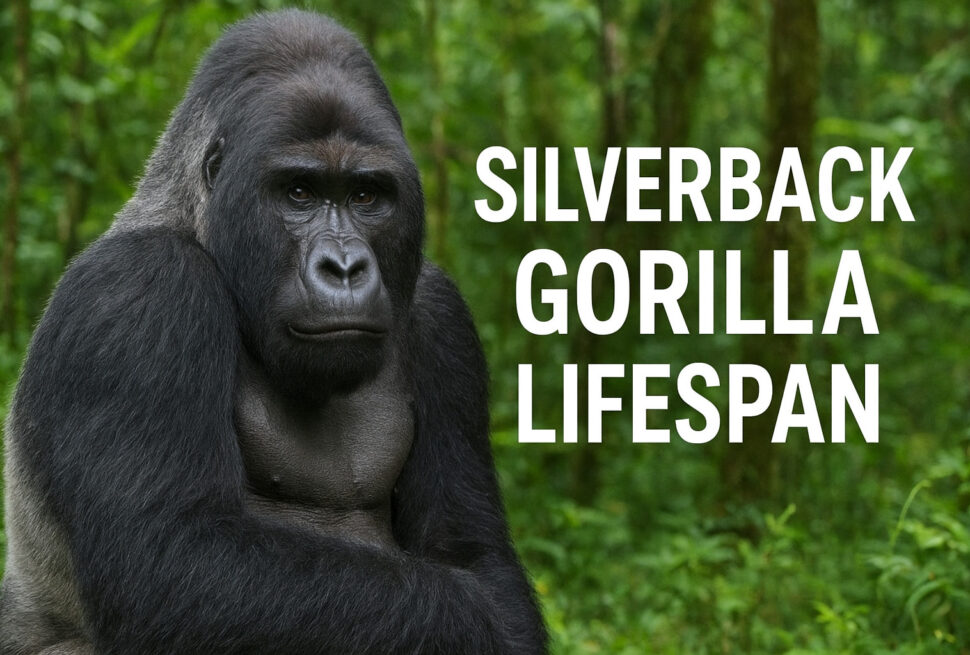
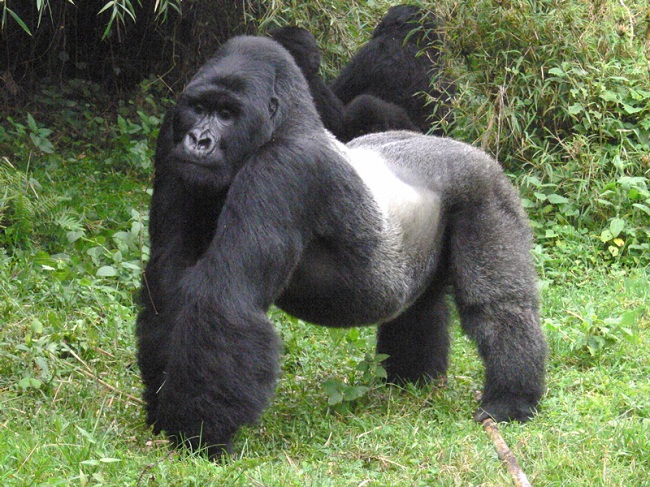
Adult male silverbacks typically stand 5 to 6 feet tall when upright and weigh between 300 and 500 pounds (136–227 kg).
Their muscular build, broad chest, and long arms allow them to move with remarkable agility despite their mass.
In terms of raw strength, silverbacks are extraordinary—capable of lifting or exerting force equivalent to around 1,800 pounds (820 kg).
Pound for pound, this makes them 10 times stronger than the average human. check this Guide for more about silverback gorilla weight.
| Feature | Silverback Gorilla | Average Human |
|---|---|---|
| Height (standing) | 5–6 ft (1.5–1.8 m) | 5.5–6 ft (1.65–1.8 m) |
| Weight | 300–500 lbs (136–227 kg) | 160–200 lbs (73–91 kg) |
| Arm Span | 7–8 ft (2.1–2.4 m) | 5.5–6 ft (1.65–1.8 m) |
| Maximum Lift Force | ~1,800 lbs (820 kg) | ~180 lbs (82 kg) |
| Upper-Body Strength | ~10× human | 1× baseline |
This strength allows silverbacks to defend their troops and perform impressive display behaviors without posing a natural predation threat to humans.
Anatomical Features
Silverbacks also possess distinct anatomical traits adapted for survival and social signaling.
Their arms are longer than their legs, enabling powerful swings, climbing, and dramatic chest-beating displays.
These gestures communicate dominance and can deter rivals without physical combat.
Their teeth, particularly the large canines, are primarily tools for display and defense rather than hunting.
Their signature silver fur develops as males mature, signaling their status within the troop. This silvering usually begins around age 12 and continues through adulthood.
Beyond its social function, their dense fur provides insulation in the cooler mountain and rainforest habitats.
Diet and Physique
Silverbacks are strictly herbivorous, consuming up to 40 pounds (18 kg) of vegetation daily, including leaves, shoots, bark, and occasional fruit.
Their powerful jaws and digestive systems allow them to process fibrous plants efficiently.
The robust musculature that gives them strength also supports their high-volume foraging, enabling them to sustain their massive bodies.
While their sheer size and strength might seem intimidating, silverbacks are not predators of humans.
Their physical attributes are primarily for troop defense, social dominance, and survival in dense forests—not hunting.
Observing these traits up close reinforces both their power and their generally peaceful nature when unprovoked. Learn more about What Do Silverback gorillas Eat here.

Behavior and Social Structure
Silverback gorillas are not solitary giants; they are social leaders who orchestrate the lives of their troops with intelligence and care.
Understanding their behavior is key to both appreciating their complexity and interacting safely with them in the wild.
1. Daily Life and Hierarchy
A typical silverback leads a troop of 5 to 30 gorillas, including females, their offspring, and occasionally subordinate males.
The silverback’s primary responsibilities are protection, guidance, and conflict resolution.
He decides where the group forages, mediates disputes, and ensures the safety of all members.
Life in the troop follows a structured hierarchy.
While the silverback is the dominant male, other members have defined roles: mature females care for young, subordinate males observe and learn, and juveniles explore boundaries under supervision.
Intra-group aggression can occur, particularly when young males mature and challenge the leader for dominance.
These conflicts are often ritualized and rarely result in serious injury, as the troop benefits from maintaining stability.
2. Communication and Warnings
Silverbacks communicate constantly through vocalizations, gestures, and postures.
Chest-beating, a signature display, produces deep reverberating sounds that signal dominance, excitement, or warnings to rivals.
Contrary to popular belief, chest-beating is often a bluff rather than a precursor to attack.
Other warning signals include stomping, vocal hoots, grunts, and threat gestures like pounding the ground or mock charges.
Subtle facial expressions—raised eyebrows, lip curls, or head movements—convey intent within the troop.
These communication strategies help prevent unnecessary conflicts and reinforce social bonds.
3. Aggression Triggers
Despite their generally peaceful nature, silverbacks can become dangerous under specific circumstances.
Aggression is usually triggered by threats to the troop, such as predators, rival males encroaching on territory, or humans approaching too closely.
Habitat loss and environmental pressures can also increase tension, as resources become scarce and competition rises.
It’s important to note that aggression toward humans is rare.
Most encounters with wildlife tourists or researchers are calm and non-confrontational, provided proper safety guidelines are followed.
Maintaining respectful distance, avoiding sudden movements, and observing quietly are key to preventing stress-induced behaviors.
By understanding silverback gorilla behavior, observers can appreciate the intelligence, social complexity, and protective instincts that define these majestic apes.
Their daily routines, communication systems, and responses to threats reveal a species finely adapted to communal living, balancing power with social cohesion.
Interactions with Humans: Are They Really Dangerous?
Silverback gorillas, despite their immense size and strength, are generally peaceful creatures that prefer to avoid human contact.
Documented attacks on humans are exceedingly rare, with fewer than ten confirmed fatalities in history.
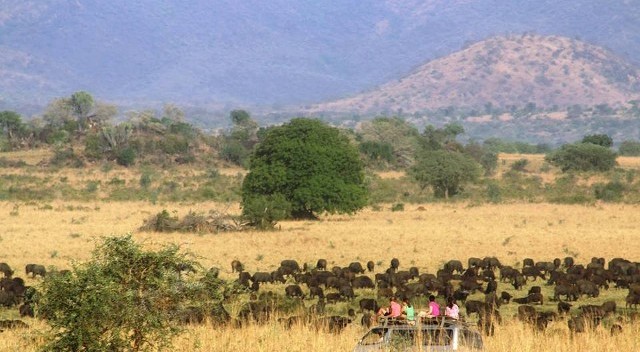
Most interactions, especially in regions where gorillas are habituated to human presence—like Uganda’s Bwindi Impenetrable Forest or Rwanda’s Volcanoes National Park—are non-threatening.
Millions of tourists safely observe these magnificent animals every year during guided safaris.
However, certain risks remain, including poaching, accidental disease transmission, and defensive reactions if gorillas feel threatened.
Understanding these interactions can help visitors appreciate gorillas safely while protecting their natural habitats.
1. Wild Encounters
In the wild, gorillas are shy and typically retreat when they sense humans nearby.
When a gorilla perceives a threat, it may engage in bluff charges—loud chest-beating, ground slapping, and vocal displays designed to intimidate rather than injure.
These displays are a warning and rarely escalate into actual attacks.
Real attacks usually occur only if a gorilla is cornered, startled, or defending its family.
Visitors on safari should maintain distance, follow the guidance of trained park rangers, and avoid sudden movements.
By respecting the gorilla’s space, humans minimize the already low risk of an encounter turning dangerous.
2. Captive Incidents
Captive gorillas may occasionally make headlines for aggression toward humans, but these incidents are often misunderstood. Take the famous 2016 case of Harambe, the gorilla at the Cincinnati Zoo.
Harambe reacted protectively when a child fell into his enclosure, highlighting that gorilla aggression is typically defensive, not malicious.
In captivity, human interaction can increase the risk of incidents due to stress, confinement, or mismanagement.
However, professional sanctuaries and zoos implement strict safety protocols to minimize such risks.
Observing gorillas from a safe distance, whether in captivity or the wild, is the key to safe human-gorilla interaction.
3. Human Impact on Gorillas
One of the most significant threats to gorillas isn’t direct aggression but human activity encroaching on their habitats. Deforestation, mining, and agricultural expansion reduce the space gorillas need to live and forage.
These pressures can inadvertently bring gorillas into closer contact with humans, sometimes resulting in conflict.
Additionally, human presence introduces the risk of disease transmission; gorillas share 98% of our DNA, making them highly susceptible to human illnesses.
Protecting gorilla habitats and practicing responsible tourism are critical steps in preventing harmful interactions and ensuring gorilla populations thrive.
Safety Guidelines for Visitors
To reduce the already minimal risk of encounters, follow these safety rules when observing gorillas:
-
Maintain Distance: Stay at least 7–10 meters away from gorillas.
-
Avoid Eye Contact: Direct staring can be perceived as a threat.
-
Follow Ranger Instructions: Never approach gorillas independently.
-
Stay Calm: Move slowly; sudden gestures may startle them.
-
No Flash Photography: Bright lights can agitate gorillas.
-
Health Precautions: Avoid visiting if ill; diseases can transfer easily.
-
Respect Their Space: Never touch, feed, or attempt to interact physically.
By following these guidelines, visitors can safely enjoy gorilla encounters while minimizing stress on these majestic animals.
Conclusion:
While the phrase “silverback gorilla attacks on humans” may evoke fear, the reality is that such events are extremely rare.
Wild gorillas avoid humans whenever possible, and habituated groups in safaris provide safe opportunities for observation.
Most conflicts arise not from aggression but from human intrusion, habitat loss, or accidental provocation.
Responsible tourism, respect for gorilla behavior, and strict adherence to safety protocols allow humans and gorillas to coexist peacefully.
Protecting gorilla habitats and educating visitors ensures these incredible creatures remain safe for generations to come.
Famous Incidents and Case Studies
While silverback gorillas are often portrayed in media as dangerous or aggressive, the reality is far more nuanced.
Actual incidents involving gorilla-human interactions are exceedingly rare, and most documented cases highlight either protective behavior or accidental conflicts.
Understanding these events can help dispel myths and emphasize the intelligence, empathy, and caution exercised by these majestic animals.
Protective Heroes
Some gorillas have demonstrated remarkable protective instincts toward humans, challenging the stereotype of them as violent beasts.
The most famous example is Binti Jua, a gorilla at the Brookfield Zoo in Chicago in 1996.
When a three-year-old boy fell into the enclosure, Binti gently carried the child to a door where keepers could retrieve him, showing a level of empathy rarely witnessed in the animal kingdom.
Other anecdotes from habituated troops in Uganda and Rwanda recount gorillas watching over lost or scared tourists without any aggression.
These stories illustrate that gorillas are protective rather than malicious, especially when humans behave calmly and respectfully.
Tragic Mishaps
Not all interactions are safe. Some incidents have turned tragic, often as a result of human interference or poaching pressures.
In the Democratic Republic of Congo, a handful of fatal encounters occurred when poachers entered gorilla territories, leading to defensive reactions by the animals.
Such cases are extremely rare, especially compared to other wildlife dangers; for example, gorilla-human fatalities are far fewer than deaths caused by shark attacks annually.
Importantly, incidents like the 2016 Harambe case at the Cincinnati Zoo, while sensationalized, underscore that gorilla aggression is usually defensive, not deliberate, and that human error often plays a key role.
Debunking Media Myths
Movies like King Kong have contributed to a lasting myth that gorillas are uncontrollable monsters. In reality, gorillas rarely display unprovoked aggression.
Their social structures, protective instincts, and avoidance of humans make such dramatized attacks highly exaggerated.
Recognizing this distinction is critical for promoting both safe ecotourism and conservation awareness.
Timeline of Famous Gorilla-Human Incidents
| Year | Gorilla | Location | Incident Type | Outcome |
|---|---|---|---|---|
| 1996 | Binti Jua | Chicago, USA | Protective | Carried child to safety |
| 2016 | Harambe | Cincinnati, USA | Defensive | Child fell into enclosure, gorilla shot |
| 1990s | Unnamed | Congo | Defensive attack on poacher | Fatalities (rare) |
| 2000s | Habituated wild gorillas | Uganda/Rwanda | Close tourist encounters | No injuries, educational |
These cases demonstrate that famous silverback gorilla attacks are far less common than media portrayals suggest. Most incidents involve either defensive action or human error rather than unprovoked aggression.
Conclusion:
Silverback gorillas, while immensely powerful, rarely harm humans intentionally.
Protective behaviors, as seen in Binti Jua’s famous case, highlight their intelligence and capacity for empathy.
Tragic incidents serve as reminders of the need for responsible tourism, habitat protection, and anti-poaching measures.
Comparing gorilla-human fatalities to more common wildlife dangers, it becomes clear that these animals are misunderstood rather than dangerous.
By appreciating their true nature, humans can enjoy safe encounters while supporting the conservation of one of the planet’s most remarkable species.
Myths vs. Facts: Debunking Common Misconceptions
Silverback gorillas are often misunderstood, with popular culture and folklore painting them as dangerous beasts.
Let’s separate myth from reality with expert insights and scientific facts.
1. Myth: Gorillas are man-eaters
Fact: Gorillas are primarily herbivores.
They feed on leaves, stems, fruits, and occasionally insects.
There are virtually no verified cases of wild gorillas actively hunting humans.
Primatologist Jane Goodall emphasizes, “Gorillas are gentle giants.
They are more likely to retreat than attack when confronted by humans.”
The “man-eating” image largely stems from sensationalized media and movies.
2. Myth: Gorillas are always aggressive
Fact: The vast majority of gorilla interactions with humans are peaceful.
Studies show that 98% of encounters with silverbacks do not result in aggression.
Aggressive displays like chest-beating or mock charges are mostly warning behaviors, meant to intimidate rivals or threats without actual harm.
Only when a gorilla feels its family or territory is in danger might it act defensively.
3. Myth: All gorillas are dangerous
Fact: Gorillas live in tightly knit social groups.
Within these groups, conflicts are rare and usually involve younger males challenging the dominant silverback.
Most gorillas exhibit calm, social behaviors and are highly intelligent, capable of problem-solving and even using simple tools in the wild.
Hollywood vs. Reality
Hollywood has long exaggerated gorilla behavior.
Films like King Kong portray gorillas as monstrous, uncontrollable killers, reinforcing fear.
In reality, gorillas are shy and cautious around humans.
Their reputation as violent predators is dramatically overstated, and observing them in the wild reveals nurturing, protective, and social creatures.
Cultural Beliefs in Africa
In many African communities, gorillas are respected and sometimes revered.
Some tribes see them as spiritual symbols of strength and protection, not threats.
These cultural beliefs often emphasize coexistence and conservation, contrasting sharply with Western misconceptions.
By debunking these myths, we can foster a deeper understanding of gorilla behavior and promote conservation.
Learning the truth about these gentle giants helps humans respect their role in the ecosystem and reduces unnecessary fear.
Conservation Efforts and Safety Tips for Visitors
Gorillas, particularly mountain gorillas, face serious threats.
With only around 1,000 individuals left in the wild, conservation has never been more critical.
Poaching, habitat loss, and disease continue to endanger these gentle giants.
Ethical tourism plays a vital role in their protection, as revenue from responsible tours funds anti-poaching patrols, veterinary care, and habitat preservation.
By choosing an ethical gorilla trekking experience, visitors contribute directly to saving these magnificent creatures while enjoying a safe, unforgettable wildlife encounter.
How to Help Gorillas
-
Support Protected Areas: Visit national parks and reserves that actively protect gorillas, such as Bwindi Impenetrable Forest and Volcanoes National Park.
-
Choose Ethical Tours: Book with licensed tour operators who follow conservation guidelines and contribute to local communities.
-
Raise Awareness: Educate friends and family about the plight of gorillas and the importance of preserving their habitats.
-
Donate or Volunteer: Contribute to organizations working on gorilla conservation. Even small donations help fund patrols, habitat restoration, and veterinary care.
Trekking Guidelines
When trekking to see gorillas, safety is paramount—for both humans and gorillas.
Follow these essential gorilla trekking safety tips:
-
Maintain a minimum distance of 7 meters (23 feet) from gorillas.
-
Avoid direct eye contact, which gorillas may interpret as a threat.
-
Follow your guide’s instructions at all times.
-
Do not touch or feed the gorillas.
-
Limit group size and noise to minimize stress on the animals.
-
Stay healthy; avoid trekking if sick, as gorillas can catch human diseases.
-
Use eco-friendly practices, leaving no litter behind.
By adhering to these guidelines, you ensure a safe and respectful encounter, while minimizing disturbance to their natural behavior.
Call to Action: Join a sustainable gorilla safari to witness these incredible animals safely and ethically.
Every ethical tour booked helps protect gorillas and their habitats for future generations.
For recommended tour operators and ethical trekking packages, check this guide to plan your visit responsibly.
Why Book Your Gorilla Trekking with Go Silverback Safaris Ltd
Choosing the right safari operator is the difference between a life-changing gorilla trek and a stressful journey.
Go Silverback Safaris Ltd stands out as a leading, trusted, and conservation-driven gorilla trekking company in East Africa.
We don’t just take you into the jungle—we ensure you experience the heart, soul, and wonder of the gorilla world safely, ethically, and comfortably.
1. Licensed, Trusted & Experienced Gorilla Specialists
With years of hands-on trekking experience and deep knowledge of gorilla families, terrains, and behaviors,
Go Silverback Safaris Ltd guarantees professional guidance, accurate information, and responsible wildlife interactions.
Our guides are trained in gorilla ecology, safety protocols, and park regulations—so you trek confidently.
2. Ethical & Sustainable Safari Tours
Every booking supports anti-poaching patrols, rangers, veterinary programs, and local community livelihoods.
When you travel with us, you are not just sightseeing—you are directly protecting the last remaining mountain gorillas on Earth.
3. First-Class Trekking Comfort & Personal Attention
From luxury lodges to mid-range and budget-friendly packages, we tailor your journey to your style. Expect:
-
Smooth permit handling
-
Comfortable 4×4 safari vehicles
-
Professional drivers and porters
-
Seamless transfers and lodging arrangements
Your trek is curated with precision and care—no rushed schedules, no confusion, just pure adventure.
4. Safety First, Always
We follow strict gorilla trekking safety standards: maintaining distance, avoiding eye contact, and respecting troop boundaries. With our expert guides, you’ll feel secure, informed, and relaxed throughout your encounter with these majestic primates.
5. Unmatched Customer Testimonials
Travelers call us “the most respectful and knowledgeable gorilla trekking team” because we combine passion, expertise, and personalized hospitality that large tour companies simply can’t replicate.
Book Today, Trek Responsibly & Experience the Unforgettable
Your gorilla trekking journey should feel meaningful—not commercialized, not rushed, but soulful and respectful.
Travel with Go Silverback Safaris Ltd and witness the mountain gorillas the way nature intended—authentic, peaceful, and breathtaking.
📞 Contact Us | 📧 Email | 🌍 WhatsApp | 🌐 Website
Secure your gorilla trekking permit now.
The gorillas are waiting—join us, protect them, and experience magic in the mist.
Can a silverback gorilla be friendly?
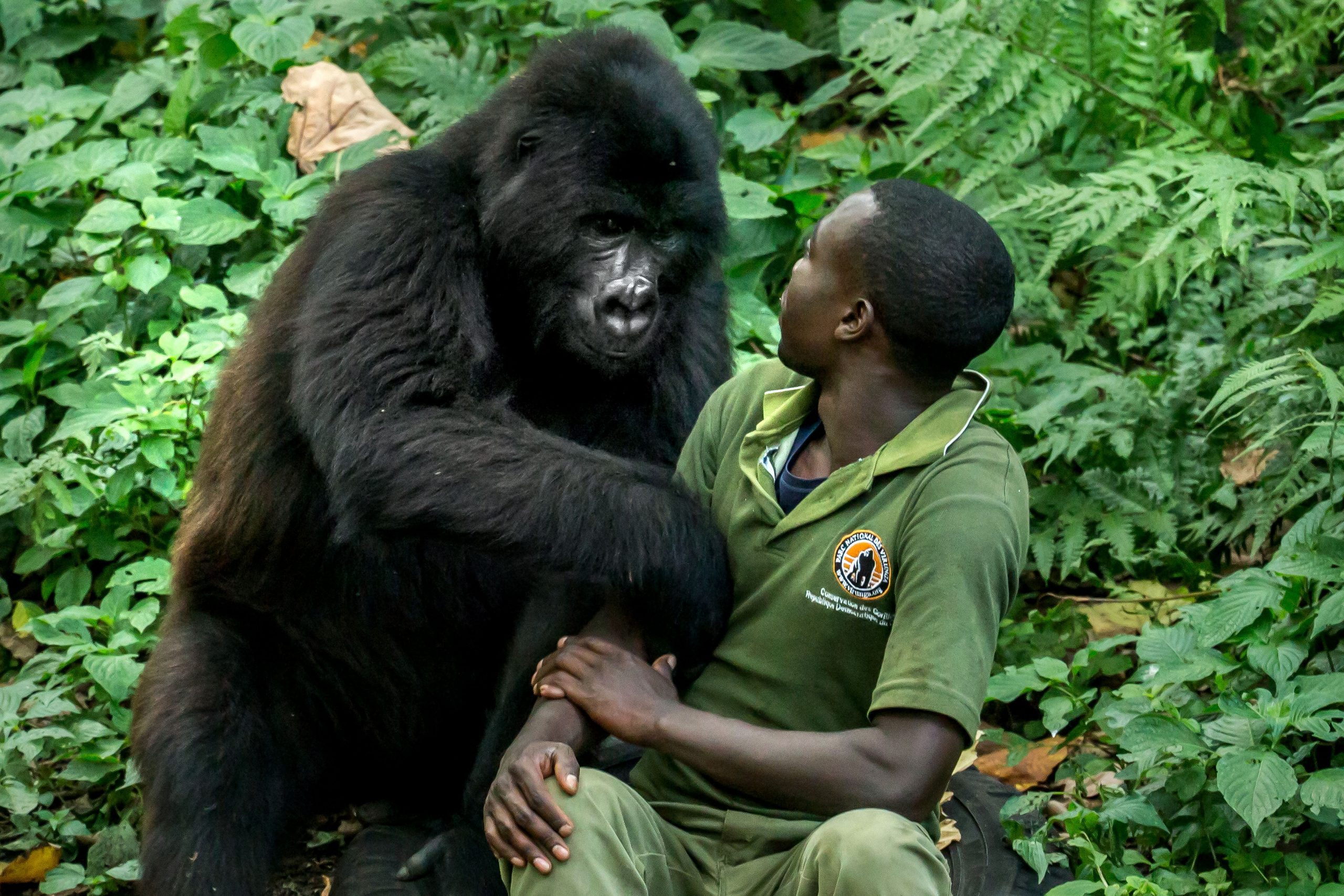
Yes, silverback gorillas can show friendly and calm behavior, especially within their own troop.
They are nurturing fathers, gentle with infants, and tolerant of familiar trackers during habituated tourism encounters.
However, “friendly” should not be confused with domesticated.
They remain wild animals with strict dominance rules and protective instincts. While they rarely attack, their primary focus is safeguarding their family.
Visitors should never attempt to touch, feed, or approach a silverback without trained guides.
When respected and given space, silverbacks display peaceful, curious, and surprisingly gentle personalities, earning them the reputation of true jungle “gentle giants.”
Could a human fight a silverback gorilla?
No—physically and behaviorally, a human would have no chance against a silverback in direct combat.
A male silverback weighs 300–500 lbs, has arms 30–40% longer than ours, and possesses up to 6–9 times human upper-body strength.
They can crush bamboo, snap branches like twigs, and deliver bite force over 1,300 psi. Humans lack the muscle density, reach, jaw strength, and natural weapons required to compete.
Luckily, gorillas are not predators and avoid violence unless cornered or provoked. A human’s best defense is distance, calmness, and respect—not confrontation.
What’s more dangerous, a silverback gorilla or a grizzly bear?
A grizzly bear is significantly more dangerous than a silverback gorilla.
Grizzlies are territorial predators, built for aggressive defense and hunting, with claws, heightened scent tracking, and intense predatory drives.
Silverbacks, on the other hand, are herbivores known for avoidance over attack. While both are extremely strong, silverbacks use force only to defend their troop.
Grizzlies have a higher frequency of human conflict, recorded attacks, and fatalities compared to gorillas. Statistically and behaviorally, gorillas are protective leaders—grizzlies are survival-driven predators. One is a guardian, the other an apex hunter.
Has a gorilla ever bitten a human?
Yes, but such cases are extremely rare and typically occur only when a gorilla feels cornered, provoked, or is defending offspring. In many reported incidents, the bite was a brief defensive reaction rather than an intent to kill.
Gorilla teeth are designed for vegetation grinding, not hunting, but their bite force can cause severe injury if triggered. During trekking, strict distance rules (7 meters) and calm behavior prevent such encounters.
In habituated gorilla groups, aggression and biting are almost nonexistent due to controlled visitor conduct and ranger expertise in reading gorilla signals.
Frequently Asked questions
Are silverback gorillas dangerous to humans?
Generally no. Silverbacks are calm, non-predatory, and avoid conflict unless they perceive a threat to their family troop.
Do silverbacks attack people?
Attacks are extremely rare. Most “charges” are bluff displays meant to scare, not injure.
Why do silverbacks chest-beat?
Chest-beating is a communication signal—announcing dominance, warning rivals, or showing power. It is not necessarily aggression.
Can silverbacks kill a human?
Physically yes—they are immensely strong—but they almost never choose to. Their behavior in the wild is defensive, not predatory.
Are gorillas more aggressive than chimpanzees?
No. Chimpanzees display significantly higher aggression levels. Gorillas are known as gentle giants compared to chimps.
What triggers silverback aggression?
Direct eye contact, sudden movements, loud noises, threatening their infants, or entering their territory without respect.
Do silverbacks eat meat?
No. They are primarily herbivores (leaves, bark, stems, fruit). Meat-eating myths come from movies, not reality.
How can visitors stay safe near gorillas?
Maintain distance (7 meters), follow ranger instructions, avoid staring, and keep movements slow and calm.
Are captive gorillas more aggressive?
Captive gorillas may show stress behaviors but are still generally gentle. Aggression is rare unless provoked or socially disrupted.
Is gorilla trekking safe?
Yes—when done with licensed guides following conservation regulations. Thousands trek yearly with no incident thanks to expert supervision and strict protocol.
Conclusion
Silverback gorillas are undeniably powerful, yet their strength is paired with calm intelligence and peaceful behavior.
They are not naturally dangerous unless threatened, and when approached respectfully, they offer one of the most profound wildlife encounters on Earth.
Protecting them means safeguarding an entire ecosystem and supporting communities that live alongside these incredible primates.
Conservation, responsible trekking, and ethical tourism are the keys to their survival. Ready to experience gorillas? Book now!.
Trek, Explore and Meet The Giant Silverbacks.