Silverback Dominance Fights Guide: Inside Gorilla Leadership Battles
In the heart of Africa’s high-altitude rainforests, a low-frequency rumble vibrates through the damp air—a sound that signals the presence of a king.
To the uninitiated traveler on a gorilla trekking safari, the silverback gorilla appears as a stoic, peaceful guardian. However, beneath this calm exterior lies a complex political world where power is absolute and leadership is constantly tested.
Understanding silverback dominance fights is essential for any traveler seeking to appreciate the raw, evolutionary drama of the mountain gorilla (Gorilla beringei beringei).
These are not merely random acts of animal aggression; they are calculated, high-stakes maneuvers that determine the survival of an entire genetic lineage.
At GoSilverback Safaris, we believe that witnessing the social structure of these great apes is the most profound wildlife experience on Earth.
Understanding Silverback Gorillas and Their Role in Society
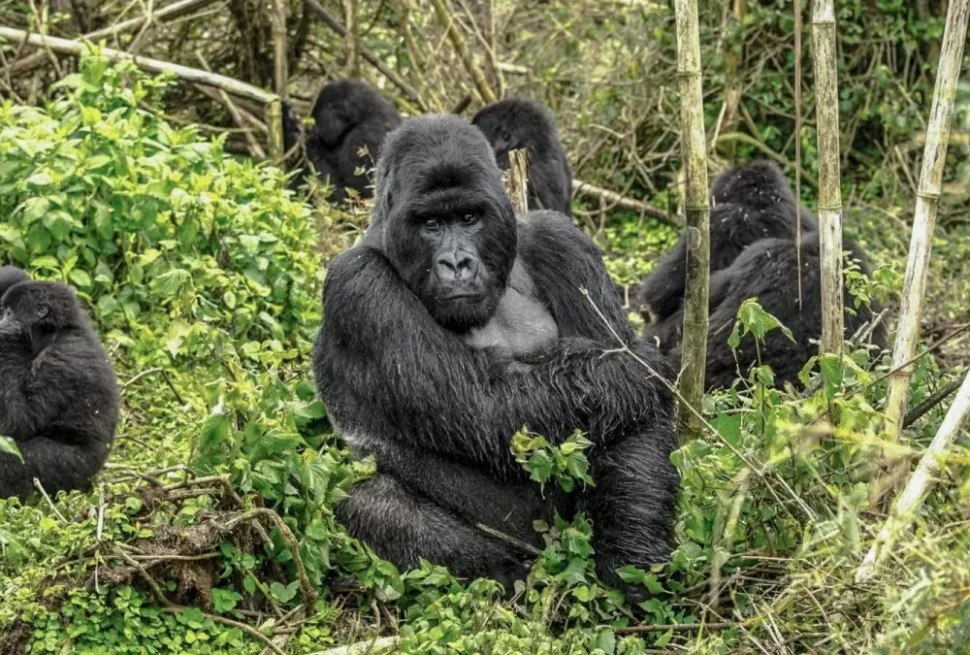
A silverback is an adult male gorilla, typically over the age of 12, distinguished by the patch of silver-white hair across his back. This coloration is the biological equivalent of a crown, signaling sexual maturity and the physical capability to lead a troop.
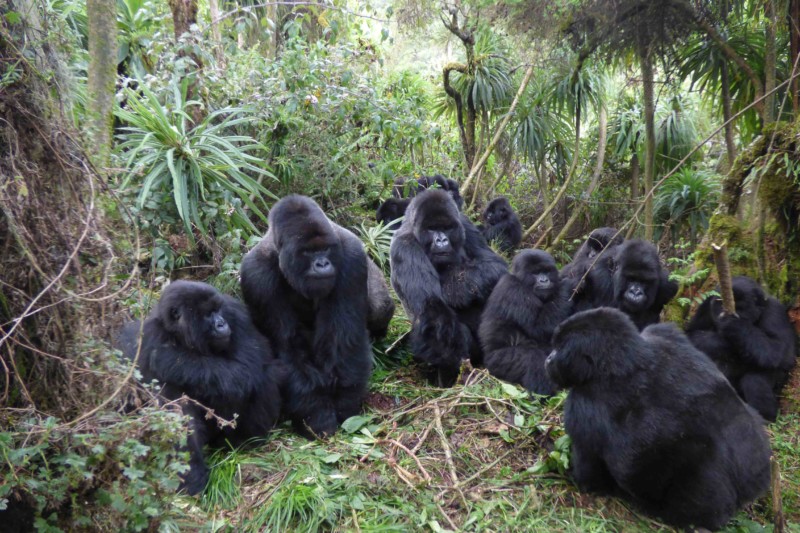
In gorilla society, the silverback is the absolute monarch, serving as the group’s protector, decision-maker, and primary breeder. The role of a silverback is multifaceted and exhausting. He determines where the group forages, when they rest, and where they sleep.
More importantly, he is the thin line between his family and external threats. Whether it is a prowling leopard or a rival “bachelor” male seeking to dismantle his harem, the silverback must be prepared to defend his troop to the death.
His presence provides a “shield of security” that allows females to raise infants in relative peace.
However, leadership in a gorilla troop is not guaranteed for life. A silverback’s dominance depends on his physical prowess and his emotional intelligence.
If he shows signs of weakness, illness, or aging, the social fabric of the group begins to fray, inviting challenges from younger, stronger males.
This delicate balance of power is the primary driver behind the intense social dynamics travelers observe in the forests of Uganda and Rwanda.
What Are Silverback Dominance Fights?
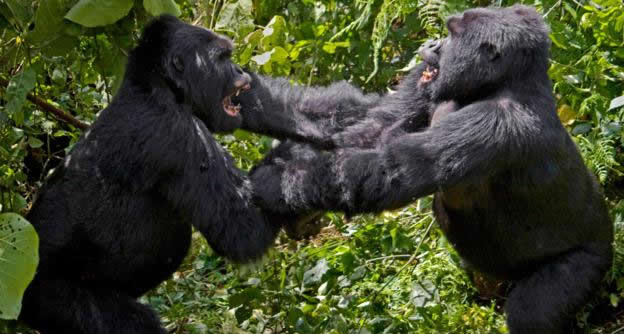
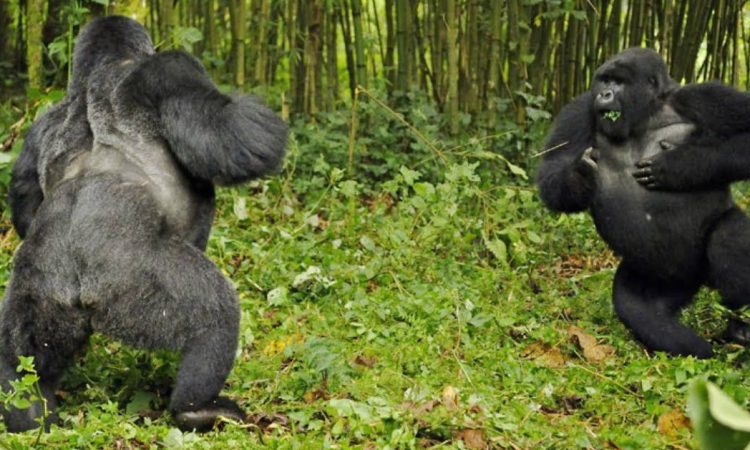
A silverback dominance fight is a physical or ritualized confrontation between two mature males to determine who will control a harem of females. These battles are the most intense social interactions in the primate world.
Unlike the play-fighting seen among juveniles, dominance fights between silverbacks are high-risk encounters that can result in severe injury or even death.
Most “fights” actually begin as highly choreographed displays of intimidation. A silverback does not want to fight if he can win through psychological warfare; physical combat is energy-consuming and dangerous.
However, when two well-matched males refuse to back down, the ritualized display escalates into a full-scale physical assault.
These confrontations typically occur when a lone silverback (a “bachelor”) attempts to “kidnap” females from an established troop, or when a younger male within the group decides it is time to depose the aging leader.
Why Silverback Gorillas Fight for Dominance
The biological imperative behind gorilla aggression is simple: genetic continuity. In the world of the great apes, the “winner” of a dominance fight gains exclusive access to the females in the group.
-
Reproductive Rights: Since the dominant silverback monopolizes mating, a male without a troop has zero chance of passing on his genes. Fighting is his only path to fatherhood.
-
Resource Control: A dominant male controls the best foraging grounds. In the dense forests of Bwindi or Volcanoes National Park, access to high-quality bamboo shoots and wild celery is vital for health.
-
Protection of the Lineage: Females are biologically programmed to seek the strongest protector. If a silverback cannot win a fight, he is viewed as an inadequate guardian for future offspring, leading females to naturally gravitate toward the victor.
-
Social Stability: Interestingly, fights sometimes occur to restore order. If a group becomes too large, a secondary silverback may fight to split the group, creating two separate, more manageable families.
How Silverback Dominance Fights Actually Happen
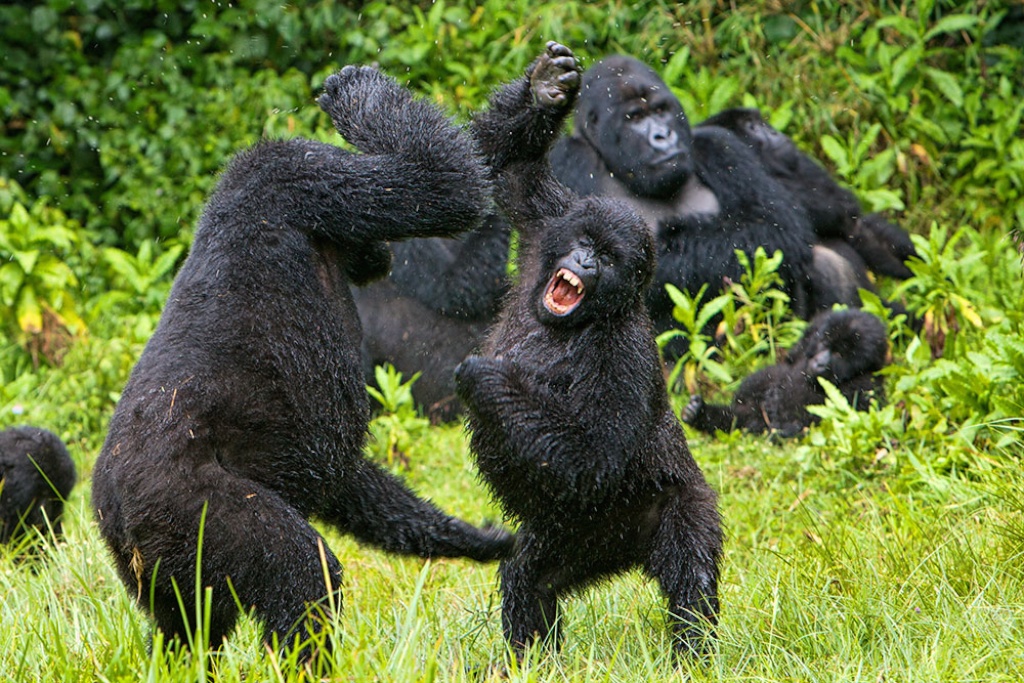
A silverback battle is a multi-stage process that escalates with terrifying precision. Scientists and safari guides categorize these encounters into nine distinct steps:
-
Hooting: The challenger begins with a series of quick, accelerating “hoots.”
-
Symbolic Feeding: Males may nervously pluck at leaves and place them in their mouths—a sign of high tension.
-
Rising: The silverbacks rise onto their hind legs to appear as large as possible.
-
Vegetation Throwing: They may tear up shrubs and hurl them at the opponent.
-
Chest Beating: The iconic “pok-pok-pok” sound created by cupped hands hitting the air sacs in the chest. This sound can carry for over a mile.
-
Sideways Run: A high-speed, bipedal or quadrupedal charge meant to test the opponent’s nerves.
-
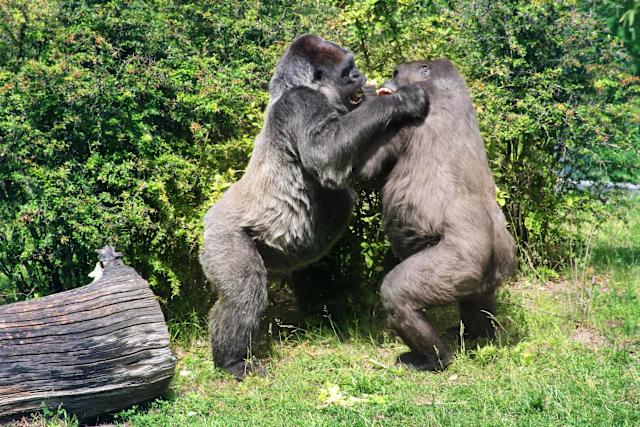
Slapping and Tearing: If the display doesn’t work, they close the distance, using their massive arms to slap and shove.
-
The Bite: This is the most dangerous stage. A silverback’s canine teeth are longer and sharper than a lion’s, capable of crushing bone and tearing through thick muscle.
-
The Retreat: Finally, one male breaks eye contact and retreats, signaling total submission.
The Strength and Power of a Silverback Gorilla
To understand the stakes of these fights, one must respect the physical power of a silverback. An adult male stands roughly 5.5 to 6 feet tall when upright and can weigh up to 440 pounds (200 kg) of pure, functional muscle.
Their strength is estimated to be 6 to 10 times that of an average human. A silverback can snap a thick bamboo stalk as if it were a toothpick and can exert a bite force of approximately 1,300 pounds per square inch (PSI)—stronger than a Great White Shark.
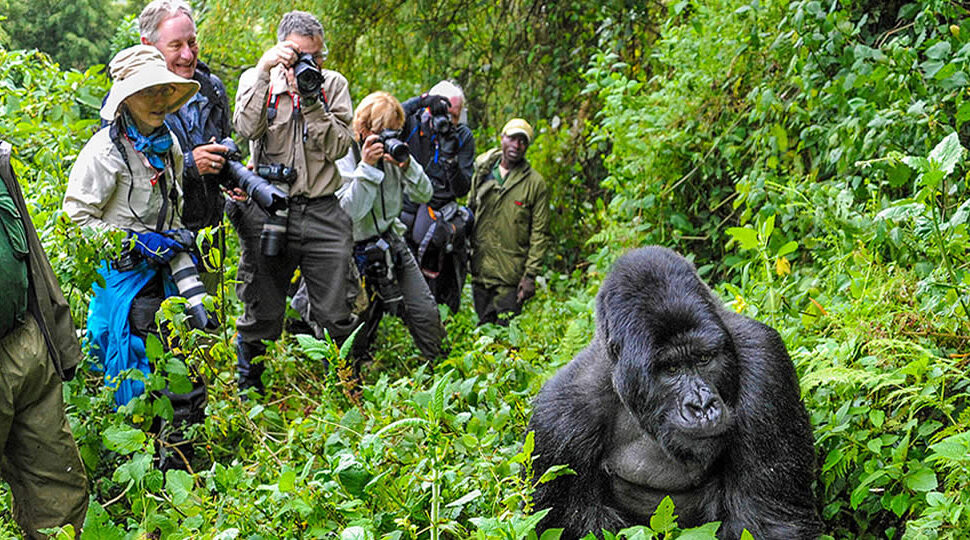
During a dominance fight, this power is concentrated into explosive bursts of energy. This is why gorilla trekking rules require a 7-meter (23-foot) distance; even a non-aggressive movement from a silverback can be dangerous due to their sheer mass.
What Happens When a Silverback Loses a Fight
The aftermath of a lost dominance battle is often tragic for the former leader. In gorilla society, there is rarely a “silver medal.”
If an incumbent silverback is defeated, he is usually forced into exile. He becomes a “lone silverback,” wandering the forest fringes. These solitary males often suffer from depression and physical decline due to the lack of social grooming and the stress of loneliness.
In some rare cases, a defeated father may be allowed to stay in the group as a subordinate “retired” male if the victor is his son, but he loses all breeding rights and decision-making power.
For the females, a change in leadership is a period of extreme stress and transition, as they must now adapt to the temperament and protection style of a new, often aggressive, patriarch.
Infanticide and Power Takeovers in Gorilla Society
The darkest chapter of silverback dominance is the practice of infanticide. When a new silverback successfully takes over a troop, he may kill the nursing infants of the previous leader.
While this behavior seems cruel, it is a cold, evolutionary strategy. Nursing females do not ovulate. By killing the infant, the new silverback triggers the female to return to estrus (fertility) almost immediately.
This allows him to sire his own offspring and ensure his genes are the ones being protected. As a traveler, seeing a new silverback with a group is a reminder of the harsh “survival of the fittest” reality that governs the wild.
Famous Silverback Battles Observed by Scientists
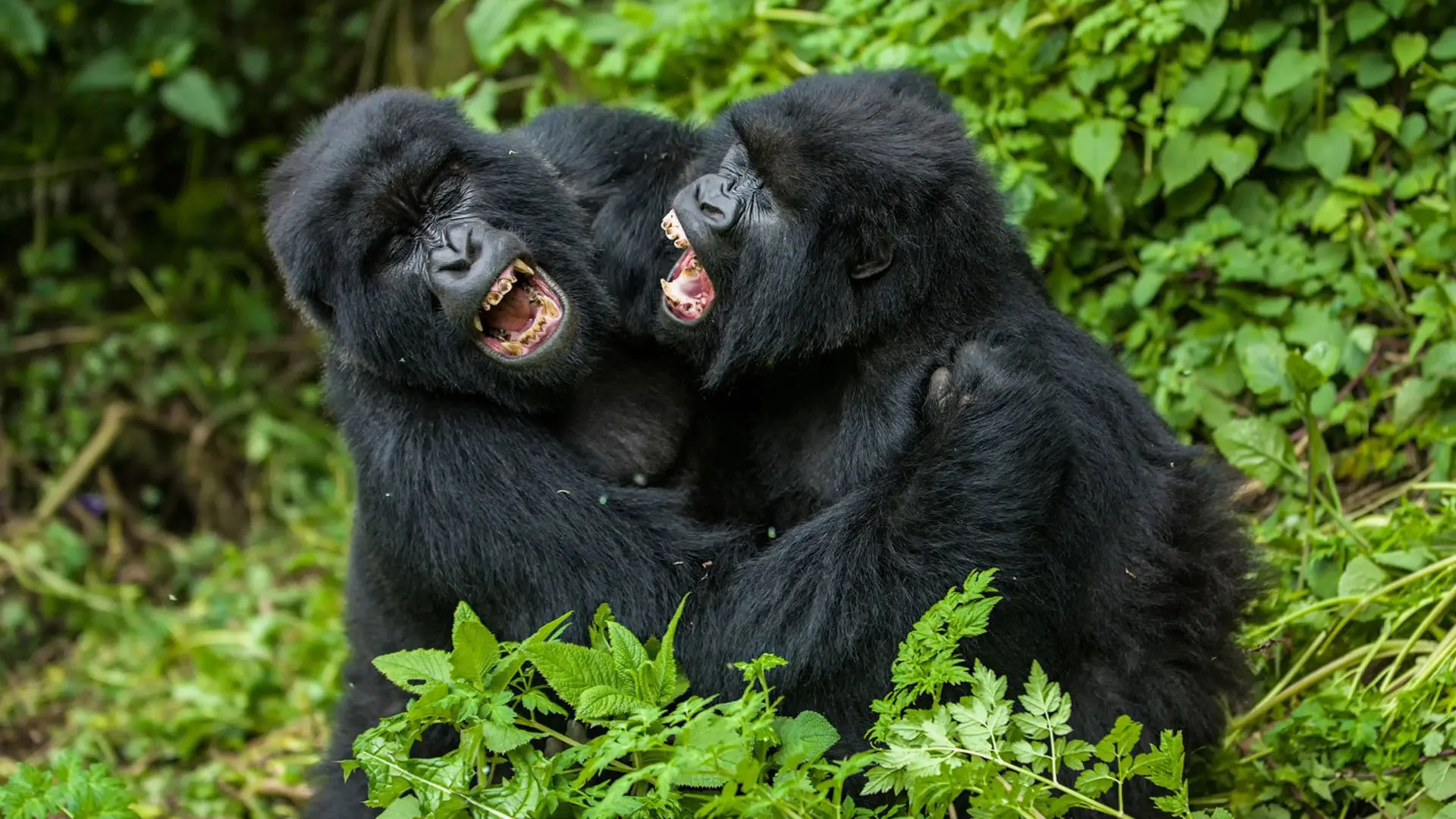
Primatologists at the Dian Fossey Gorilla Fund have documented legendary battles that shaped our understanding of the species.
One of the most famous was the struggle for the Beetsme Group in Rwanda. When the legendary silverback Titus began to age, his son Cantsbee (one of the most successful silverbacks in history) eventually took over leadership.
Their transition was relatively peaceful, but Cantsbee later had to defend his massive group from external “bachelor” attacks in battles that lasted for hours and left both males covered in deep lacerations.
These real-world “Games of Thrones” demonstrate that gorilla leadership is a constant cycle of defense and defiance.
Do Tourists Witness Silverback Fights?
It is extremely rare for tourists to witness a full-scale dominance fight during a standard one-hour gorilla trek. Gorillas generally prefer peace, and the presence of humans often causes them to be on their “best behavior.”
However, guests frequently witness the ritualized components of dominance:
-
A silverback giving a sharp “stiff stare” to a juvenile.
-
The magnificent sound of a chest beat to signal the group’s location to a rival.
-
Brief charges or “swiping” at vegetation to show off strength. If a real fight does break out, your expert rangers are trained to move the group back immediately for safety.
Conservation Lessons from Silverback Dominance Behavior
Understanding these fights helps conservationists manage populations. We now know that habitat fragmentation is a major problem; if there isn’t enough forest for “lone silverbacks” to find their own space, they are forced into more frequent and violent confrontations with established troops.
By protecting large, contiguous corridors of forest in Bwindi and the Virungas, we reduce unnecessary conflict and allow the natural cycle of gorilla leadership to flourish.
FAQs About Silverback Dominance Fights
Do silverbacks ever kill each other in fights?
While rare, death can occur due to infected bite wounds or internal injuries. Most fights end when one male submits and retreats to avoid fatal damage.
How often do these fights happen?
Small displays happen weekly, but major “takeover” battles may only occur every few years when a leader ages or a group grows too large.
Can a female stop a silverback fight?
Females cannot physically stop a fight, but their loyalty plays a role. If females refuse to follow a victor, his “takeover” is effectively a failure.
Are the silverbacks aggressive toward tourists?
No. Habituated gorillas view humans as neutral observers. Aggression is almost always directed at other gorillas or perceived threats like leopards.
Why do they beat their chests?
It is a display of size and health. The sound tells rivals exactly how big the silverback is without the need for a physical fight.
Can a younger “blackback” win a fight?
Occasionally, a strong blackback (8-10 years old) can challenge an old silverback, but usually, they wait until they have their full “silver” saddle of hair.
Do gorillas use tools in fights?
No. They rely entirely on their massive muscle mass, weight, and powerful canine teeth to inflict damage.
What is a “lone silverback”?
A male who has either been ousted from his troop or has left his birth group to try and start his own harem.
Do silverbacks fight over food?
Rarely. Mountain gorillas live in “a salad bowl” of abundant food. Most fights are strictly over reproductive rights and female companionship.
How long do these battles last?
The physical combat usually lasts only a few minutes, but the ritualized “posturing” and chasing can go on for an entire day.
Conclusion: The Power and Responsibility of a Gorilla Leader
The silverback dominance fight is a testament to the intensity of life in the wild. It reminds us that the silverback’s life is not one of leisure, but one of constant vigilance and profound responsibility. He carries the weight of his family’s survival on his silver-furred shoulders.
Witnessing these “Gentle Giants” in the forests of Uganda and Rwanda is a privilege that changes your perspective on nature. You aren’t just looking at animals; you are looking at a complex, ancient society governed by strength, respect, and the drive to endure.
Experience the Power of the Great Apes with GoSilverback Safaris
Are you ready to step into the world of the silverback? At GoSilverback Safaris, we specialize in providing the most immersive, expert-led gorilla trekking tours in Africa. Our guides are veterans of the forest who understand every grunt, chest beat, and movement of these magnificent creatures.
Permits for the 2026 season are selling out fast. Don’t miss your chance to witness the majesty of the mountain gorilla in person.
[Contact GoSilverback Safaris Today to Secure Your Gorilla Permit and Book Your Adventure]