Best Time to Trek Gorillas in Uganda, Rwanda & Congo: Month-by-Month Guide in 2026
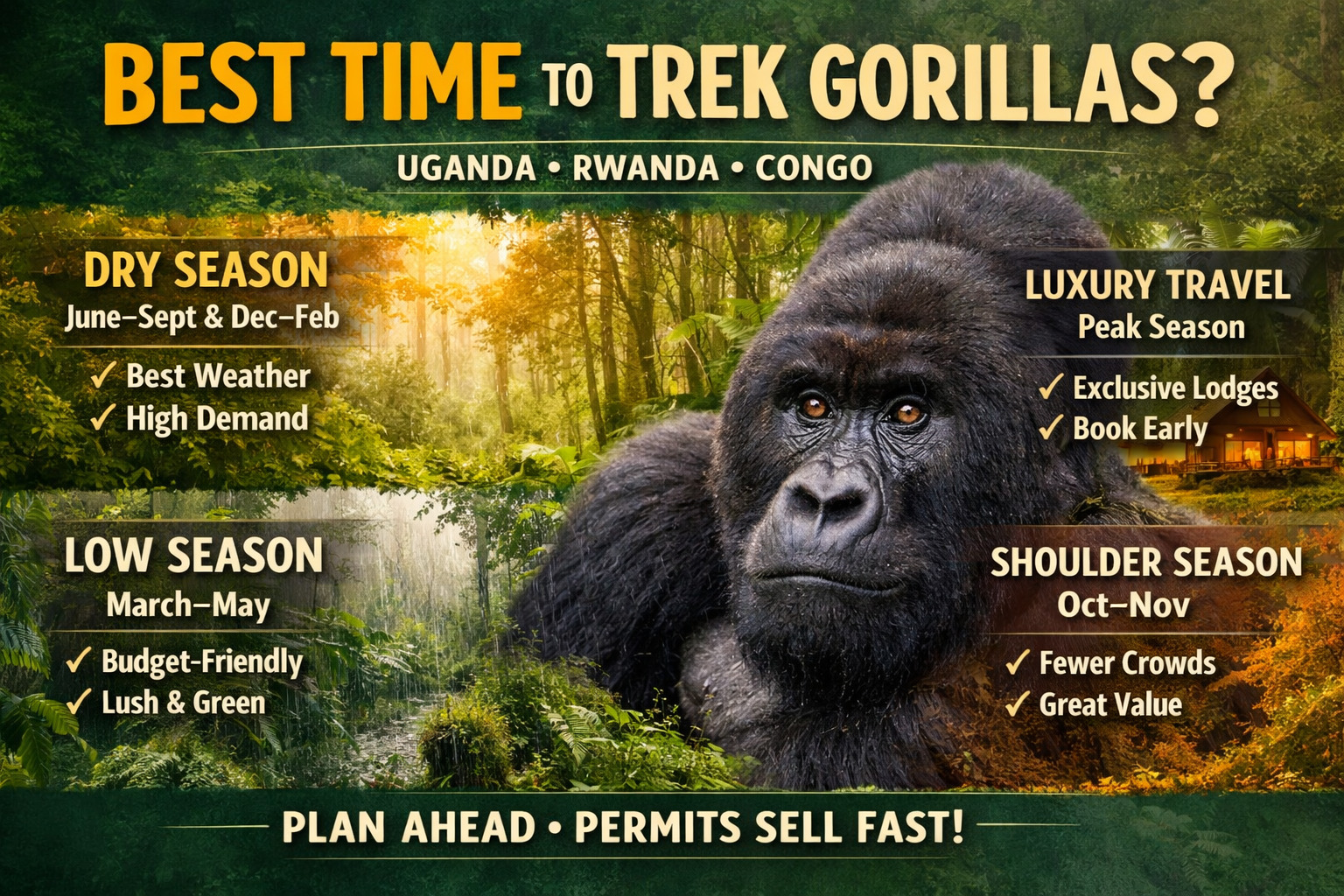
The best time to trek gorillas in Uganda, Rwanda & Congo in 2026 is during the dry seasons—June to September (long dry season) and December to February (short dry season)—when forest trails are drier and firmer, trekking is easier and less muddy, and visibility for observing the mountain gorillas is at its peak.
Gorilla trekking is possible year-round in key destinations like Uganda’s Bwindi Impenetrable National Park, Rwanda’s Volcanoes National Park, and (with caveats) parts of DR Congo, as the gorillas are habituated and active regardless of weather.
There’s truly no “bad” time, since sightings are nearly guaranteed (over 90-95% success rate with experienced trackers), and the experience remains profound in any season.
However, the dry seasons stand out for optimal weather conditions—less rain means reduced slipping on steep, forested paths, shorter effective trekking times, and better photography in clearer light.
In contrast, the wet seasons (March–May long rains and October–November short rains) bring lush, greener landscapes and more birdlife, but trails can be very muddy and challenging, with higher chances of heavy downpours.
A key difference lies in best weather vs. best price/availability.
- Dry seasons align with peak demand, leading to higher accommodation rates, faster permit sell-outs (often 6–12 months in advance, especially in popular sectors), and more crowded trails.
- Wet seasons offer better value—lower lodge prices, easier permit availability, and a quieter, more intimate experience with fewer tourists.
In 2026, demand is expected to rise further due to ongoing post-pandemic travel recovery patterns. International tourism has rebounded strongly, with “revenge travel” and bucket-list experiences like gorilla trekking driving high interest.
Pent-up demand from delayed trips, combined with growing awareness of sustainable conservation (and limited daily permits—e.g., only ~96 in Rwanda and ~200+ in Uganda), means peak seasons book out quickly.
Early booking (ideally 6–12+ months ahead) is essential for preferred dates, especially as global interest in East African wildlife adventures continues to grow.
If prioritizing comfort and reliability, target the dry months—but if seeking value and solitude, consider the shoulder or wet periods.
Gorilla Trekking Countries Compared (2026 Edition)
Gorilla trekking remains one of Africa’s premier wildlife experiences, with mountain gorillas accessible in three countries sharing the Virunga Massif and Bwindi forests: Uganda, Rwanda, and the Democratic Republic of Congo (DRC).
Each offers unique advantages in cost, accessibility, luxury, and adventure level.
Permit prices for foreign non-residents in 2026 are:
- Uganda: USD 800 (Bwindi Impenetrable & Mgahinga Gorilla National Parks)
- Rwanda: USD 1,500 (Volcanoes National Park)
- DRC: USD 400 (Virunga National Park for mountain gorillas)
Here’s a quick comparison:
| Aspect | Uganda (Bwindi & Mgahinga) | Rwanda (Volcanoes NP) | DRC (Virunga NP) |
|---|---|---|---|
| Permit Cost (2026) | USD 800 | USD 1,500 | USD 400 |
| Market Positioning | Mid-range to luxury; diverse options | High-end/luxury; premium infrastructure | Budget/adventurous; raw experience |
| Best Months | June–Sept & Dec–Feb (dry) | June–Sept & Dec–Feb (dry) | June–Sept & Dec–Feb (dry, when open) |
| Crowd Levels | Moderate to high in peak dry months | High in dry seasons; more exclusive feel | Lower; variable due to security |
| Key Appeal | Best value; more families/groups; birding | Luxury lodges; excellent photography | Cheapest; pristine forests (if accessible) |
| Challenges | Variable trail difficulty | Highest cost; books out fastest | Security/political risks; limited access |
Uganda – Best Time to Trek Gorillas in Bwindi & Mgahinga
Uganda provides the most flexible and cost-effective option for mountain gorilla trekking, with over 15 habituated families in Bwindi Impenetrable National Park and a few in Mgahinga Gorilla National Park.
- Dry seasons vs wet seasons — The dry seasons (June to September – long dry; December to February – short dry) offer the best conditions: firmer trails, less mud, easier navigation through steep forests, and better visibility for sightings and photos. Wet seasons (March–May long rains; October–November short rains) bring lush greenery and potentially shorter treks (gorillas often lower), but trails turn very slippery and muddy, increasing physical challenge and rain risk.
- Permit cost: USD 800 per person for foreign non-residents (consistent year-round; habituation experience is USD 1,500).
- Crowd levels by month — Peak crowds occur in June–August and December–February due to ideal weather and school holidays; trails can feel busier with 8 trekkers per group max. Shoulder months like May, September, November, and early March see moderate crowds. Wettest months (April, October–November) have the lowest crowds for a more intimate feel.
- Best months for budget travelers — March–May and October–November (wet/shoulder seasons) provide better value: easier permit availability, lower lodge rates (often 20–40% off peak), fewer tourists, and the same high success rate for sightings. Combine with other Uganda safaris for cost savings.
Rwanda – Best Time to Trek Gorillas in Volcanoes National Park
Rwanda positions itself as the premium gorilla trekking destination, with excellent infrastructure, strict conservation, and a focus on luxury and exclusivity in Volcanoes National Park.
- High-end market positioning — Rwanda emphasizes sustainable, high-value tourism with top-tier lodges (e.g., Singita, One&Only), seamless logistics from Kigali (just 2–3 hours drive), and a polished experience. It’s ideal for those seeking comfort alongside the gorillas.
- Permit cost: USD 1,500 per person (standard for foreign non-residents; promotional discounts for East Africans/Africans in 2026, but international remains unchanged).
- Best months for luxury travelers — June to September (long dry season) and December to February (short dry) — these align with peak luxury travel seasons, offering stable weather, easier access, and prime conditions. Book 9–12+ months ahead as permits (limited to ~96/day) sell out fastest here.
- Photography conditions — Dry months excel with clearer light, less rain (protecting gear), thinner undergrowth for better views, and stunning misty volcano backdrops. June–September provides the sharpest, most vibrant shots; December–February balances greenery and visibility.
DR Congo – Best Time to Trek Gorillas in Virunga
Virunga National Park offers the rawest, most affordable mountain gorilla experience, but it’s the most unpredictable due to ongoing regional challenges.
- Lowest permit costs — USD 400 per person (cheapest for mountain gorillas; some sources note occasional low-season discounts).
- Political and security considerations — Virunga has faced intermittent closures and security issues (e.g., past temporary halts due to instability; check current travel advisories). When open, it’s managed with armed escorts, but risks remain higher than in Uganda or Rwanda—suitable only for experienced, risk-tolerant travelers. Always verify status via official sources or operators before planning.
- Best months for experienced travelers — Dry seasons (June–September and December–February) when trails are drier and operations more reliable (if the park is accessible). These months minimize weather-related challenges in the rugged terrain. Avoid wet seasons for added difficulty and potential access issues.
In 2026, Uganda remains the sweet spot for most travelers balancing cost, reliability, and adventure—especially from Kampala. Rwanda suits luxury seekers, while DRC appeals to budget adventurers willing to monitor security.
Book permits early (6–12+ months for dry peaks) across all destinations, as demand stays high. Whichever you choose, the encounter with these magnificent primates is transformative.
Month-by-Month Gorilla Trekking Guide (2026)
Gorilla trekking in East Africa (primarily Uganda’s Bwindi & Mgahinga, Rwanda’s Volcanoes National Park, and DRC’s Virunga when accessible) follows consistent seasonal patterns due to the equatorial highland climate.
The two dry seasons — June–September (long dry) and December–February (short dry) — deliver the easiest trails, while wet periods bring challenges but perks like lush scenery and value.
Key facts across destinations (averages for Bwindi/Volcanoes areas):
- Annual rainfall: 1,400–2,390 mm (heaviest March–May and September–November).
- Temperatures: Daytime 20–27°C (68–81°F); nights/mornings 7–15°C (45–59°F) — always pack layers.
- Trekking difficulty rating (1–10 scale, 1=easiest, 10=most challenging): Varies by group location and fitness, but dry seasons average 4–6; wet seasons 7–9 due to mud/slippery slopes.
January – February
These months fall in the short dry season, offering reliable conditions as rains taper off.
- Dry season advantages — Minimal rainfall (typically 80–120 mm/month in Bwindi/Volcanoes), firmer trails, reduced mud, shorter/more predictable treks, and excellent visibility for gorilla sightings and photography. Mornings are crisp, afternoons pleasant.
- Permit availability — Good in shoulder periods (early Jan, late Feb), but high demand around holidays pushes sell-outs; book 6–9 months ahead for peak weeks.
- Ideal for first-time trekkers — Yes — predictable weather builds confidence, easier physical demands suit beginners, high success rates (95%+ sightings), and a magical post-holiday vibe with baby gorillas often more active.
- Trekking difficulty: 4–6/10.
March – May (Low Season)
The long rainy season brings consistent downpours, peaking in April.
- Heavy rains explained realistically — Expect frequent showers (often afternoon/evening), with monthly averages 150–200+ mm (April often wettest at ~200–250 mm in Volcanoes/Bwindi). Trails turn muddy and slippery; treks can extend due to slow progress, but gorillas may descend to lower, more accessible altitudes for shorter hikes.
- Lower lodge rates — Significant discounts (20–50% off peak), easier bookings, and quieter lodges for a personal feel.
- Why photographers love this season — Lush, vibrant green forests create dramatic, moody backdrops; mist/fog adds ethereal atmosphere; rain enhances leaf detail and water droplets for creative shots. Fewer crowds mean unobstructed views.
- Trekking difficulty: 7–9/10 (mud/slopes demand good fitness and waterproof gear).
June – September (Peak Season)
The long dry season is widely regarded as the prime window.
- Best overall trekking conditions — Lowest rainfall (July often driest at ~30–70 mm/month), dry/firm trails, minimal slipping risk, clearer light, and optimal visibility. Gorillas active and visible; treks feel more comfortable and efficient.
- Highest permit demand — Permits sell out fastest here (limited daily slots: ~184 Uganda, ~96 Rwanda); high international traffic drives competition.
- Why early booking is critical — Book 9–12+ months in advance (or 12–18 for popular sectors) to secure dates — especially July/August. Last-minute options rare; operators recommend reserving before flights.
- Trekking difficulty: 4–6/10 (easiest paths).
October – November
These form the short rainy/shoulder season, with transitional weather.
- Shoulder season explained — Rains increase (October–November averages 150–250 mm, November often peak), but not as relentless as March–May; mix of dry spells and showers creates variable but manageable conditions.
- Best value months — Lower lodge/accommodation rates, better permit availability, and bundled safari deals; combine with other activities for savings.
- Fewer crowds — Quieter trails offer intimate experiences — often just your group and trackers. Lush scenery and potential for unique wildlife sightings.
- Trekking difficulty: 6–8/10 (muddy in spots, but rewarding for adventurous travelers).
In 2026, with sustained post-pandemic demand, dry months remain the sweet spot for comfort, while wet/shoulder periods shine for budget, solitude, and dramatic photos.
Always check current advisories (especially DRC), pack rain gear year-round, and book via licensed operators for reliable permits. The gorilla encounter transcends weather — it’s unforgettable anytime!
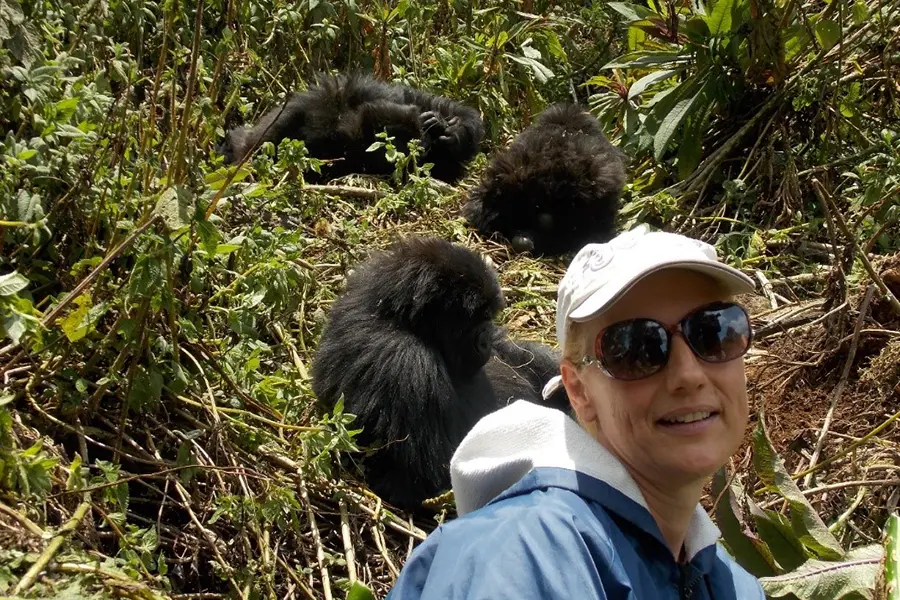
Best Time to Trek Gorillas by Traveler Type
Matching the right season to your travel style maximizes comfort, value, and enjoyment when trekking mountain gorillas in Uganda (Bwindi & Mgahinga), Rwanda (Volcanoes National Park), or DRC (Virunga, when accessible).
Dry seasons (June–September long dry; December–February short dry) generally offer easier trails, while wet/shoulder seasons (March–May long rains; October–November short rains) provide discounts and solitude.
In 2026, book early (9–12+ months for peaks) due to high demand.
Best Time for First-Time Gorilla Trekkers
Dry seasons: June–September or December–February These months deliver the most reliable and beginner-friendly experience.
Trails are firmer and less muddy (rainfall ~30–120 mm/month), reducing slipping risks and trek duration (often 2–6 hours round-trip). Clearer visibility ensures high sighting success (95%+), crisp mornings, and pleasant conditions build confidence for newcomers.
- Why ideal: Predictable weather minimizes surprises; easier navigation suits those new to rainforest trekking. Avoid wet seasons if concerned about physical demands.
- Trekking difficulty: 4–6/10.
Best Time for Luxury Travelers
June–September (long dry season), with December–February as a strong alternative Rwanda’s high-end positioning shines here: premium lodges (e.g., Singita, One&Only) offer seamless luxury, with stable dry weather for effortless access and comfort.
Permits book fastest in these peaks, aligning with upscale fly-in safaris and combined itineraries.
- Why ideal: Clear skies, minimal rain, and prime photography complement luxury experiences; fewer weather disruptions ensure polished logistics. Book 12+ months ahead for preferred sectors.
- Trekking difficulty: 4–6/10.
Best Time for Budget Travelers
March–May or October–November (wet/shoulder seasons) These low seasons unlock the best value: lodge rates drop 20–50%, permits remain available closer to travel dates, and fewer tourists mean quieter trails.
Gorilla sightings stay reliable, with potential for shorter hikes as groups descend in rain.
- Why ideal: Significant savings on accommodations and packages; combine with Uganda’s affordable USD 800 permits for maximum bang-for-buck. Embrace waterproof gear for mud—rewarded with lush, green scenery.
- Trekking difficulty: 7–9/10 (slippery but manageable).
Best Time for Photography
June–September (long dry season), or March–May (long rains) for creative shots Dry months provide sharp, vibrant images: thinner undergrowth, clearer light, minimal rain on gear, and stunning misty volcano/gorilla portraits.
Rainfall averages 30–70 mm/month in July (driest).
Wet seasons add drama—lush emerald forests, mist, water droplets, and moody atmospheres for artistic wildlife photography with fewer crowds blocking views.
- Why ideal: Dry for technical reliability; wet for unique, ethereal moods. Use fast lenses and rain covers year-round.
- Trekking difficulty: 4–6/10 (dry) or 7–9/10 (wet).
Best Time for Seniors or Less Fit Travelers
Dry seasons: June–September or December–February Prioritize these for easier conditions: drier, firmer trails reduce slipping on steep slopes, shorter effective treks, and lower physical strain.
Many operators recommend dry months for those with mobility concerns; some sectors (e.g., certain Bwindi/Rwanda groups) offer gentler paths.
- Why ideal: Predictable weather and better footing suit moderate fitness levels; avoid wet-season mud that increases difficulty. Porters are available everywhere (~USD 15–20/day) to carry gear. Check health requirements and opt for Rwanda’s often-shorter hikes.
- Trekking difficulty: 4–6/10 (easiest in dry).
No matter your type, the gorilla encounter remains life-changing year-round—success rates stay high thanks to habituated groups and expert trackers.
Tailor to your priorities (comfort vs. savings vs. solitude), pack layers and rain gear, and secure permits early via reputable operators. From Kampala, Uganda offers the most accessible starting point for many!
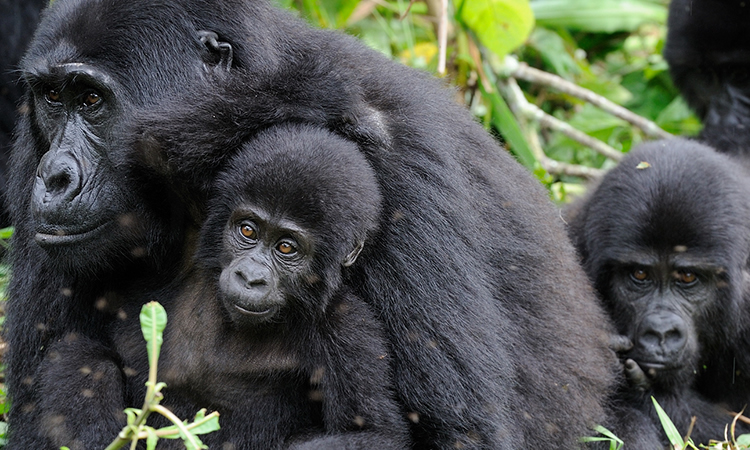
Gorilla Permit Availability & Demand in 2026
Gorilla trekking permits are strictly limited to protect the endangered mountain gorillas, making them one of the most exclusive wildlife experiences on Earth.
In 2026, demand remains exceptionally high due to ongoing post-pandemic travel recovery, growing global interest in sustainable tourism, and limited daily slots.
Permits often sell out 6–12 months in advance during peak dry seasons (June–September and December–February), with shoulder/low seasons requiring 3–6 months notice for reliable availability.
Why permits sell out 6–9 months ahead (often longer in peaks)
- Extremely limited supply: Only a fixed number of habituated gorilla families exist, and conservation rules cap visitors to minimize stress and disease risk.
- High demand from international tourists, photographers, and luxury travelers.
- Peak seasons align with ideal dry weather, school holidays, and “bucket-list” timing.
- Popular sectors/families book first; once gone, no last-minute options exist.
- Operators and direct bookings compete fiercely—early reservations secure preferred dates and groups.
Uganda vs Rwanda vs Congo permit caps Daily limits vary by country and park, based on habituated groups and strict 8-person-per-group rule.
| Country/Park | Daily Permit Cap (Approx.) | Habituated Groups | Max per Group | Notes (2026) |
|---|---|---|---|---|
| Uganda (Bwindi + Mgahinga) | ~184–200 | ~23 (Bwindi) + few (Mgahinga) | 8 | Highest availability; more flexible sectors; permits via UWA through licensed operators. |
| Rwanda (Volcanoes NP) | 96 | 12 | 8 | Most exclusive; books out fastest due to luxury appeal and shorter access from Kigali. |
| DRC (Virunga NP) | Variable (limited when open) | Few | 8 | Lowest cost but highest uncertainty; security issues often restrict access—check advisories. |
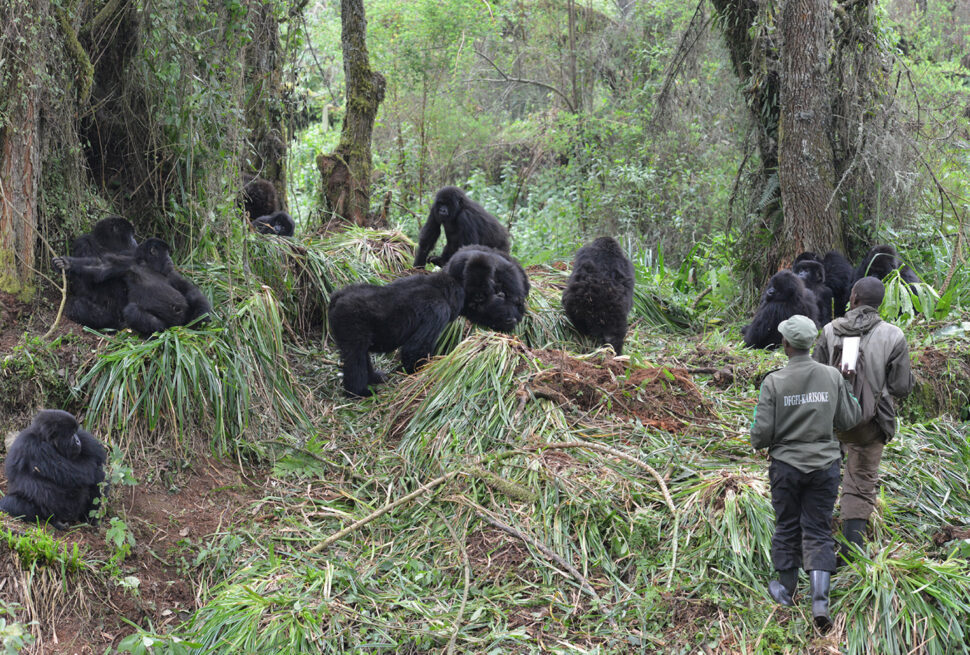
Across all destinations, only 8 trekkers are allowed per habituated gorilla family per day (excluding guides/trackers/porters). This ensures low-impact visits, one-hour observation time, and high-quality, intimate encounters.
Groups are assigned based on fitness level, trek difficulty, and availability—your operator helps match you.
How tour operators secure permits faster
Licensed operators (registered with UWA in Uganda, RDB in Rwanda, or equivalent in DRC) have priority access, real-time tracking, and bulk/advance purchasing power.
They monitor openings, secure slots before public release, and handle payments/deposits swiftly. Independent booking is possible but riskier—direct systems (e.g., online portals) fill quickly, and operators often lock in dates months earlier for clients.
Ready to secure your 2026 gorilla permit before they’re gone?
From Kampala, GoSilverback Safaris specializes in Uganda gorilla treks with reliable permit sourcing, personalized planning, and seamless experiences in Bwindi and Mgahinga.
Contact us today to check real-time availability for your dates—early action is key to avoiding disappointment and locking in the best sectors.
Don’t wait; message or call GoSilverback Safaris now for your gorilla adventure!
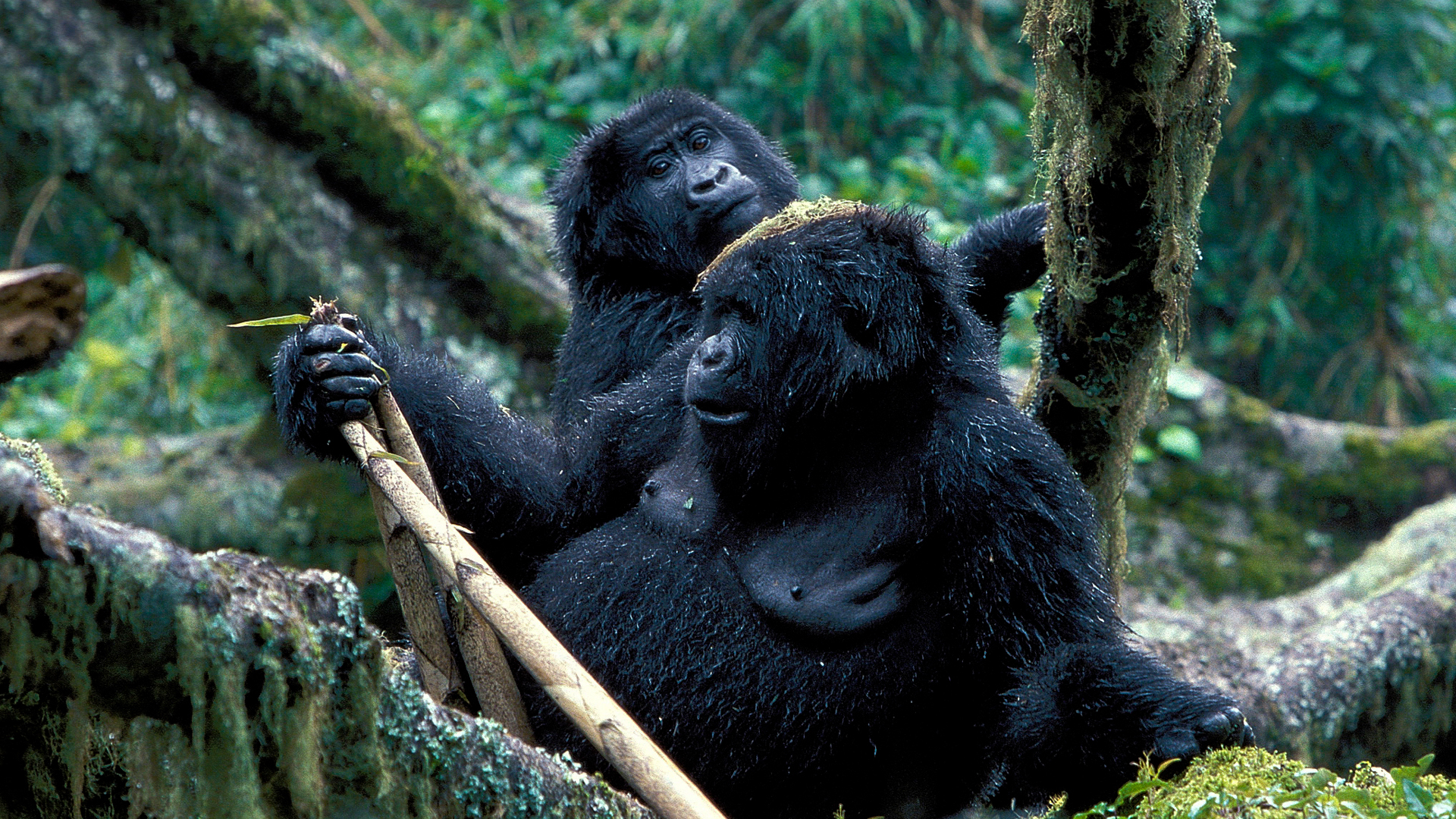
Weather, Trail Conditions & Trekking Difficulty Explained
Mountain gorilla trekking occurs in dense, high-altitude tropical rainforests across Uganda’s Bwindi Impenetrable National Park (and Mgahinga), Rwanda’s Volcanoes National Park, and DRC’s Virunga National Park (when accessible).
These areas share similar equatorial highland climates: mild temperatures (daytime 20–27°C/68–81°F; nights/mornings 7–15°C/45–59°F), high humidity, and year-round potential for rain.
Annual rainfall averages 1,400–2,390 mm in Bwindi and ~2,000 mm in Volcanoes, with patterns of two wetter periods and two drier ones.
Rainfall patterns by region (monthly averages approximate; rain can occur anytime, even in “dry” months):
- Bwindi (Uganda): Long wet season March–May (peaks April ~133–200+ mm); short wet October–November (~150–250 mm). Long dry June–September (driest July ~30–70 mm); short dry December–February (~80–140 mm).
- Volcanoes (Rwanda): Similar pattern—wettest March–April (peaks ~200 mm+); October–November heavy; drier June–September and December–February (lower but variable).
- Virunga (DRC): Comparable to Volcanoes, with high rainfall year-round but drier spells in June–September and December–February; security often limits access more than weather.
Forest terrain explained honestly
The forests are steep, rugged, and “impenetrable” in name for good reason: thick bamboo, tangled vines, dense undergrowth, muddy roots, and volcanic slopes (especially in Volcanoes and Virunga, up to 3,000–4,000m).
Trails are often narrow, uneven, and hilly—expect ascents/descents on slippery earth, fallen logs, and no paved paths.
Bwindi’s terrain varies by sector (some gentler, others very steep); Volcanoes features more volcanic ridges and steeper inclines.
Treks range 30 minutes to 6+ hours one-way, depending on gorilla location.
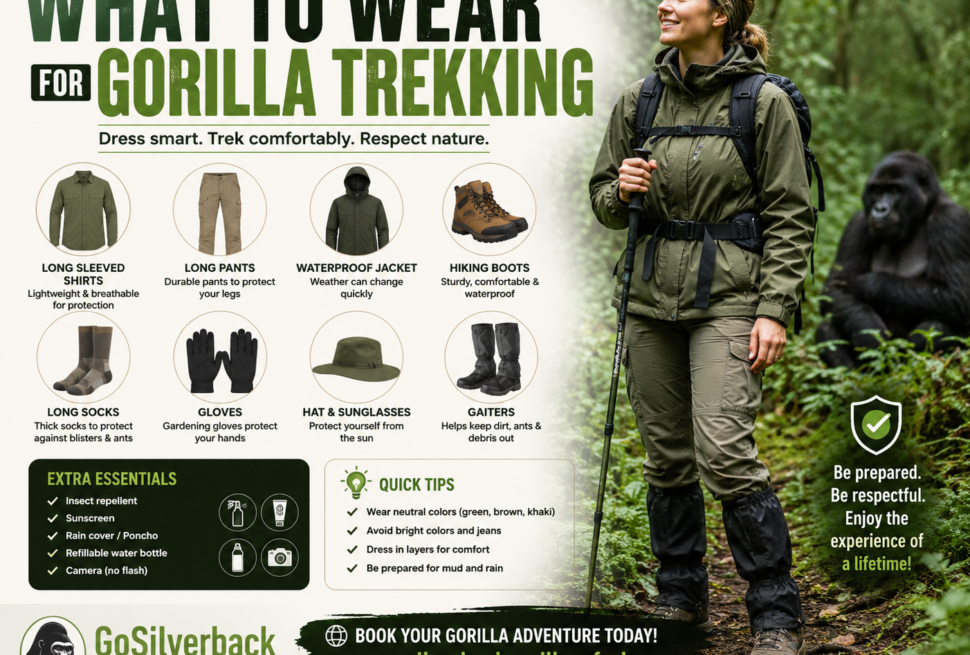
Porters (~USD 15–20/day) help carry gear; good hiking boots with grip, trekking poles, gloves, and rain gear are essential year-round.
How weather affects gorilla movement
Mountain gorillas are adaptable herbivores, but weather influences ranging:
- In wet seasons, abundant fresh vegetation (especially at lower altitudes) can draw groups downward, sometimes shortening treks as gorillas stay in more accessible areas. Rain promotes lush growth but may concentrate them in certain zones.
- In dry seasons, they may range higher or farther for preferred foods; warmer temperatures increase water-drinking needs (more in Bwindi than cooler Virunga). Climate shifts (warmer, less predictable rain) could alter food availability long-term, but habituated groups remain trackable with expert rangers. Sightings stay near-guaranteed (95%+) regardless—trackers use dung, nests, and knowledge to locate them daily.
Why wet season ≠ bad experience
Wet seasons (March–May, October–November) bring challenges—muddy, slippery trails increase physical demand (trekking difficulty 7–9/10 vs. 4–6/10 in dry), longer hikes possible from slow progress, and rain/fog reduces visibility—but they offer unique perks:
- Lush, vibrant greenery creates stunning, misty backdrops ideal for dramatic photography.
- Fewer crowds for intimate encounters.
- Lower costs (lodges 20–50% off) and easier permit access.
- Gorillas often at lower elevations for shorter, easier final approaches. Many trekkers report profound, rewarding experiences in rain—proper gear (waterproofs, gaiters) turns mud into adventure. No season is “bad”; dry prioritizes ease, wet rewards value, solitude, and scenery.
In 2026, from Kampala, Uganda’s Bwindi offers the most accessible entry—prepare for variable weather with layers and rain protection.
The gorilla encounter remains transformative anytime; focus on your fitness, book early, and let expert trackers guide you! If planning soon, reach out to GoSilverback Safaris or tailored advice on conditions and permits.
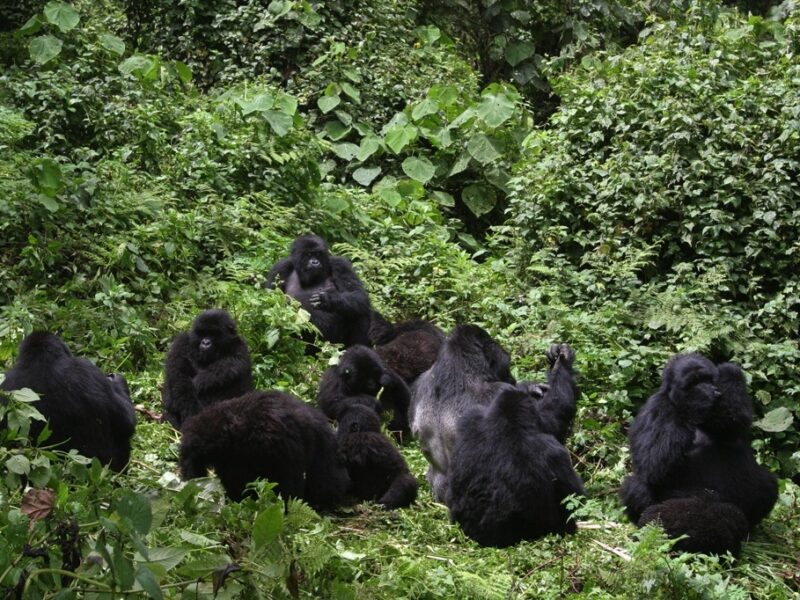
Conservation Impact of Choosing the Right Time
Every gorilla trekking permit directly contributes to the survival of mountain gorillas—one of the world’s most endangered primates—with populations now stabilized at around 1,000+ thanks to tourism-funded efforts.
In Uganda (Bwindi & Mgahinga) and Rwanda (Volcanoes National Park), permit revenue is a cornerstone of conservation, funding ranger patrols, anti-poaching, habitat protection, veterinary care (e.g., Gorilla Doctors), and long-term monitoring.
Choosing when to visit—peak dry seasons or low/shoulder wet seasons—still supports these vital programs, as the same daily limits and fees apply year-round.
How permits fund ranger patrols
Permit fees are a primary revenue source for protected area management. In Uganda, the Uganda Wildlife Authority (UWA) allocates significant portions to park operations, including daily ranger patrols that remove snares, deter poachers, track gorilla groups, and enforce strict rules (e.g., 7-meter distance, one-hour observation).
Rangers—often from local communities—receive salaries, equipment, and training funded by these revenues.
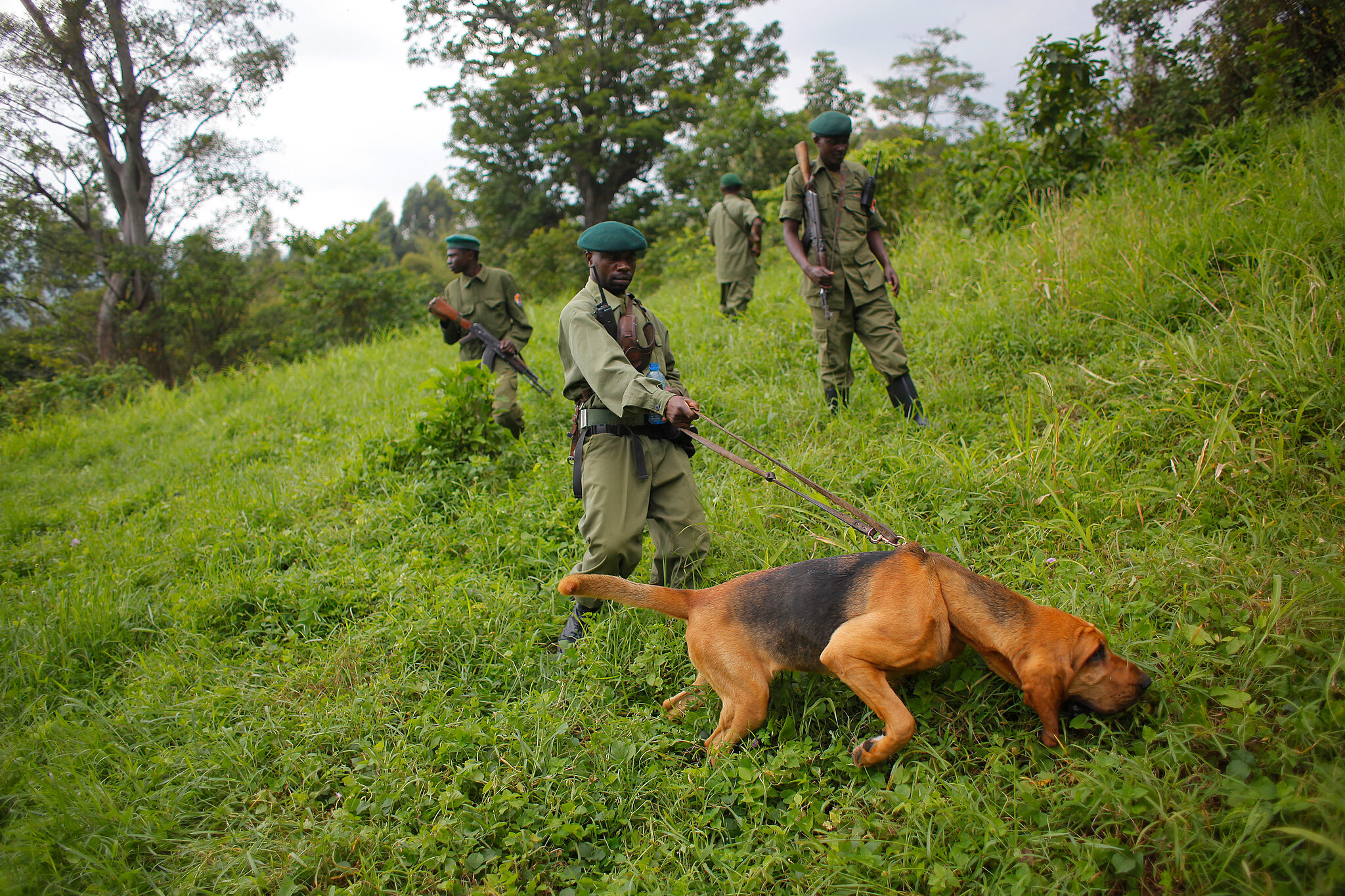
In Rwanda, the Rwanda Development Board uses permit income for similar frontline protection: reconnaissance teams locate groups at dawn, surveillance prevents encroachment, and anti-poaching units safeguard the forest.
These patrols are essential—without them, threats like illegal hunting or habitat loss could reverse decades of gains.
Community revenue sharing
Tourism creates a powerful incentive for locals to protect gorillas rather than exploit the forest.
- In Uganda, UWA shares 20% of park entry fees with surrounding communities, plus USD 10 per gorilla permit sold (increased from USD 5 in 2015). Funds support household and community projects that reduce human-wildlife conflict (e.g., crop protection) or improve livelihoods (schools, health centers, water projects). Recent disbursements, like UGX 2.19 billion to Bwindi-Mgahinga communities, highlight direct benefits.
- In Rwanda, 10% of national park tourism revenue (including gorilla permits) is reinvested in socio-economic projects around Volcanoes National Park—funding education, health infrastructure, clean water, and alternative livelihoods. This model turns communities into conservation stewards, reducing poaching and encroachment.
Why visiting in low season still matters
Low/shoulder seasons (March–May long rains; October–November short rains) generate the same per-permit revenue as peak dry months—your contribution funds patrols, rangers, and community projects regardless of crowds.
In fact, spreading visits across the year supports sustainable tourism by:
- Reducing pressure on trails and gorilla groups during peaks (less erosion, lower disease transmission risk).
- Providing steady, year-round income for rangers and communities (avoiding seasonal unemployment).
- Enabling quieter, more intimate experiences while maintaining high sighting success (95%+). Low-season travel diversifies economic benefits without compromising conservation—every trek counts equally.
Sustainability message
Choosing gorilla trekking responsibly—via licensed operators, following strict rules, and visiting at times that suit your needs—directly powers one of Africa’s greatest conservation success stories.
Mountain gorilla numbers have rebounded from critically low levels due to this model: tourism revenue has funded habitat expansion (e.g., Rwanda’s Volcanoes extensions), anti-poaching, and community partnerships that align human well-being with wildlife protection.
By trekking, you’re not just witnessing these magnificent animals—you’re investing in their future and the livelihoods of people who share their home.
From Kampala, make your 2026 adventure count: book with GoSilverback Safaris for ethical, permit-secure treks that maximize positive impact.
Contact us today to plan a trip that supports conservation year-round—your journey helps ensure gorillas thrive for generations!
Common Mistakes Travelers Make When Choosing Trek Dates
Planning a gorilla trek in 2026 is exciting, but small oversights in timing can lead to frustration, higher costs, or a less enjoyable experience.
From Kampala, many travelers start their adventure in Uganda’s Bwindi, but pitfalls apply across Uganda, Rwanda, and DRC (when open). Here are the most frequent mistakes—and how to avoid them—for a seamless, memorable trip.
Assuming gorillas migrate (they don’t)
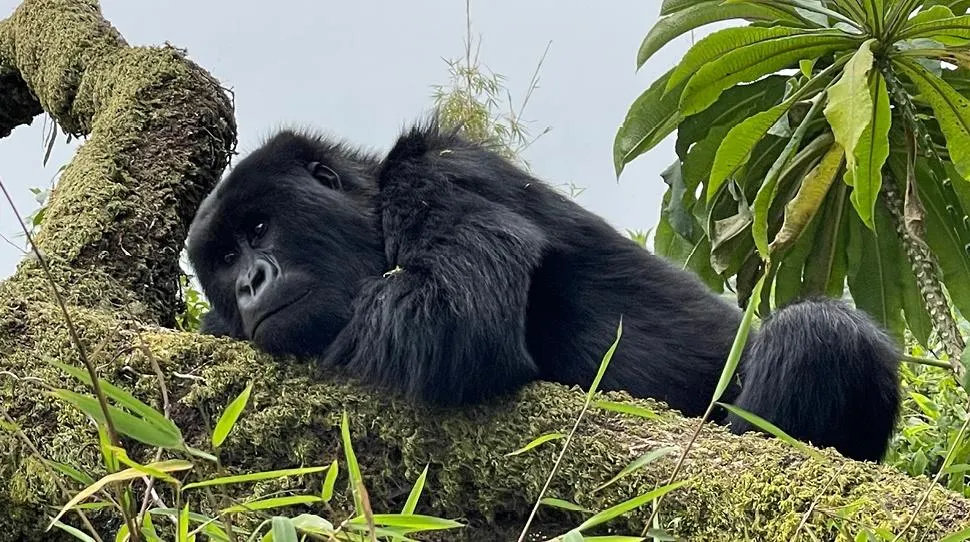
Mountain gorillas are non-migratory residents of their specific home ranges in the Virunga Massif and Bwindi forests—they don’t undertake long-distance seasonal migrations like wildebeest in the Serengeti.
Their daily movements are short (a few kilometers at most) in search of food, influenced slightly by seasonal vegetation availability (e.g., descending lower in wet seasons for fresher growth or ranging higher in dry periods).
Trackers locate habituated groups reliably every day using signs like nests and trails.
- Mistake impact: Some travelers skip wet seasons thinking gorillas “migrate away,” missing out on lush scenery, lower crowds, and better value.
- Reality: Sightings remain 95%+ successful year-round—no bad season for seeing them!
Booking flights before permits
Permits are the bottleneck—limited daily slots (e.g., ~184–200 in Uganda, 96 in Rwanda) sell out fastest in peak dry seasons (June–September and December–February), often 6–12+ months ahead (or even 9–18 for popular sectors).
Many travelers lock in cheap flights first, then discover no permits match their dates.
Avoid it: Secure your gorilla permit first (ideally 9–12 months for peaks, 3–6 for shoulders/low).
- Flexible flights or open-jaw tickets come later.
- Operators track real-time availability and can adjust itineraries.
Choosing the wrong country for their budget
- Rwanda’s USD 1,500 permit positions it as premium/luxury (excellent infrastructure, shorter drives from Kigali).
- Uganda’s USD 800 offers the best value and more groups/families.
- DRC’s USD 400 is cheapest but riskiest due to security. Mistake impact: Budget travelers pick Rwanda and face sticker shock, or luxury seekers opt for Uganda and miss polished experiences. Match your priorities: value + diversity (Uganda), exclusivity (Rwanda), adventure on a budget (DRC, with caveats).
Ignoring physical fitness level
Gorilla treks involve steep, muddy, uneven rainforest terrain (difficulty 4–6/10 in dry seasons, 7–9/10 in wet due to slips). Gorillas can be anywhere—gentle paths or grueling climbs (up to 6+ hours one-way).
Many underestimate this, especially in wet seasons or if choosing harder sectors.
Avoid it: Assess your fitness honestly—dry seasons (June–September, December–February) offer firmer, easier trails ideal for moderate fitness or seniors.
- Request easier groups via operators (some sectors are gentler). Hire porters (~USD 15–20/day) for gear.
- Train with hikes/stairs beforehand.
Pro tip for 2026: With demand still rising, don’t delay—peak dates vanish quickly. From Kampala, Uganda remains the most accessible and forgiving starting point.
Ready to avoid these pitfalls and secure the perfect dates? GoSilverback Safaris handles permit sourcing, fitness-matched groups, and full planning to ensure your trek aligns with your budget, fitness, and goals.
Contact GoSilverback Safaris today for real-time 2026 availability—book early and trek worry-free!
Expert Booking Tips for Gorilla Trekking in 2026
Securing a gorilla trekking permit in 2026 is the single most critical step—limited daily slots (e.g., ~184–200 in Uganda, 96 in Rwanda) and high demand mean peaks sell out 12–18 months ahead (or even earlier for popular sectors).
From Kampala, Uganda’s Bwindi remains the most convenient launchpad, but follow these expert steps to avoid common pitfalls and land your spot.
1. Choose your country first
Decide based on budget, experience level, and priorities before anything else:
-
- Uganda (Bwindi & Mgahinga): Best value at USD 800 per permit; more habituated groups (~23+), flexible sectors, and diverse options for families or first-timers. Ideal if you’re starting from Kampala with easier access and combined safaris.
- Rwanda (Volcanoes NP): Premium/luxury at USD 1,500; polished infrastructure, shorter drives from Kigali, excellent photography, and exclusivity—perfect for high-end travelers.
- DRC (Virunga): Cheapest at ~USD 400, but only for experienced, risk-tolerant adventurers due to ongoing security concerns—check current advisories. Match to your style: value + adventure (Uganda), luxury + ease (Rwanda). This choice guides everything else, including permit process and logistics.
2. Lock permits early
Book as soon as you know your dates—don’t wait!
-
- Peak dry seasons (June–September long dry; December–February short dry): Secure 12–18 months in advance (or 9–12 for shoulders) to guarantee availability—permits vanish fastest here due to ideal weather and holidays.
- Low/shoulder wet seasons (March–May, October–November): 3–6 months ahead often suffices for better odds, lower crowds, and potential discounts (e.g., Rwanda’s occasional low-season offers). Permits are date-specific, non-refundable/non-transferable, and issued first-come, first-served via official channels (UWA in Uganda, RDB in Rwanda). Use licensed operators—they access real-time databases, secure slots faster, and handle payments/deposits. Provide passport details and full payment promptly for confirmation (often a PDF with QR code).
3. Match season to travel style
Align dates with your priorities for the best experience:
-
- Comfort/ease/first-timers/seniors: Dry seasons (June–September or December–February)—firmer trails, less mud, easier treks (difficulty 4–6/10).
- Budget/value/fewer crowds: Wet/shoulder seasons (March–May or October–November)—lower lodge rates (20–50% off), easier permit access, lush scenery, but muddier trails (7–9/10).
- Photography: Dry for clear light; wet for dramatic mist/greenery. Factor in fitness—request gentler groups/sectors via your operator—and pack accordingly (rain gear year-round). This step ensures your trek feels rewarding, not rushed.
4. Use licensed operators only
Never book directly if possible—licensed operators (e.g., members of AUTO in Uganda or registered with RDB in Rwanda) have priority access, monitor openings, and prevent scams/fake permits.
They coordinate everything: permits, park briefings, transport from Kampala (or Kigali), accommodations, and porters. Avoid unofficial agents or walk-ins (no such thing—permits sell out).
Verify operator credentials, read reviews, and confirm they provide official booking confirmations before final payment.
Final pro tip for 2026: With sustained high demand, act now—many peak 2026 dates are already booking or limited. From Kampala, start with Uganda for the most reliable path.
Ready to lock in your 2026 gorilla trek the smart way? GoSilverback Safaris is a trusted, licensed operator specializing in permit-secure Uganda adventures from Kampala, with expert matching for country, season, and style.
Contact GoSilverback Safaris today for real-time availability checks and personalized quotes—secure your dates before they’re gone and make your gorilla dream a reality!
Frequently Asked Questions
What is the cheapest time to trek gorillas?
The cheapest time is during the low/wet seasons (March–May long rains and October–November short rains). While permit prices remain fixed (USD 800 in Uganda, USD 1,500 in Rwanda for foreign non-residents), lodge and accommodation rates drop 20–50%, permits are easier to secure, and crowds are minimal. Combine with shoulder months for maximum value—trekking success stays high (95%+).
Can you trek gorillas in the rainy season?
Yes, absolutely—gorilla trekking is possible year-round in Uganda (Bwindi & Mgahinga) and Rwanda (Volcanoes NP). Rainy seasons bring lush greenery, potentially shorter treks (gorillas often lower), fewer tourists, and dramatic photography opportunities. Trails are muddier (difficulty 7–9/10 vs. 4–6/10 dry), so pack waterproof gear and use porters. No “off season”—sightings guaranteed with habituated groups.
Is July or August better for gorilla trekking?
July edges out slightly as the driest month (rainfall ~30–70 mm in Bwindi/Volcanoes), with firmer trails, clearer light, and optimal visibility. Both are peak dry season (June–September), offering excellent conditions—but July often has marginally lower humidity and fewer holiday crowds than August. Book either 12+ months ahead; difficulty ~4–6/10.
How far in advance should I book for 2026?
9–18 months for peak dry seasons (June–September, December–February)—many dates already limited or sold out by early 2026. For low/shoulder seasons (March–May, October–November), 3–6 months often works. Permits are date-specific and non-transferable; licensed operators secure them fastest via real-time access (UWA/RDB systems).
Which country is best for gorilla trekking in 2026?
It depends on your priorities—Uganda (USD 800 permits, Bwindi/Mgahinga) for best value, more groups, and accessibility from Kampala. Rwanda (USD 1,500, Volcanoes NP) for luxury, shorter drives from Kigali, and premium infrastructure. DRC (Virunga NP, ~USD 400) is currently closed to gorilla trekking until further notice due to security—avoid planning here. Uganda suits most (value + reliability); Rwanda for high-end.
From Kampala, GoSilverback Safaris is your go-to licensed operator for secure 2026 permits, tailored dates, and seamless Uganda treks.
Contact us today for real-time availability and expert guidance—don’t miss out on these limited slots!
Final Verdict – When Should You Trek Gorillas in 2026?
The best months to trek mountain gorillas in 2026 remain the dry seasons: June to September (long dry season) and December to February (short dry season).
These periods offer the easiest trekking conditions—drier, firmer trails, less mud, shorter hike times, and optimal visibility for sightings and photography. July and August stand out as the driest and most reliable within the peak window.
Best country by traveler type
- First-timers, families, budget-conscious, or value seekers: Uganda (Bwindi Impenetrable & Mgahinga) – USD 800 permits, the highest number of habituated groups (~23+), diverse sector options, and excellent accessibility from Kampala.
- Luxury travelers or those wanting premium ease: Rwanda (Volcanoes National Park) – USD 1,500 permits, world-class lodges, shorter drives from Kigali, and a polished, exclusive experience.
- Experienced adventurers on a tight budget: DRC (Virunga) only if security stabilizes significantly—lowest cost (~USD 400) but currently not recommended due to ongoing risks.
Why 2026 is a prime year to go Mountain gorilla populations continue their remarkable recovery (over 1,000 individuals), thanks to tourism-funded conservation that supports ranger patrols, veterinary care, and community projects.
Post-pandemic “revenge travel” demand remains strong, but 2026 offers a sweet spot: established safety protocols, improved infrastructure (especially in Uganda and Rwanda), and no major disruptions expected.
Permit limits stay strict for sustainability, meaning slots will still sell out fast—especially in peak months. Going in 2026 lets you witness one of conservation’s greatest success stories while it’s still intimate and impactful.
Bottom line: For most travelers starting from Kampala, Uganda in June–September 2026 delivers the ultimate balance of weather, value, and reliability.
Book permits now (many peak dates are already filling) to secure your spot.
Ready to make 2026 your gorilla year? GoSilverback Safaris, based in Kampala, specializes in securing Uganda permits quickly and crafting seamless itineraries tailored to your style.
Contact GoSilverback Safaris today for real-time 2026 availability and lock in your life-changing trek before it’s too late!
Ready to Trek Gorillas in 2026? Act Now Before Permits Vanish
Gorilla trekking permits are strictly limited—only a handful are issued each day (around 184–200 in Uganda, just 96 in Rwanda), and they are allocated on a first-come, first-served basis with no waiting lists.
In 2026, demand is already surging as travelers return to bucket-list adventures, conservation awareness grows, and East Africa remains one of the safest and most rewarding wildlife destinations.
Peak dry-season dates (June–September and December–February) are filling up faster than ever—many popular sectors and family groups are already reserved or spoken for.
Every trek you book contributes directly to mountain gorilla conservation: your permit fee funds ranger patrols, anti-poaching efforts, veterinary care, and community revenue-sharing programs that protect these endangered primates and support the people who live alongside them.
By choosing ethical, responsible travel, you become part of one of the world’s most successful conservation stories—ensuring gorillas thrive for generations.
GoSilverback Safaris makes booking simple, secure, and stress-free. As a trusted, fully licensed safari operator based right here in Kampala, we have priority access to real-time permit availability through official channels (UWA and partners), expert local guides who know every trail and gorilla family, and personalized itineraries tailored to your budget, fitness level, and travel style.
We handle everything—from permit securing and date matching to seamless airport transfers, quality lodges, and porters—so you focus on the once-in-a-lifetime experience.
Don’t risk disappointment. Permits don’t wait, and the best dates disappear quickly.
Contact GoSilverback Safaris today—call, message, or email us for instant 2026 availability checks, no-obligation quotes, and guaranteed permit placement.
Secure your spot now and turn your 2026 into the year you met mountain gorillas face-to-face.
Your adventure starts here. Book with GoSilverback Safaris before it’s too late!