
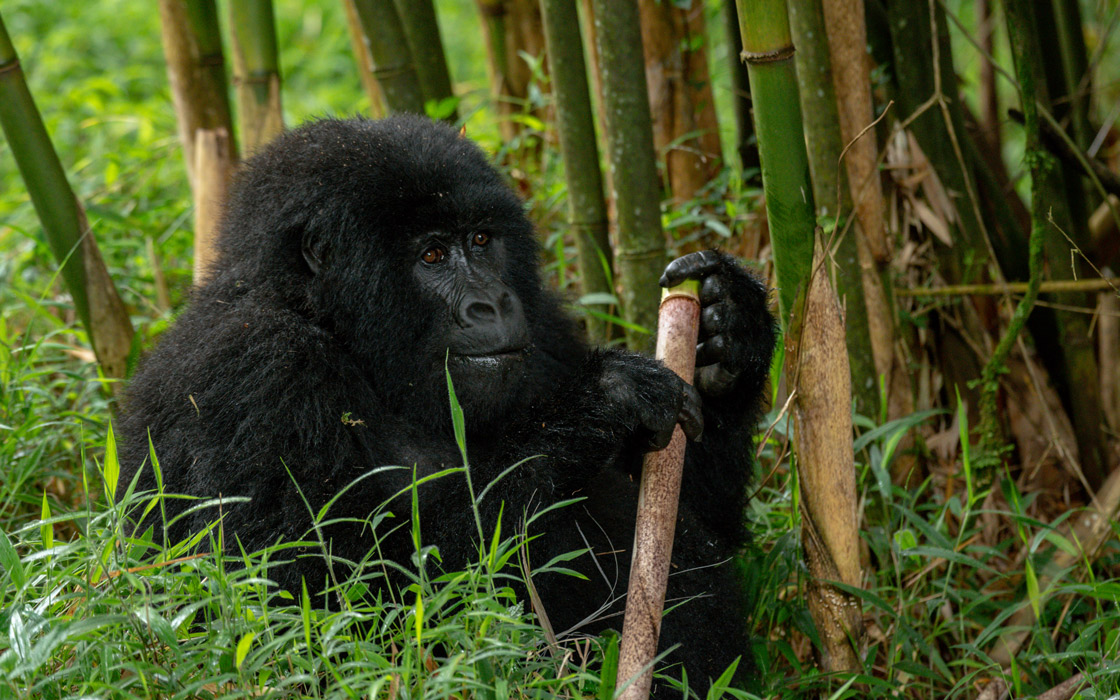
Ultimate Mgahinga Gorilla Park Guide: Trek & Explore 2026
Mgahinga Gorilla National Park stands as a beacon for adventure seekers and nature enthusiasts alike, offering an unparalleled opportunity to witness the majestic mountain gorillas in their natural habitat.
Imagine trekking through dense bamboo forests, the air thick with anticipation, only to come face-to-face with a silverback gorilla, its powerful gaze locking onto yours amid the echoing calls of exotic birds.
This smallest national park in Uganda, spanning just 33.7 square kilometers, punches well above its weight, blending thrilling wildlife encounters with volcanic hikes and rich cultural experiences.
Located in the southwestern corner of Uganda, bordering Rwanda and the Democratic Republic of Congo, Mgahinga Gorilla National Park is home to endangered mountain gorillas and playful golden monkeys, making it a must-visit for eco-tourists planning a trip from Kampala.
Whether you’re drawn by the allure of gorilla trekking in Mgahinga or the challenge of scaling ancient volcanoes, this park promises memories that last a lifetime.
In this comprehensive guide, we’ll delve into its history, wildlife, top activities like gorilla trekking and volcano hiking, practical planning tips including Mgahinga permit costs, and sustainable tourism practices to ensure your visit in 2026 is both responsible and rewarding.
If you’re ready to embark on this adventure, start by securing your permits early—book your Uganda gorilla permit today through trusted affiliates for seamless planning. Contact us Today.
As one of Uganda’s hidden gems, Mgahinga Gorilla National Park attracts visitors from around the world, particularly those interested in primate safaris and cultural immersion.
Its proximity to Kampala, about 540 kilometers away, makes it accessible for domestic travelers looking for a weekend escape or an extended holiday.
The park’s unique position within the Virunga Conservation Area not only protects biodiversity but also fosters cross-border conservation efforts.
Quick facts to note: Established in 1991, it safeguards three extinct volcanoes—Mounts Muhavura, Gahinga, and Sabyinyo—and hosts the Nyakagezi gorilla family, one of the few habituated groups available for trekking.
For eco-tourists from Kampala, the journey itself is part of the allure, winding through scenic highlands and offering stops at local markets.
This article will equip you with everything needed to plan your visit, from best time to visit Mgahinga to budgeting for Mgahinga accommodations.
By the end, you’ll understand why this park isn’t just a destination but a transformative experience.
Don’t forget to pack your sense of wonder—and if you’re booking from Kampala, consider group tours for cost efficiency.
History and Background of Mgahinga Gorilla National Park
The story of Mgahinga Gorilla National Park is deeply intertwined with the volcanic landscapes and human histories of East Africa, evolving from ancient geological formations to a modern bastion of conservation.
Formed millions of years ago through tectonic activity, the park’s three iconic volcanoes—Mount Muhavura (4,127 meters), Mount Gahinga (3,474 meters), and Mount Sabyinyo (3,669 meters)—dominate the skyline, their slopes blanketed in lush vegetation that supports a thriving ecosystem.
These volcanoes, part of the larger Virunga chain, have shaped the region’s biodiversity, creating diverse habitats from bamboo forests to alpine meadows.
Historically, the area was inhabited by the indigenous Batwa people, often referred to as pygmy hunters, who lived in harmony with the forest for centuries, relying on its resources for survival.
However, colonial influences in the early 20th century began altering this balance, with European explorers and administrators designating forest reserves in the 1930s to protect timber and wildlife, inadvertently displacing the Batwa communities.
Post-independence, Uganda’s government recognized the area’s ecological value, gazetting Mgahinga Gorilla National Park in 1991 as part of the transboundary Virunga Conservation Area, a collaborative effort with Rwanda and DRC to safeguard the endangered mountain gorillas.
This move was crucial amid rising poaching threats and habitat loss, with gorilla habituation programs starting in the 1990s to promote eco-tourism as a sustainable alternative to exploitation.
The Batwa’s displacement during park establishment remains a poignant chapter, but recent initiatives have integrated them into conservation roles, such as guiding cultural trails, ensuring their traditional knowledge contributes to park management.
Today, the park emphasizes UNESCO World Heritage potential, highlighting its role in global biodiversity hotspots.
Conservation efforts have seen gorilla populations stabilize, with Mgahinga hosting the migratory Nyakagezi family that crosses borders, underscoring the importance of international cooperation.
To visualize this evolution, here’s a timeline of key events:
| Year | Event |
|---|---|
| 1930s | Initial forest reserves established under colonial rule |
| 1991 | Gazetted as Mgahinga Gorilla National Park |
| 1990s | Gorilla habituation begins, boosting tourism |
| 2020s | Increased tourism post-COVID, with enhanced community programs |
Location, Accessibility, and How to Get There
Strategically positioned in Kisoro district, southwestern Uganda, Mgahinga Gorilla National Park offers a gateway to the Virunga volcanoes while being remarkably accessible from major hubs like Kampala.
At approximately 540 kilometers from the capital, the park’s location near the borders of Rwanda and DRC allows for multi-country itineraries, such as combining gorilla trekking in Mgahinga with visits to Volcanoes National Park in Rwanda.
The geography features dramatic volcanic terrain, with elevations ranging from 2,227 to 4,127 meters, providing stunning vistas and varied trekking challenges.
For travelers from Kampala, the most popular route is via Kabale, a scenic drive through rolling hills and tea plantations, offering opportunities to stop at cultural sites or local eateries for authentic Ugandan matooke.
Accessibility has improved in recent years, with upgraded roads reducing travel times and enhancing safety.
Driving from Kampala takes 8-10 hours, ideal for those seeking flexibility to explore en route.
Public buses from Kampala to Kisoro run daily, providing an affordable option, though they can be crowded.
For quicker access, charter flights to Kisoro Airstrip cut the journey to about an hour, perfect for time-constrained visitors.
Once in Kisoro, park headquarters at Ntebeko Gate is just a short drive away.
If planning a cross-border trip, note visa requirements and use Cyanika border post for Rwanda entry.
Compare transport options in this table for better planning:
| Option | Time from Kampala | Cost (approx. USD) | Pros/Cons |
|---|---|---|---|
| Drive | 8-10 hours | 50-100 (fuel) | Flexible, scenic / Tiring |
| Bus | 10-12 hours | 20-30 | Affordable / Crowded |
| Flight | 1 hour | 150-200 | Quick / Limited schedules |
Tips for border crossings include carrying valid passports and permits, ensuring your Mgahinga adventure starts smoothly from Kampala.
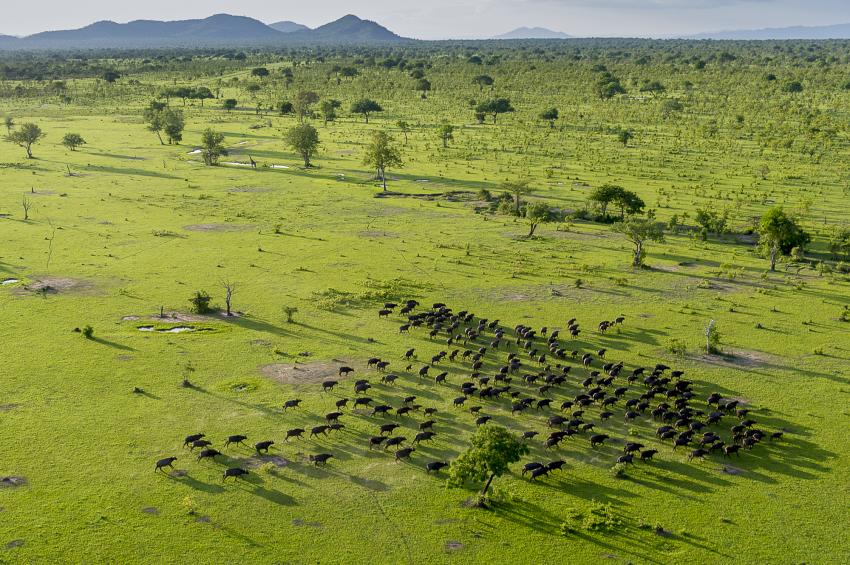
Wildlife and Biodiversity in Mgahinga
Mgahinga Gorilla National Park boasts an astonishing array of wildlife and biodiversity, making it a paradise for nature lovers and a critical habitat for endangered species.
The park’s compact size belies its richness, hosting over 76 mammal species and 270 bird varieties within its volcanic ecosystems.
At the heart are the mountain gorillas, with the Nyakagezi family—comprising around 10 individuals—serving as the star attraction.
These gentle giants, sharing 98% of human DNA, exhibit complex social behaviors, from grooming rituals to playful interactions among juveniles.
Their diet primarily consists of bamboo shoots, leaves, and fruits, which they forage in the dense undergrowth, facing threats like habitat fragmentation and disease transmission from humans.
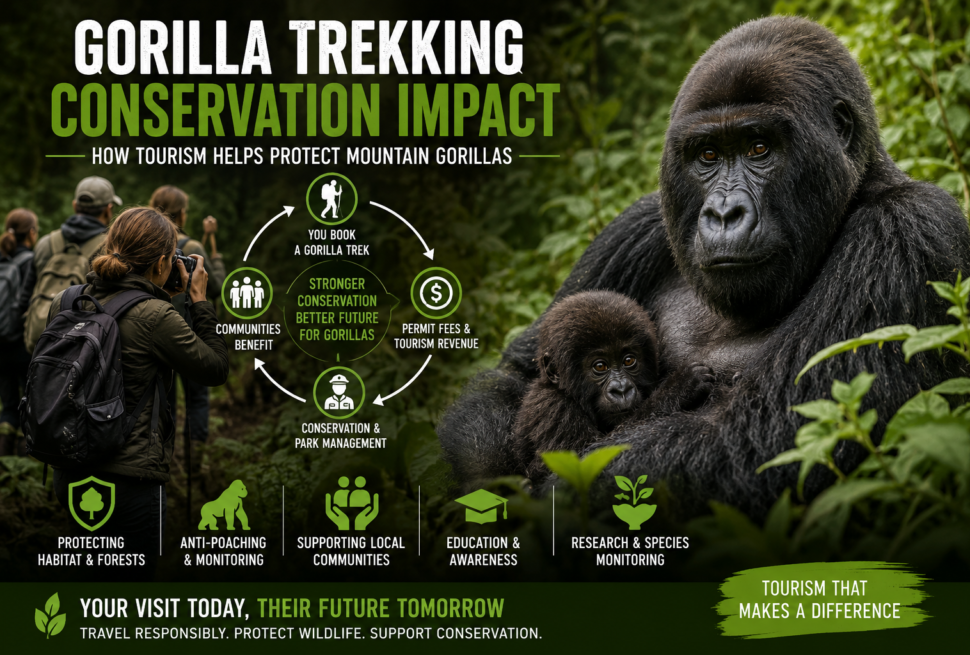
Conservation stats reveal that Mgahinga contributes to protecting half of the world’s remaining 1,000+ mountain gorillas, a success story driven by anti-poaching patrols and community involvement.
Beyond gorillas, golden monkeys—endemic to the Virunga region—add a splash of color with their vibrant fur and acrobatic antics in bamboo thickets.
Tracking these primates offers valuable tips: Move quietly, use binoculars for distant views, and follow ranger guides to avoid disturbing troops of up to 100 individuals.
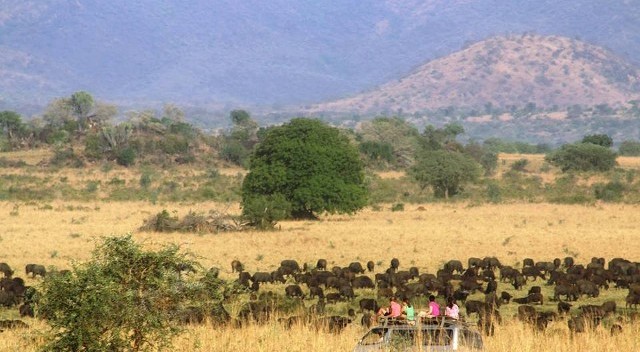
Other primates include black-and-white colobus monkeys, while larger mammals like forest elephants and buffaloes roam the lower slopes, though sightings are rarer due to the park’s size.
Bird enthusiasts will delight in over 270 species, such as the striking Rwenzori turaco and Albertine Rift endemics like the handsome francolin.
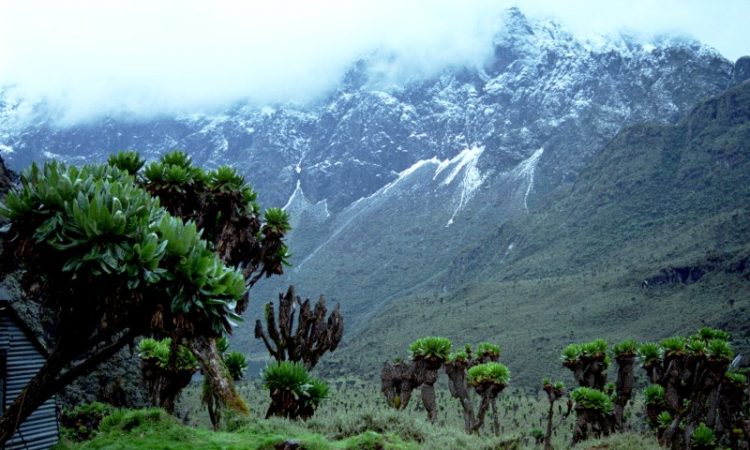
Best spotting spots include the bamboo zone for primates and alpine meadows for birds, where diverse flora—from giant lobelias to heather—supports this avian haven.
The park’s flora enhances its biodiversity, with bamboo forests transitioning to montane zones, creating microhabitats that sustain everything from insects to apex predators.
This intricate web underscores Mgahinga’s role in global conservation, where every visit supports ongoing efforts to preserve these treasures for future generations.
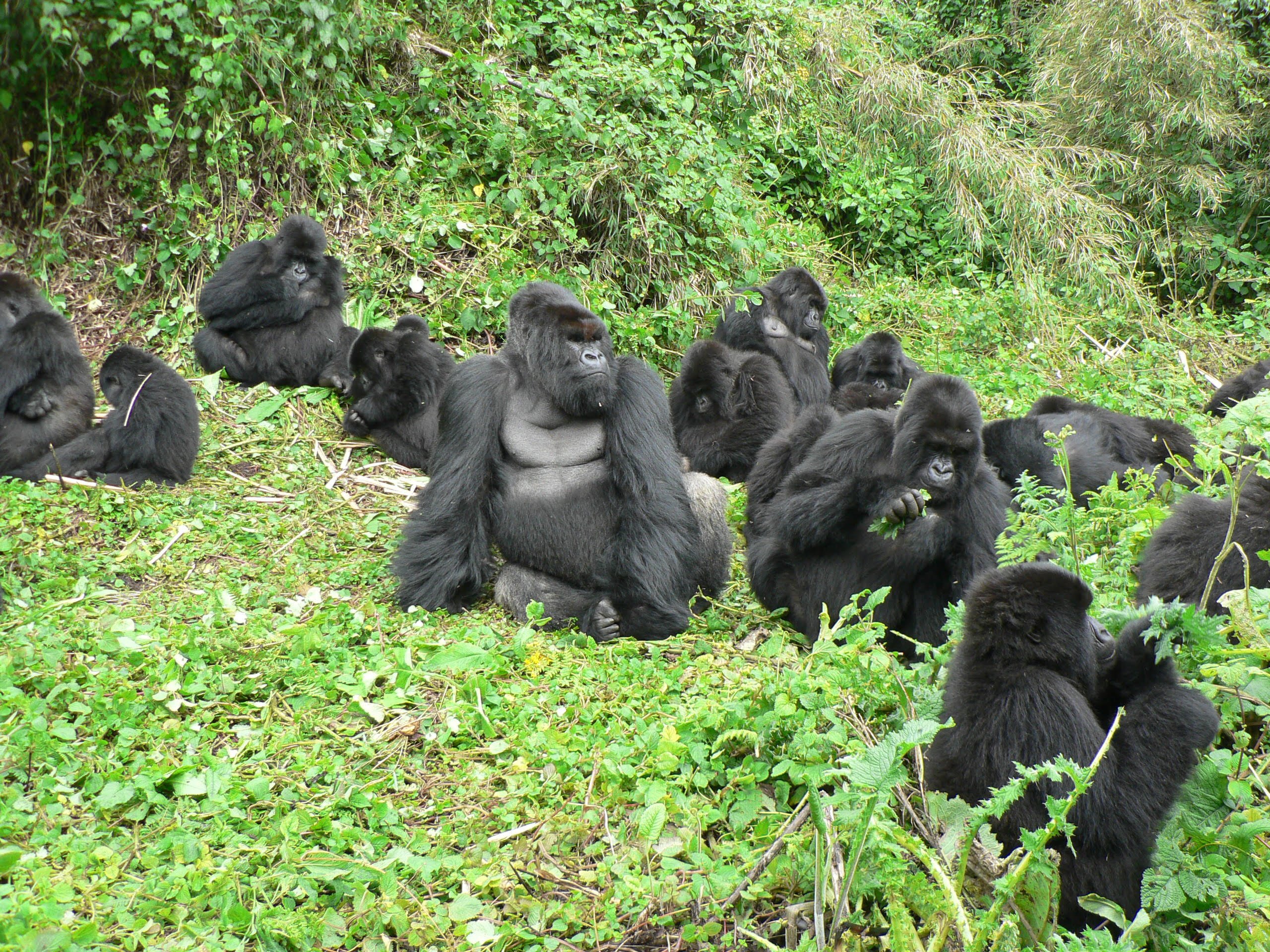
Mountain Gorillas
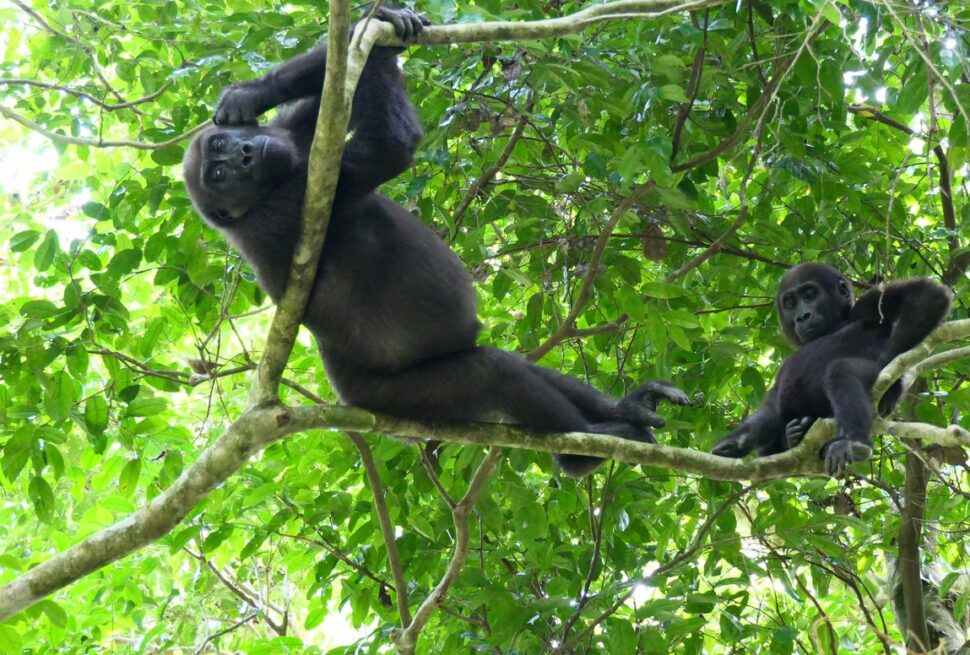
Delving deeper into mountain gorillas in Mgahinga Gorilla National Park, these primates captivate with their intelligence and family dynamics, often led by a dominant silverback who protects the group from threats.
Behaviorally, they spend mornings foraging and afternoons resting, with mothers nurturing infants in a display of tender care. Diets rich in vegetation help them maintain their massive builds, up to 200 kilograms for males.
Threats persist, including poaching and climate change impacting food sources, but habituation has allowed safe tourism, generating revenue for protection.
Golden Monkeys and Other Primates
Golden monkeys shine as a highlight, their troops leaping through canopies with infectious energy.
Tracking tips involve early starts and patience, rewarding visitors with close encounters.
Other primates like L’Hoest’s monkeys add diversity, each species adapted to the park’s altitudes.

Birds and Other Wildlife
The avian world thrives, with Rwenzori turaco calls echoing across valleys.
Spotting spots near swamps yield rare sightings, while elephants leave trails in the undergrowth, emphasizing Mgahinga’s holistic biodiversity.

Top Activities and Experiences
The core appeal of Mgahinga Gorilla National Park lies in its diverse activities, designed to immerse visitors in nature’s wonders while promoting conservation.
From adrenaline-pumping treks to cultural insights, these experiences cater to various fitness levels and interests, ensuring every traveler leaves with unforgettable stories.

Gorilla Trekking
Gorilla trekking in Mgahinga is the pinnacle activity, requiring a Uganda gorilla permit costing $800 for foreign non-residents in 2026, secured through the Uganda Wildlife Authority (UWA).
Groups are limited to eight people per trek, lasting 2-6 hours depending on gorilla locations.
Expect moderate to strenuous hikes through muddy trails, demanding good fitness—train with cardio and hill walks beforehand.
What to anticipate: Rangers lead you to the Nyakagezi family, allowing one hour of observation at a 7-meter distance, witnessing raw behaviors like feeding and playing.
It’s emotionally profound, often described as life-changing.
Golden Monkey Tracking
As a cheaper alternative at $100 per permit, golden monkey tracking offers playful encounters with these agile primates.
Treks are shorter, 1-4 hours, focusing on bamboo zones where troops frolic, providing photography opportunities and insights into their social structures.
Volcano Hiking
Volcano hiking in Mgahinga challenges adventurers with summits offering panoramic views.
Mount Muhavura (4,127m) is the toughest, a full-day ascent with steep sections rewarding climbers with crater lakes.
Mount Gahinga and Mount Sabyinyo vary in difficulty—moderate for Gahinga, advanced for Sabyinyo due to its tri-country summit.
Difficulty levels suit intermediates; expect stunning flora and potential wildlife sightings.

Batwa Cultural Trail
The Batwa cultural trail provides a guided journey with pygmy hunters, learning survival skills like fire-making and herbal medicine.
This 3-4 hour experience honors the Batwa’s heritage, fostering cultural appreciation.
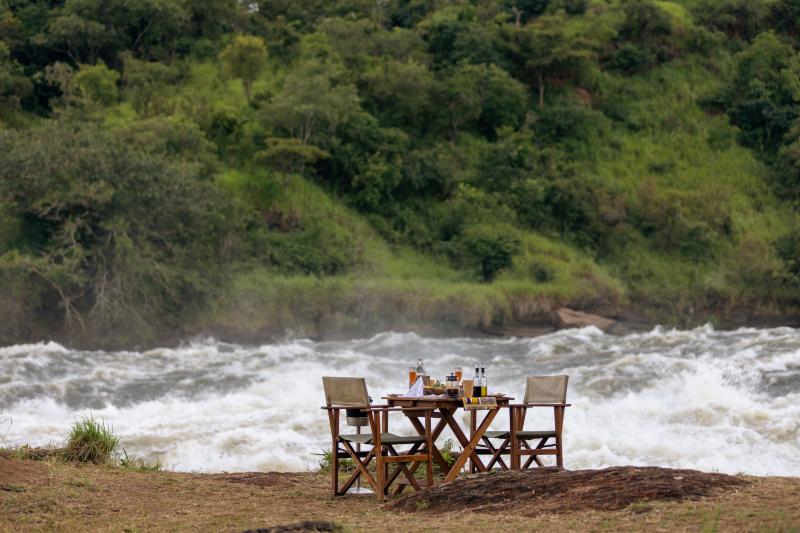
Bird Watching and Nature Walks
For relaxed pursuits, bird watching along trails like the Gorge Trail reveals endemic species.
Nature walks explore flora, with bullet-point essentials for packing:
- Rain gear for unpredictable weather
- Sturdy boots for traction
- Binoculars for distant views
- Insect repellent to ward off bites
These activities make Mgahinga a versatile destination.

Best Time to Visit and Weather Guide
Timing your visit to Mgahinga Gorilla National Park is crucial for optimal experiences, with weather patterns influencing trail conditions and wildlife visibility.
The dry seasons—June to September and December to February—are ideal for gorilla trekking and volcano hiking, featuring less mud and clearer paths, reducing slip risks.
Temperatures hover around 15-25°C, comfortable for outdoor activities, though nights can dip lower at higher altitudes.
In contrast, wet seasons from March to May and October to November bring heavy rains, making trails slippery but offering lush scenery and fewer crowds, with discounted rates on accommodations.
A monthly breakdown helps refine plans:
| Month | Weather | Pros for Visit |
|---|---|---|
| Jan-Feb | Dry, warm | Clear trails, high gorilla visibility |
| Mar-May | Rainy | Fewer crowds, bird migration |
| Jun-Sep | Dry, cool | Best trekking, volcano hikes |
| Oct-Nov | Rainy | Lush vegetation, budget-friendly |
| Dec | Dry, mild | Holiday vibes, good weather |
For 2026, factor in potential festivals like the Kisoro cultural events in July, enhancing visits with local celebrations.
Permits, Costs, and Planning Your Trip
Effective planning for Mgahinga Gorilla National Park revolves around securing permits and budgeting wisely.
The gorilla trekking permit costs $800 for foreigners, booked via UWA well in advance due to limited availability—only 8 per group daily.
Park entry is $40 per day, with additional fees for activities like golden monkey tracking at $100.
Total costs vary: Expect $1,000-3,000 per person for a 3-day trip, including transport and lodging.
Budget breakdown table:
| Item | Cost (USD) | Notes |
|---|---|---|
| Gorilla Permit | 800 | Per person, advance booking |
| Accommodation | 100-500/night | Lodge vs. camping |
| Transport | 50-200 | From Kampala |
Accommodation and Dining Options
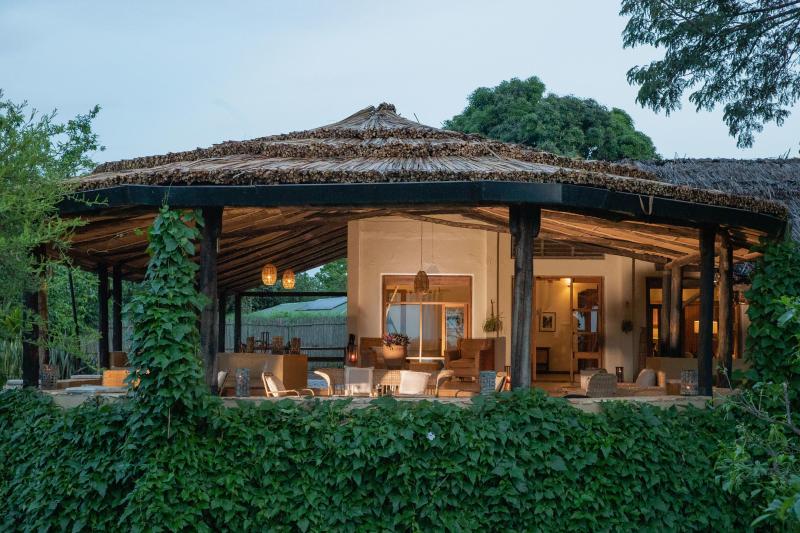
Accommodations in Mgahinga Gorilla National Park range from luxury to budget, ensuring options for all.
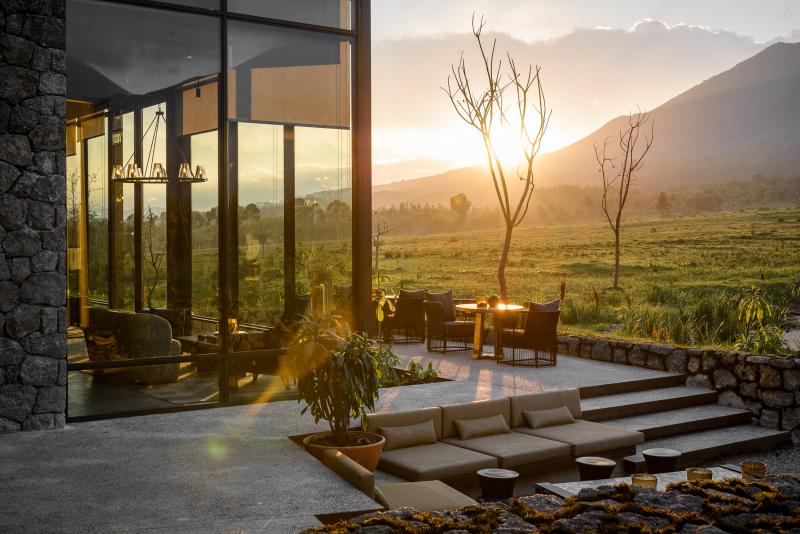
Luxury choices like Mount Gahinga Lodge offer stone bandas with volcano views, spa services, and gourmet meals, ideal for post-trek relaxation.
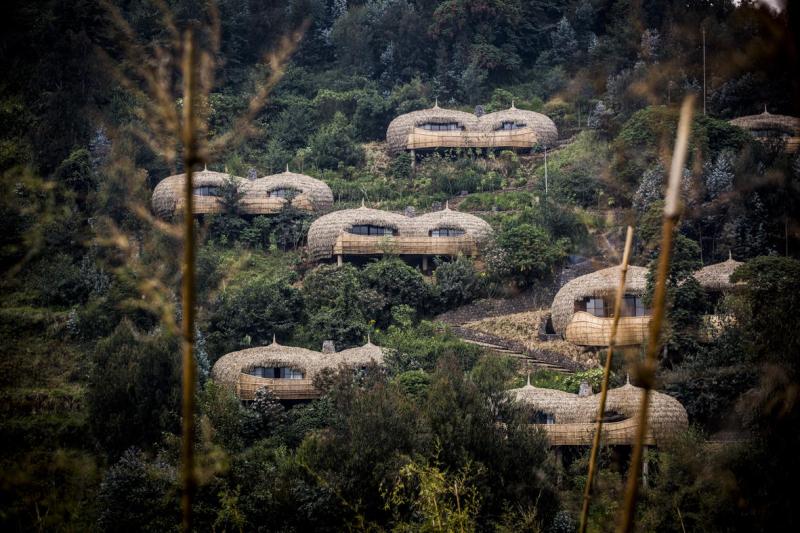
Mid-range includes Traveller’s Rest Hotel in Kisoro, with comfortable rooms and proximity to the park.
Budget options like camping at Ntebeko provide immersive nature stays.
Pros/cons:
- Luxury: Ultimate comfort, but pricier
- Mid-range: Balanced value, convenient
- Budget: Affordable, authentic
Dining features local Ugandan cuisine: Try matooke (plantain mash) and fresh Kisoro produce, often farm-to-table in lodges.
Conservation Efforts and Sustainable Tourism
Mgahinga Gorilla National Park thrives through robust conservation, focusing on anti-poaching and habitat restoration in the Virungas.
Revenue sharing with Batwa communities funds education and healthcare, while visitors contribute via eco-friendly practices like sticking to trails and buying local crafts.
Practical Tips and Safety for Visitors
Health precautions include yellow fever vaccinations and malaria prophylaxis.
Safety mandates guided tours; pack layers, water, and respect gorilla etiquette: Maintain 7m distance, limit to one hour.
From Kampala, prepare for altitude with acclimatization.
Conclusion
In summary, Mgahinga Gorilla National Park encapsulates Uganda’s wild beauty, from gorilla trekking to cultural trails. Visit responsibly in 2026—plan your adventure today and book with GoSilverback Safaris.
[…] Mgahinga Gorilla National Park […]