
The Secrets of Silverback Gorilla Reproduction and Courtship Mating Behaviors 2026
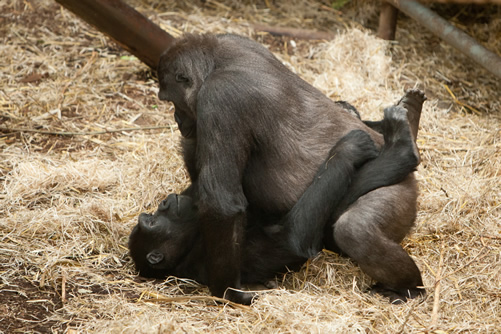
Silverback gorillas reproduce sexually. The dominant male, the silverback, mates with adult females in his troop. Courtship involves gentle grooming, close body contact, and affectionate gestures.
During mating, the male mounts the female from behind while she signals receptivity through posture and vocalizations.
Females typically ovulate once per cycle, making timing crucial for conception. Gestation lasts about 8.5 months, after which the female gives birth to a single infant, rarely twins.
The silverback plays a protective role, guarding both mother and baby, ensuring their safety, and maintaining the social structure essential for successful reproduction.
Silverback Gorilla Reproduction centers on the dominant male’s role in protecting, leading, and fathering most offspring within a troop.
A silverback typically leads a family group of 5–30 gorillas and is the primary breeding male.
Female gorillas reach sexual maturity around 8–10 years, while males become true silverbacks at about 12–15 years.
There is no fixed breeding season. Females signal readiness to mate through subtle behaviors and body cues.
After mating, the gestation period lasts about 8.5 months (255 days), similar to humans. Usually, a single infant is born, weighing about 2 kg (4.4 lbs).
Infant gorillas are highly dependent on their mothers for the first three years, riding on their backs and nursing frequently.
The silverback plays a crucial protective role, defending infants from predators and rival males.
Gorilla birth intervals average 4–6 years, contributing to slow population growth.
This low reproductive rate makes silverback gorilla conservation critical, as population recovery takes decades.
Introduction to Silverback Gorilla Reproduction
Deep in the misty rainforests of Central Africa, a massive silverback gorilla rises from the foliage.
His broad chest, powerful arms, and unmistakable silver-gray saddle signal dominance.
With a single stare or chest beat, he controls the movement of the entire group.
This commanding presence is not just about strength—it is central to silverback gorilla reproduction and the survival of the species.
A silverback is a fully mature male gorilla, typically 12 years or older, distinguished by the silver hair running across his back and hips.
This physical transformation marks reproductive maturity and leadership.
As the dominant male, the silverback is the primary breeder, protector, and decision-maker of the troop, which may include 5 to 30 individuals.
Reproduction plays a critical role in gorilla survival, yet it is naturally slow. Female gorillas give birth to only one infant every 4–6 years, following an 8.5-month gestation.
Combined with high infant mortality, habitat loss, poaching, and disease, these low birth rates place gorillas at constant risk.
This makes successful reproduction vital—and fragile.
The topic of silverback gorilla reproduction fascinates researchers because it blends biology, social behavior, and conservation science.
Understanding how silverbacks mate, protect offspring, and maintain group stability helps scientists develop effective protection strategies for endangered gorilla populations.
This guide explores the anatomy, mating behaviors, reproductive cycles, and challenges faced by silverback gorillas in the wild.
By examining how reproduction works—and why it is under threat—we gain insight into one of nature’s most powerful yet vulnerable primates.
Anatomy and Physiology of Silverback Gorillas in Reproduction
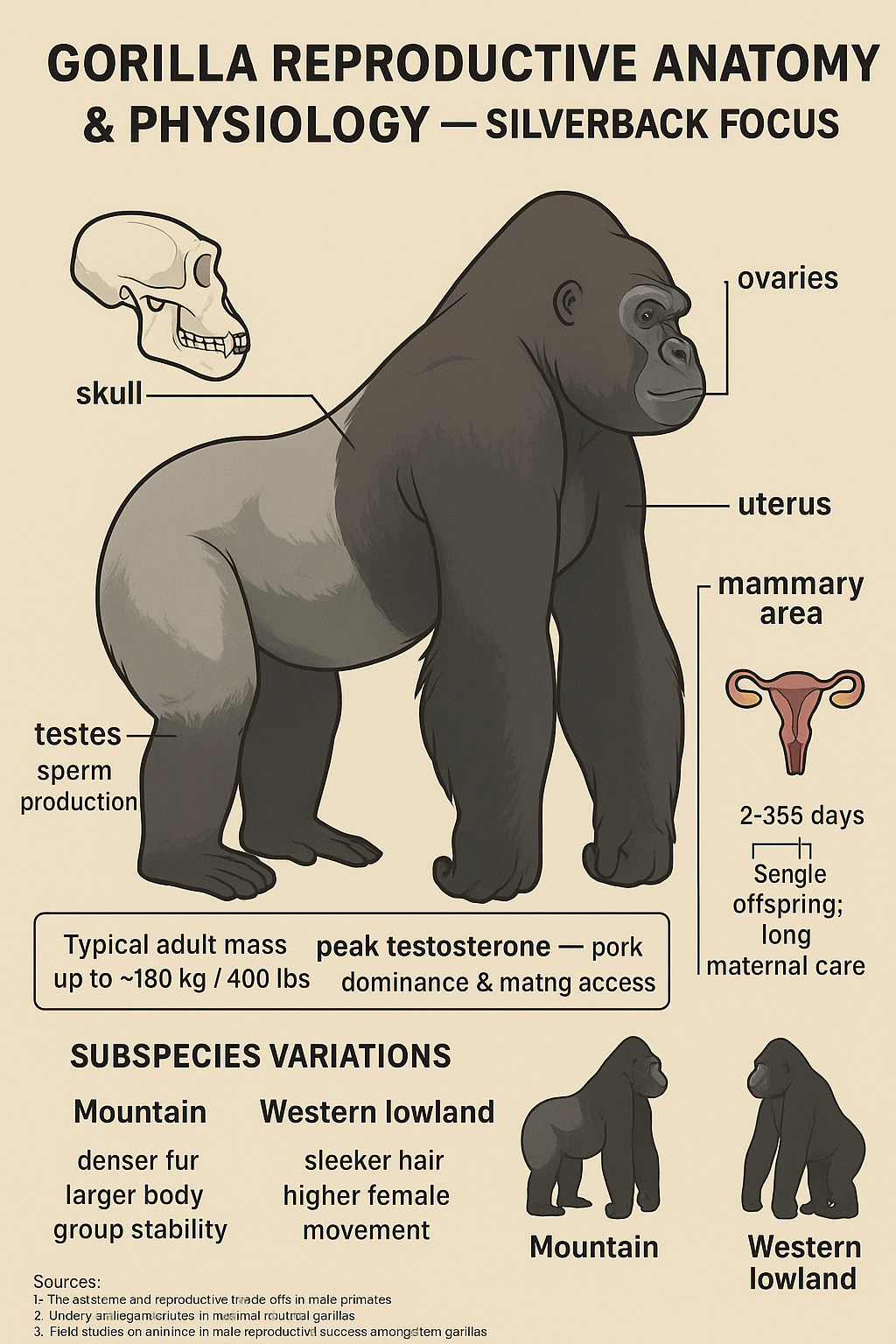
The male gorilla’s reproductive anatomy is built for dominance and reproductive effort.
Adult silverbacks (mature males, often 12+ years and up to ~180 kg/400 lbs) have proportionally large testes relative to body size for a polygynous primate, and their endocrine profile is dominated by androgens — especially testosterone — which peaks in dominant males and correlates with mating effort, aggression, and social status.
Testosterone rises during social challenges and when maintaining harems, linking physiology to the silverback’s role as primary breeder.
Key male structures include the testes (sperm production), epididymis (sperm maturation), and a relatively short, muscular penis adapted to the species’ mating style.
High testosterone supports muscle mass and secondary sexual traits (body size, sagittal crest development in some males) that reinforce dominance and mating access.
Variation in urinary and fecal androgen measurements across wild and captive studies shows clear age- and status-related patterns.
Female counterparts are anatomically adapted for a slow, careful reproductive strategy.
Females possess paired ovaries that cyclically produce follicles and hormones; their estrous (reproductive) cycle is typically reported at about 28–33 days depending on the subspecies and individual.
Outward signs of ovulation are subtle compared with other apes — there are no dramatic sexual swellings — so mate timing is often cryptic and influenced by social relationships with the silverback.
Gestation averages about 8.5 months (≈255 days) and births are almost always singletons, followed by prolonged maternal care.
Subspecies variations and reproductive implications
Mountain gorillas (e.g., Virunga populations, Gorilla beringei beringei) and western lowland gorillas (Gorilla gorilla gorilla) show anatomical and social differences that affect reproduction.
Mountain gorillas are larger-bodied with longer, denser fur and more pronounced sagittal crests in males; they typically live in stable multimale or single-silverback groups with longer inter-birth intervals tied to ecology.
Western lowland gorillas tend to have sleeker hair, sometimes different group compositions, and higher rates of female emigration — factors that can change mating patterns, variance in male siring success, and effective population fertility.
Studies show male reproductive success varies with harem size and social structure across subspecies.
Scientific backing (selected)
-
Testosterone and reproductive trade-offs in male primates — review showing androgen links to mating effort.
-
Urinary androgen studies in western lowland gorillas — age/status variation in androgens.
-
Field studies on variance in male reproductive success among western gorillas.
-
Park/ecotourism and species guides reporting cycle lengths and gestation.
How Long Does Gorilla Sex Last?
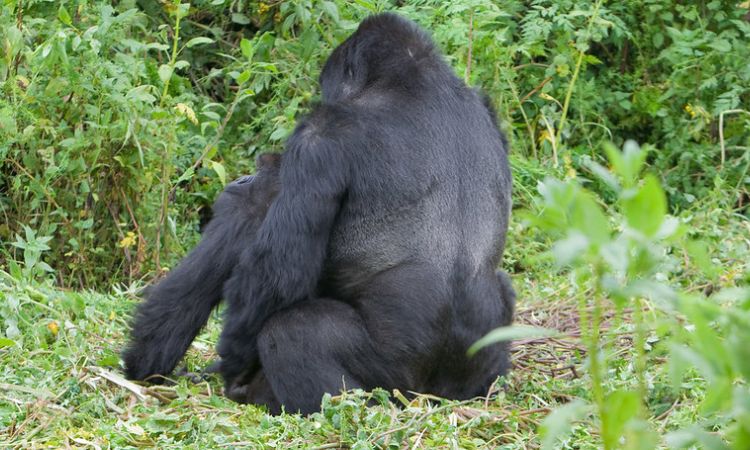
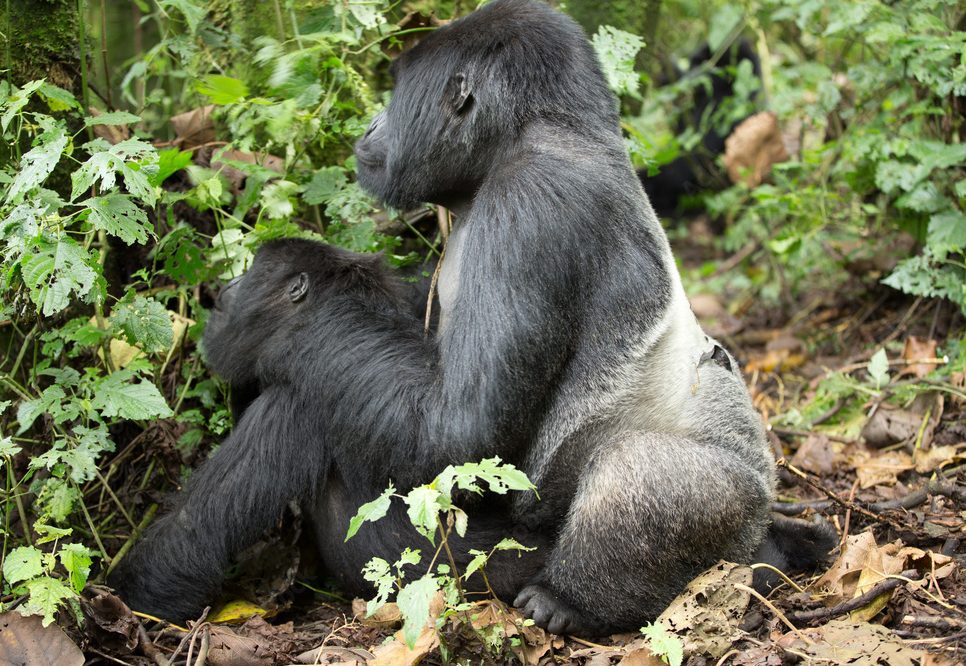
Gorilla sex is remarkably brief. On average, mountain gorilla copulation lasts between 30 seconds and 2 minutes, with most encounters finishing in under 60 seconds.
Silverbacks mount females from behind in a quick, efficient mating that rarely exceeds 90 seconds. Unlike humans, gorillas do not engage in prolonged foreplay or extended sessions.
Females are only receptive for a few days during their cycle, so mating is fast and purposeful. This short duration is typical across all gorilla subspecies and helps minimize vulnerability to predators or rival males in the dense forests of Bwindi and Virunga.
Mating Behaviors and Courtship Rituals of Silverback Gorillas
Silverback gorilla mating behavior is shaped by power, patience, and complex social intelligence.
In the dense forests of Central Africa, reproduction is not driven by chance encounters but by carefully managed dominance systems, subtle courtship signals, and constant competition.
These behaviors define how silverback gorilla reproduction succeeds—or fails—in the wild.
Dominance and Polygamy: Control of the Harem
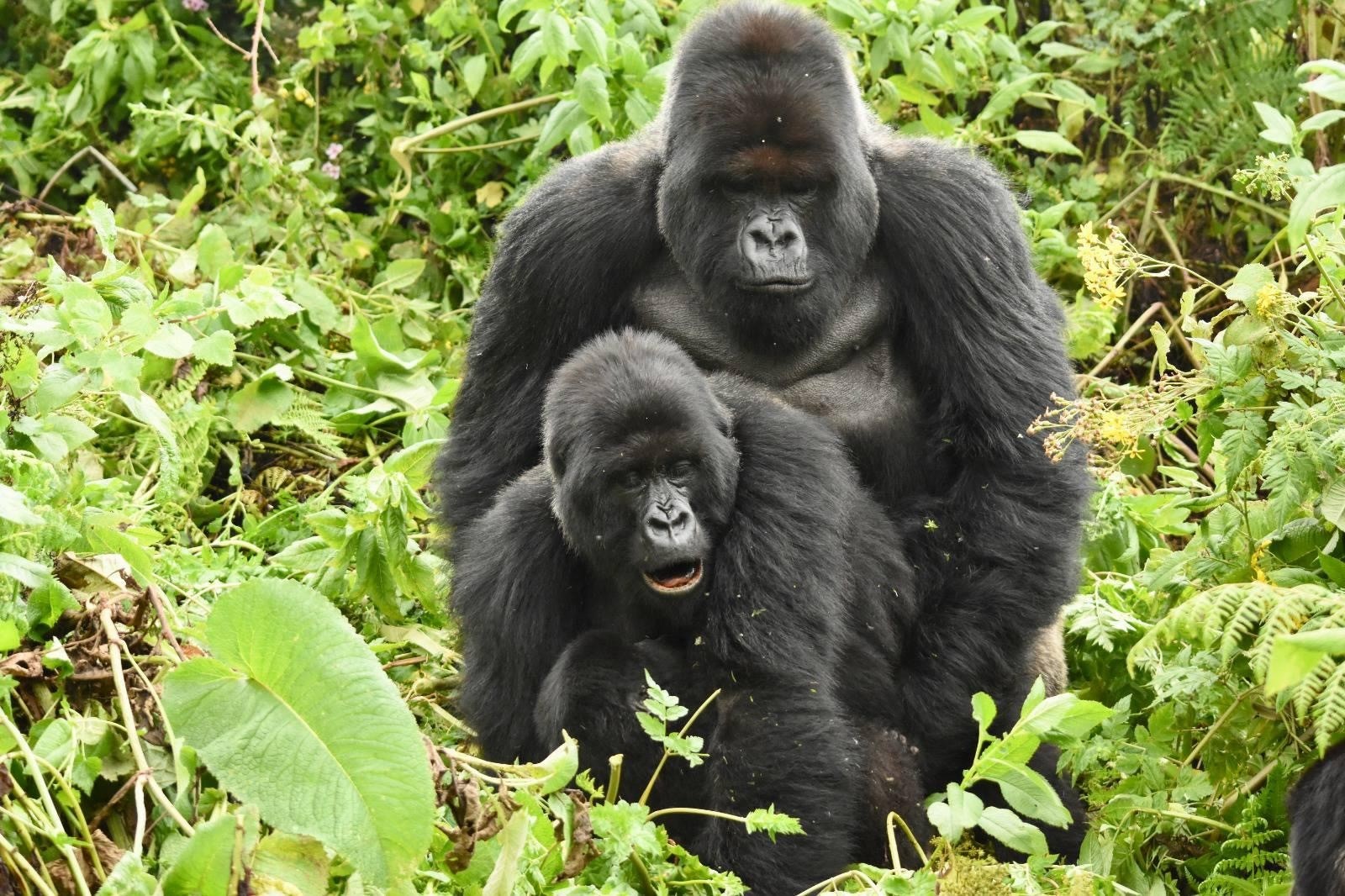
Silverbacks are polygynous, meaning one dominant male typically mates with multiple females within his group.
A typical troop ranges from 5 to 30 individuals, including adult females, juveniles, infants, and sometimes subordinate males.
The silverback maintains exclusive mating rights, enforced through intimidation, displays, and physical strength.
Dominance is not just physical—it is social. A successful silverback provides protection, resolves conflicts, and leads the group to feeding grounds.
Females often remain loyal to males who demonstrate calm leadership rather than constant aggression. However, dominance is never permanent.
Rival males, especially younger blackbacks, constantly assess opportunities to challenge aging silverbacks, making mating access a high-stakes evolutionary reward.
Initiation and Courtship Signals
Courtship in gorillas is subtle and quiet, especially compared to other primates. Female gorillas initiate most mating encounters.
When receptive, a female may slowly approach the silverback, maintain prolonged eye contact, and purse her lips or tilt her head—signals unique to gorilla social communication.
In response, the silverback may grunt softly, touch the female, or position himself for mating.
More dramatic displays—chest-beating, charging, or vocalizations—are usually reserved for rival males rather than courtship.
Aggression toward females is rare and counterproductive; forced mating is not typical in gorilla societies.
This mutual signaling reinforces social bonds and reduces tension within the group.
The Mating Process
Silverback gorillas breed year-round, with no fixed mating season.
This is advantageous in stable rainforest environments where food is available throughout the year.
One of the most remarkable aspects of gorilla mating is face-to-face copulation, a behavior shared with humans and bonobos but rare among apes.
This position is believed to strengthen social bonding and allow better communication during mating.
Copulation can last up to 15 minutes, significantly longer than in many mammals, and may occur repeatedly over several days during a female’s fertile window.
Despite frequent mating, actual conception rates are low, reflecting the species’ slow reproductive pace.
Competition, Risk, and Reproductive Strategies
Reproduction is threatened by infanticide, one of the greatest risks to infant gorillas.
When a new silverback takes over a group, he may kill unrelated infants to bring females back into estrus sooner.
This brutal strategy accelerates his own reproductive success.
To counter this risk, females employ several strategies:
-
Group transfers to avoid inbreeding or aggressive males
-
Mating with multiple males in multi-male groups to confuse paternity
-
Forming strong bonds with protective silverbacks
Some gorilla groups include more than one adult male, reducing the likelihood of infanticide and increasing infant survival.
Silverback vs. Blackback Rivalry
A blackback is a sexually mature male gorilla (8–12 years) who has not yet developed the iconic silver fur.
These males are the primary challengers to dominant silverbacks.
Rivalry begins subtly—through posture, proximity, and vocal exchanges—but can escalate into violent confrontations.
Blackbacks may attempt to steal females or split the group, especially if the silverback is aging or injured.
Physical battles are rare but intense, involving bites, charges, and grappling. Most conflicts are resolved through displays, as serious injury can be fatal.
Successful blackbacks either overthrow the silverback or leave to form their own group.
This rivalry is a key driver of natural selection, ensuring only the strongest and most socially competent males reproduce.
Female Choice in Mating
Despite the silverback’s dominance, female choice plays a critical role in gorilla mating.
Females actively select males based on protection, stability, and parenting potential rather than brute strength alone.
Studies show females are more likely to mate with silverbacks who:
-
Defend infants effectively
-
Maintain group cohesion
-
Avoid excessive aggression
Females may refuse mating attempts or transfer to other groups if dissatisfied.
This selective behavior reduces infanticide risk and improves offspring survival.
In evolutionary terms, female choice balances male dominance, shaping gorilla social systems over generations.
Evolutionary Insights and Human Parallels
Research dating back to early aggression studies in 1982 revealed that gorilla mating systems are less violent and more socially regulated than once believed.
The emphasis on bonding, face-to-face mating, long parental care, and female choice offers striking parallels to human reproductive behavior, providing valuable insights into primate evolution.
Gestation, Birth, and Neonatal Development in Silverback Gorillas
The survival of gorilla populations depends heavily on successful pregnancies and early infant care.
In silverback gorilla reproduction, gestation, birth, and neonatal development are slow, delicate processes shaped by biology, maternal investment, and environmental pressures.
Gestation Period: A Long and Demanding Pregnancy
Female gorillas experience a gestation period of approximately 8.5 months, ranging from 251 to 295 days, closely mirroring human pregnancy length.
There is no seasonal breeding; conception can occur at any time of year, provided the female is healthy and socially stable.
Maternal nutrition plays a critical role during pregnancy. Females rely on a diet rich in leaves, shoots, fruit, and bark to sustain fetal growth.
Poor food availability—often caused by habitat loss or environmental stress—can lead to miscarriage, low birth weight, or weak infants.
Pregnant females reduce travel distances and rest more frequently, while the silverback ensures group safety and access to feeding areas.
Because ovulation signals are subtle and fertility rates are low, many matings do not result in pregnancy, reinforcing the fragility of gorilla reproduction.
Birth Process: Solitary and Intimate
Gorilla births are solitary events. Unlike many social mammals, females give birth alone, usually at night or in secluded forest cover.
There is no assistance from other group members.
Newborn gorillas are extremely small relative to adult size, weighing only 2–4 pounds (0.9–1.8 kg) at birth.
Despite the silverback’s massive stature, infants are fragile and underdeveloped.
Immediately after birth, the mother cleans the infant and initiates skin-to-skin bonding, a crucial step for temperature regulation and emotional attachment.
The silverback does not directly assist in delivery but often remains nearby afterward, providing protection. His presence reduces threats from predators or rival males during this vulnerable period.
Early Development: Total Dependence
Gorilla infants are born helpless, unable to support their own weight, regulate body temperature efficiently, or move independently.
For the first 3–4 months, infants are carried ventrally (on the mother’s chest), clinging tightly to her fur.
After this period, they transition to dorsal carrying (on the mother’s back), which continues for up to three years.
Suckling occurs frequently—about every three hours—both day and night. Breast milk remains the primary source of nutrition for the first 12 months, although infants begin sampling solid foods at around 4–6 months.
Motor development is gradual:
-
2 months: lifting head
-
5–6 months: sitting independently
-
8–9 months: crawling
-
12 months: walking short distances
Throughout this phase, maternal attention is constant, while the silverback’s role is indirect but essential—defending the infant and maintaining group stability.
Risks and Mortality
Infant mortality in gorillas is high, with estimates reaching up to 43% in the wild. The most common causes include:
-
Disease
-
Infanticide following male takeovers
-
Malnutrition
-
Accidental injuries
Twin births are extremely rare and rarely survive due to the mother’s limited ability to nurse two infants simultaneously.
Survival rates differ significantly between environments. In protected captivity and well-managed reserves, infant survival exceeds 90%, while wild populations face far harsher conditions.
Birth Intervals and Population Impact
Female gorillas give birth only once every 3.5–4.5 years, reflecting prolonged lactation and extended infant dependence.
This slow reproductive rate means population recovery takes decades, even under ideal conservation conditions.
Every successful birth is therefore biologically and conservationally significant.
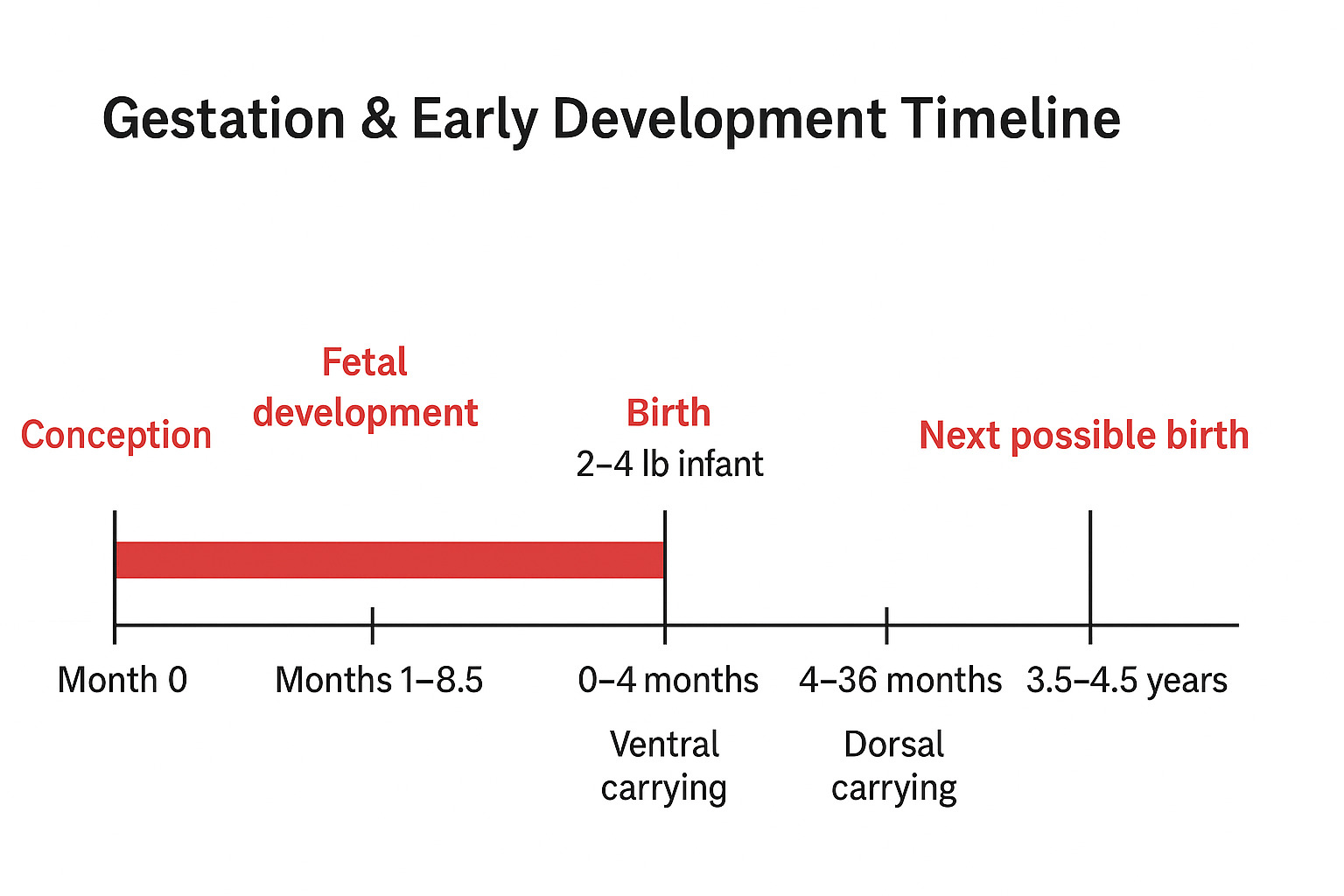
This timeline visually reinforces the slow, high-investment nature of silverback gorilla reproduction and early life development.
Parental Care and Family Dynamics in Silverback Gorillas
Parental care is the foundation of gorilla survival.
In silverback gorilla reproduction, the extended upbringing of infants—often lasting nearly a decade—shapes not only individual development but the stability of the entire group.
Maternal Role: The Core of Infant Survival
Mother gorillas are the primary caregivers and emotional anchors of their offspring.
Nursing begins immediately after birth and continues for 3 to 4 years, making gorilla lactation among the longest in mammals.
During this period, mothers provide constant physical contact, warmth, and nutrition.
Beyond feeding, mothers teach essential foraging skills, such as identifying edible plants, selecting ripe fruit, and avoiding toxic vegetation.
Social learning is equally important. Infants observe maternal interactions, learning grooming etiquette, vocal cues, and appropriate responses to dominance displays.
Discipline is gentle—usually limited to body positioning or soft vocalizations—reinforcing trust rather than fear.
The Silverback’s Involvement: Protector and Social Anchor
Although silverbacks do not directly feed infants, their role is critical.
The silverback acts as the group’s primary protector, defending against leopards, rival males, and the threat of infanticide during social upheaval.
His presence alone deters most attacks.
Silverbacks frequently engage in play behavior with juveniles—wrestling, gentle chasing, and mock displays.
These interactions build confidence, teach physical coordination, and strengthen social bonds.
By maintaining group cohesion and reducing conflict, the silverback indirectly increases infant survival rates.
Group Support: Allomothering and Social Learning
Gorilla parenting is not entirely solitary. Other adult females often participate in allomothering, temporarily carrying, grooming, or supervising infants while the mother feeds or rests.
This cooperative care reduces maternal stress and accelerates infant socialization.
Juveniles also benefit from peer interactions, learning hierarchy, cooperation, and conflict resolution through play. These early social experiences are essential for later integration into adult group life.
Weaning and Growing Independence
Weaning typically begins around 30 months, as infants gradually reduce nursing and increase solid food intake.
This transition is smooth, supported by increased play with siblings and peers, which helps reduce dependency-related stress.
By 6–8 years, juveniles gain significant independence.
Females usually remain in their natal group until maturity, while males begin to distance themselves, eventually leaving to avoid inbreeding and to establish or join new groups.
Challenges to Parental Care
Orphaned infants face low survival rates, especially in the wild. Without maternal milk and protection, few survive unless adopted by another female or protected by the silverback.
Human-related threats—habitat destruction, snares, disease transmission, and poaching—disrupt family structures and increase orphaning.
Challenges, Conservation, and Human Impacts on Silverback Gorilla Reproduction
Despite their strength and complex social systems, gorillas face mounting pressures that directly threaten silverback gorilla reproduction.
Slow birth rates combined with increasing human impacts make population recovery fragile and uncertain.
Major Threats to Reproduction
Habitat loss is the most significant threat. Expanding agriculture, logging, mining, and infrastructure fragment forests, reducing access to nutritious food essential for female fertility and healthy pregnancies.
When food quality declines, females experience longer birth intervals, miscarriages, and weaker infants.
Poaching—both targeted and accidental—also disrupts reproduction. Adult silverbacks are sometimes killed for bushmeat or during conflicts, triggering group collapse, infanticide, and orphaned young.
Wire snares meant for other animals frequently injure or kill gorillas, impairing mobility and mating ability.
Disease poses another critical risk. Gorillas share up to 98% of human DNA, making them highly susceptible to human-borne illnesses such as respiratory infections.
Disease outbreaks can sharply reduce fertility and wipe out entire family groups.
Climate change further compounds these threats. Shifts in rainfall patterns affect plant growth cycles, altering food availability.
Nutritional stress delays ovulation, reduces conception rates, and increases infant mortality—directly undermining reproductive success.
Conservation Efforts Supporting Reproduction
Conservation initiatives have proven that protection works.
Anti-poaching patrols, veterinary intervention programs, and stricter protected-area enforcement have significantly improved survival and birth rates in monitored populations.
Captive breeding programs, particularly in accredited zoos, provide genetic insurance populations.
While not a replacement for wild conservation, these programs help maintain healthy gene pools and advance reproductive research.
Ecotourism plays a powerful role. Carefully managed gorilla trekking generates revenue for conservation, supports local communities, and incentivizes habitat protection.
When communities benefit economically, they are more likely to protect gorillas and report illegal activities.
Future Outlook: Cautious Optimism
Gorillas remain critically endangered, but there are notable success stories.
Mountain gorilla populations in Rwanda, Uganda, and the Democratic Republic of Congo have shown steady population growth over recent decades due to intensive conservation efforts.
Increased birth rates in protected areas demonstrate that when threats are reduced, silverback gorilla reproduction can rebound.
However, western lowland gorillas continue to decline in less protected regions, highlighting the uneven nature of conservation success.
How You Can Help (Call to Action)
The future of silverback gorillas depends on sustained global support. You can contribute by:
-
Supporting conservation organizations such as WWF
-
Booking ethical, regulated gorilla safaris that fund protection efforts
-
Promoting responsible tourism and awareness
Every protected habitat, every healthy birth, and every surviving infant strengthens the future of this iconic species.
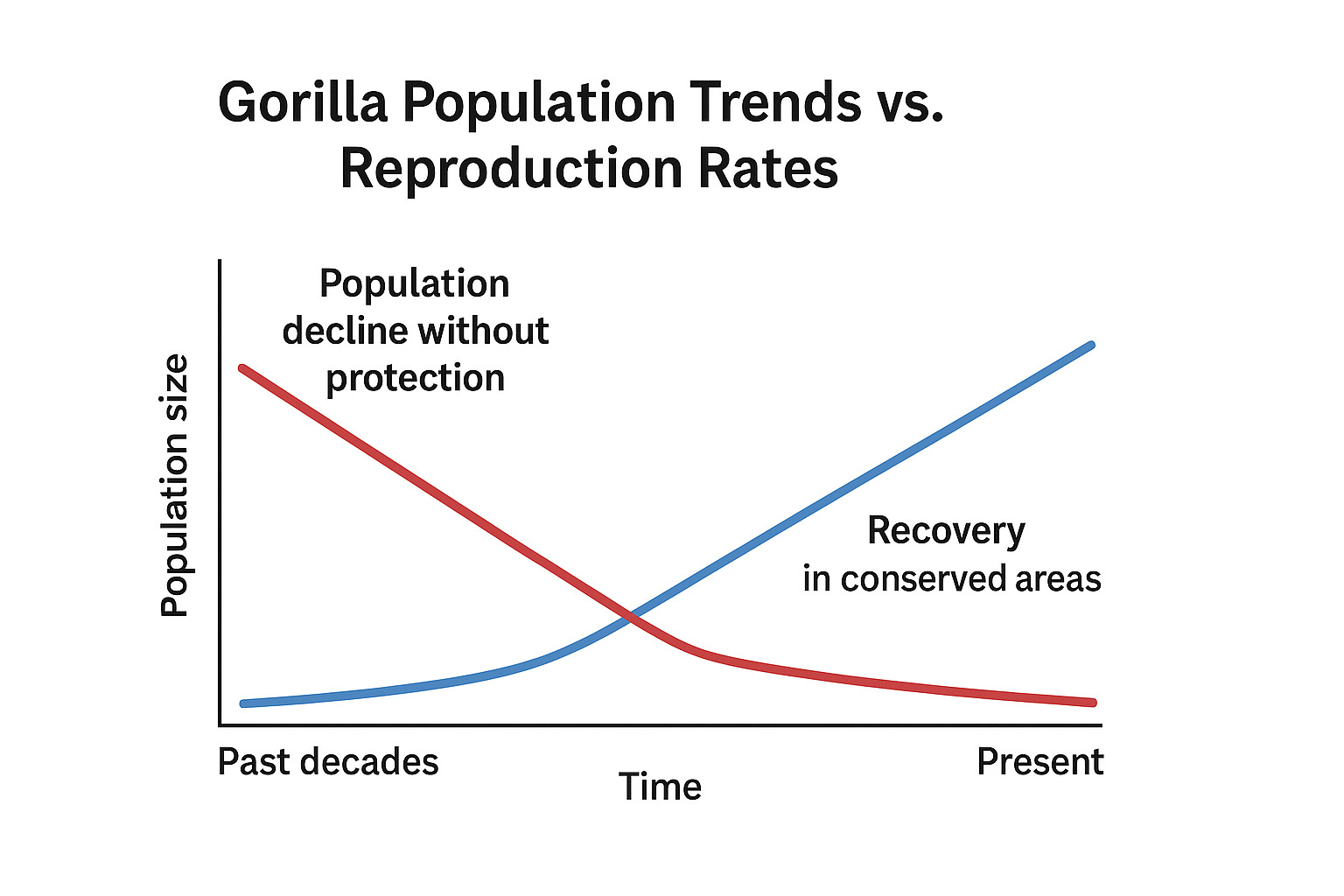
This visual clearly links conservation action to reproductive success and long-term survival.
Why Choose GoSilverback Safaris Ltd for Your Gorilla Safari
Choosing the right tour operator can transform a gorilla trek from a simple wildlife encounter into a once-in-a-lifetime experience.
GoSilverback Safaris Ltd stands out as a professional, reliable, and ethical safari company dedicated to delivering unforgettable gorilla experiences in Rwanda and Uganda—while actively supporting conservation and local communities.
1. Proven Expertise in Gorilla Safaris
GoSilverback Safaris Ltd specializes in mountain and silverback gorilla safaris, backed by deep regional knowledge and years of hands-on experience.
Our expert guides are highly trained, licensed, and passionate about primates, conservation, and guest safety.
They understand gorilla behavior, trekking protocols, and park regulations, ensuring you enjoy a safe, respectful, and insightful encounter.
2. Professional Planning, Seamless Execution
From your first inquiry to the final farewell, we operates with precision and transparency.
We handle permits, accommodation, transport, park fees, and logistics—so you don’t have to worry.
Our itineraries are carefully crafted, flexible, and tailored to your budget, travel dates, and fitness level.
3. Ethical, Responsible, and Conservation-Focused
We believe tourism should protect wildlife—not harm it.
We follows strict conservation and ethical tourism guidelines, works closely with park authorities, and promotes low-impact trekking.
A portion of your safari supports conservation efforts and community development around gorilla habitats.
4. Comfortable, Safe, and Reliable Safari Vehicles
Travel in well-maintained 4×4 safari vehicles with professional driver-guides who know the terrain and ensure timely, safe transfers—even on remote forest roads.
5. Honest Pricing & Excellent Reviews
No hidden costs. No last-minute surprises.
GoSilverback Safaris Ltd offers fair, competitive pricing with clear inclusions.
Our growing list of satisfied travelers and repeat clients speaks for our reliability and service quality.
6. Personalized Attention
You are not just a booking number.
We provide personalized support, fast communication, and 24/7 assistance during your trip—because your comfort and peace of mind matter.
Book with Confidence
When you book with GoSilverback Safaris Ltd, you’re choosing professionalism, safety, authenticity, and passion.
Let us guide you face-to-face with the world’s last remaining silverback gorillas—responsibly, comfortably, and memorably.
📩 Book your gorilla safari today with GoSilverback Safaris Ltd and experience Africa the right way.
How do silverback gorillas reproduce?
Silverback gorillas reproduce sexually. The dominant male, the silverback, mates with adult females in his troop. Courtship involves gentle grooming, close body contact, and affectionate gestures.
During mating, the male mounts the female from behind while she signals receptivity through posture and vocalizations. Females typically ovulate once per cycle, making timing crucial for conception.
Gestation lasts about 8.5 months, after which the female gives birth to a single infant, rarely twins.
The silverback plays a protective role, guarding both mother and baby, ensuring their safety, and maintaining the social structure essential for successful reproduction.
Why do female gorillas mate with multiple males?
Female gorillas may mate with multiple males to increase reproductive success and genetic diversity. In some troops, subordinate or rival males coexist with the dominant silverback.
By mating with several males, females reduce the risk of infanticide, as males are less likely to harm infants that could be theirs.
Multiple partners also maximize the chance of fertilization during the ovulation period.
Additionally, mating with several males can help females assess genetic fitness, choosing mates with superior traits.
This behavior balances troop hierarchy, promotes genetic variation, and safeguards the survival of offspring.
How long do gorillas last during mating?
Gorilla copulation is brief compared to humans. Individual mating bouts typically last between 30 seconds and 5 minutes.
The male mounts the receptive female from behind, maintaining physical contact while intently guarding her from interruptions.
Multiple copulations may occur over several hours or days to ensure fertilization during the female’s fertile period.
Though short, these encounters are highly controlled within the troop hierarchy, with the silverback dominating mating opportunities.
Repeated mating also strengthens pair bonds and reinforces the social cohesion of the troop, helping maintain the dominance of the silverback while ensuring reproductive success.
How do female gorillas seduce males?
Female gorillas signal sexual receptivity using a combination of physical and behavioral cues. They may engage in grooming, gentle touching, or playful interactions with a male.
Posture is key: females often present their backsides or lean toward the male to indicate readiness. Subtle vocalizations, like soft grunts or coos, communicate fertility.
In some cases, females approach and maintain proximity to preferred males, demonstrating interest without aggression. These behaviors encourage mating while maintaining troop harmony.
Seduction is both strategic and instinctual, allowing females to select strong, protective males, ensure fertilization, and reduce the likelihood of aggression during courtship.
Frequently Asked Questions
How often do silverback gorillas mate?
Silverback gorillas mate year-round, but females only conceive once every 3.5–4.5 years due to long lactation and infant dependency.
Do silverback gorillas have one mate?
No. Silverbacks are polygynous and typically mate with multiple females within their group.
How long is a gorilla pregnancy?
Gorilla gestation lasts about 8.5 months (251–295 days).
Do silverbacks help raise infants?
Silverbacks do not feed infants but protect them from predators, rival males, and social threats.
Why is gorilla reproduction so slow?
Long pregnancies, extended nursing (3–4 years), late maturity, and high infant mortality slow population growth.
Are silverback gorillas endangered?
Yes. Most gorilla subspecies are endangered or critically endangered due to human activities.
How can tourists help protect gorillas?
By booking ethical gorilla safaris, following park rules, and supporting conservation organizations.
Conclusion and FAQs: Understanding Silverback Gorilla Reproduction
Silverback gorilla reproduction is a finely balanced system shaped by dominance, cooperation, and long-term parental investment.
From the silverback’s role as protector and primary breeder to the female’s selective mate choice, extended gestation, and years of infant care, every stage reflects complexity and restraint rather than aggression.
Low birth rates, long intervals between pregnancies, and high infant mortality mean that even small disruptions—habitat loss, disease, or poaching—can have lasting population impacts.
What makes silverback gorilla reproduction especially remarkable is its similarity to human social systems: face-to-face mating, strong social bonds, female choice, and extended parenting.
These traits highlight the intelligence and vulnerability of gorillas—and explain why their survival depends so heavily on stable habitats and effective conservation. When protected, gorilla populations can recover. When threatened, they decline rapidly.
Conservation is not optional—it is essential. By supporting wildlife organizations, practicing responsible tourism, and choosing ethical gorilla safaris, you directly contribute to the survival of one of Earth’s most iconic species.
Every protected forest and every healthy birth strengthens the future of silverback gorillas.