
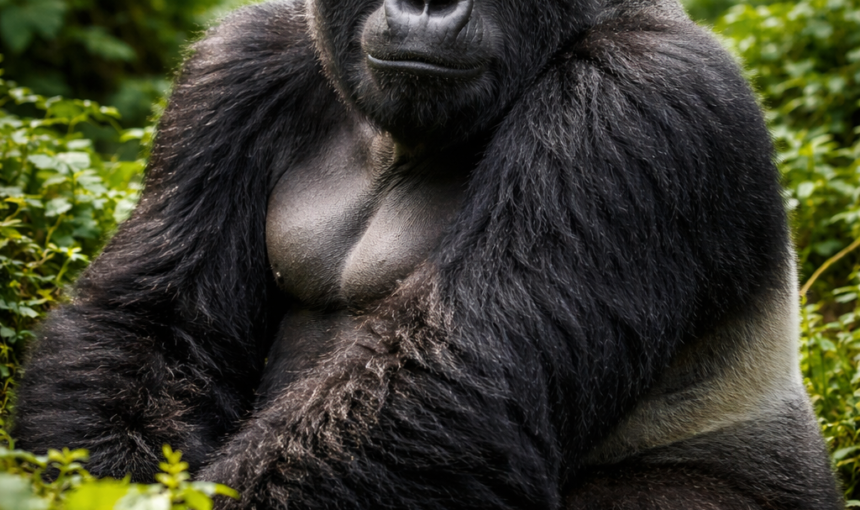
African Gorilla Facts, Trekking, Conservation & Where to See them in 2026 Ultimate Guide
African gorilla refers to the largest primates, found in Central and East Africa, including the endangered Mountain Gorilla. These powerful gentle animals live in forest habitats across countries like Uganda, Rwanda, and the Democratic Republic of Congo.
African gorillas are known for their strong family bonds, led by a dominant silverback. Today, they face threats from habitat loss, poaching, and disease.
However, gorilla trekking in Africa offers a unique opportunity to see them in the wild while supporting conservation efforts. Visiting protected areas like Bwindi Impenetrable National Park helps ensure their long-term survival.
African gorilla experiences rank among the world’s most profound wildlife encounters. From the misty highlands of the Virunga Volcanoes to the dense rainforests of Bwindi Impenetrable National Park,.
At GoSilverback Safaris we guide travelers from the USA, UK, Europe, Canada, Asia, and the Middle East — as well as local East African visitors — discover one of our closest living relatives in its natural habitat.
Mountain gorillas number just 1,063 individuals in the wild as of the latest 2025 data, a remarkable recovery from fewer than 250 in the 1980s. This success story, driven by decades of conservation and responsible tourism, makes gorilla trekking in Africa not only possible but deeply meaningful.
Yet the continent is also home to three other gorilla subspecies, each facing unique challenges and offering distinct insights into primate evolution.
This definitive guide explores every aspect of Africa gorilla — from subspecies and habitats to trekking logistics, costs, behavior, threats, and conservation.
Written for discerning travelers seeking authentic, responsible safaris, it draws on the latest field data from the International Gorilla Conservation Programme (IGCP), Uganda Wildlife Authority (UWA), and Rwanda Development Board (RDB).
Understanding Africa gorilla transforms a bucket-list adventure into a contribution to their survival.

Types of Gorillas in Africa
Africa hosts two gorilla species divided into four subspecies, each adapted to specific ecosystems.
Western Gorilla (Gorilla gorilla) The most numerous species includes:
1. Western Lowland Gorilla
The most widespread, with an estimated 316,000 individuals across the Congo Basin forests of Cameroon, Gabon, Republic of Congo, and Central African Republic. Their population has declined over 60% in the past 20–25 years due to bushmeat hunting and Ebola.
2. Cross River Gorilla
The world’s rarest great ape, with only 200–300 individuals surviving in fragmented pockets along the Nigeria-Cameroon border. Critically endangered and extremely shy, they remain among the least studied.
Eastern Gorilla (Gorilla beringei) This species comprises:
1. Mountain Gorilla
The star of gorilla trekking, confined to the Virunga Massif (shared by Rwanda, Uganda, and DRC) and Bwindi Impenetrable National Park (Uganda). The global population stands at 1,063 — roughly 604 in Virunga and 459 in Bwindi-Sarambwe.
2. Eastern Lowland Gorilla (Grauer’s Gorilla)
Found only in eastern DRC, with fewer than 6,000 remaining, down more than 50% since the 1990s.
These subspecies differ in size, habitat, and behavior. Mountain gorillas are stockier with thicker fur for high-altitude cold; western lowland gorillas are smaller and more arboreal.
All share 98.3% DNA with humans, making Africa gorilla encounters profoundly personal.
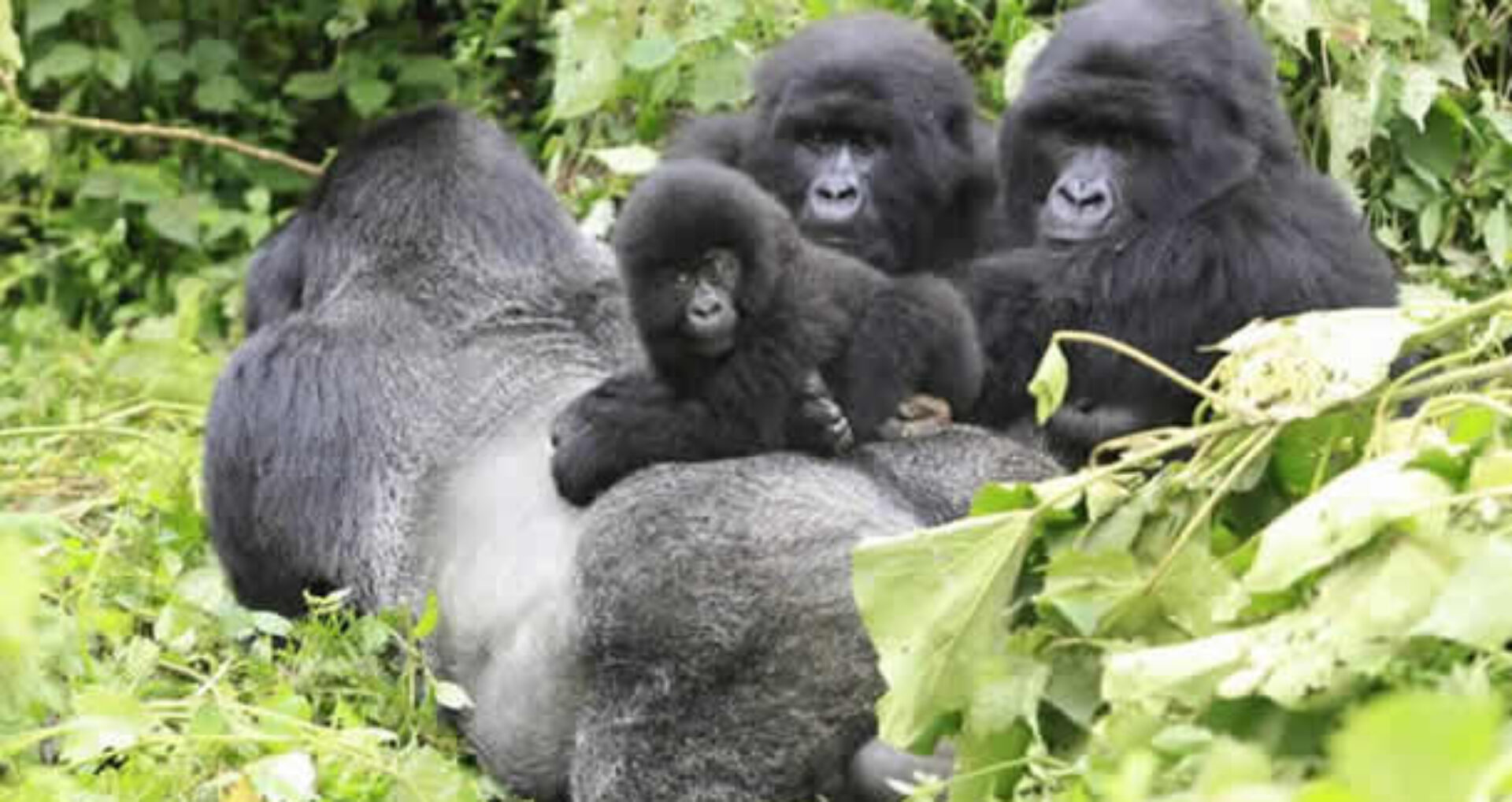
Where to See Gorillas in Africa
Where to see gorillas in Africa depends on the subspecies and your desire for habituated trekking.
Mountain Gorilla Trekking Hotspots
- Bwindi Impenetrable National Park, Uganda — home to roughly half the world’s mountain gorillas. Eight habituated groups are available across four sectors (Buhoma, Ruhija, Rushaga, Nkuringo). The dense, misty forest offers intimate encounters and excellent chances of seeing multiple families.
- Volcanoes National Park, Rwanda — the Virunga sector with 10 habituated groups. Famous for the Susa and Karisimbi groups, it provides dramatic volcanic landscapes and shorter treks on some days.
- Mgahinga Gorilla National Park, Uganda — smaller and less visited, offering a more exclusive experience with the Nyakagezi group.
- Virunga National Park, DRC — permits remain available at lower cost, but security and accessibility vary; many operators recommend focusing on Uganda and Rwanda.
Eastern Lowland Gorillas Limited habituated groups exist in Kahuzi-Biega National Park (DRC), but trekking is far less reliable due to vast ranges and security concerns. Most visitors see them only in rehabilitation centers like GRACE.
Western Lowland and Cross River Gorillas These are rarely habituated for tourism. Western lowland gorillas can be observed opportunistically in parks such as Loango (Gabon) or Odzala (Republic of Congo), but viewing is unpredictable and non-trekking focused.
Cross River gorillas remain virtually inaccessible to tourists.
For most international travelers, mountain gorilla trekking in Uganda or Rwanda delivers the definitive Africa gorilla experience — habituated, safe, and ethically managed.
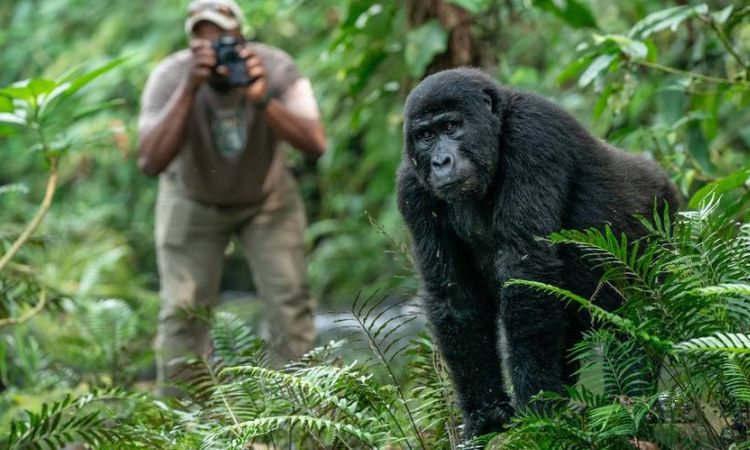
Gorilla Trekking Experience in Africa
The gorilla trekking experience in Africa combines physical challenge, emotional connection, and strict conservation protocols.
- Your day begins with a pre-dawn briefing at the park headquarters.
- Rangers assign you to a specific gorilla group (maximum 8 trekkers per family).
- After a short drive to the trailhead, you hike through dense vegetation — sometimes muddy and steep — guided by trackers who follow fresh signs.
- Trekking time ranges from 30 minutes to 7 hours, depending on the gorillas’ location. The moment you first glimpse a silverback feeding or a mother cradling her infant is unforgettable.
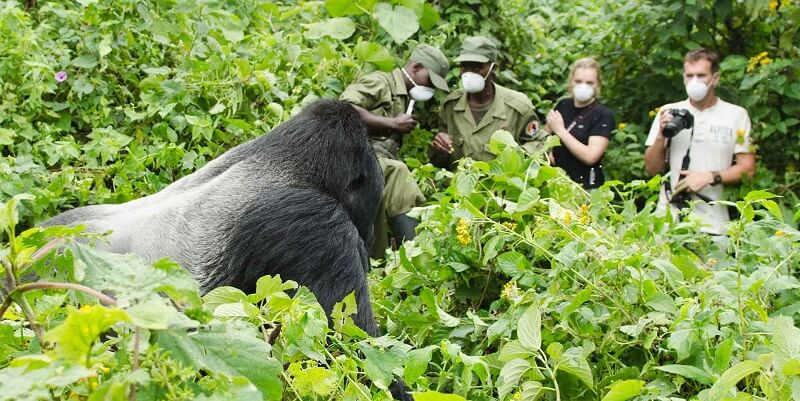
- You then spend exactly one hour at a 7-metre distance, observing natural behaviors: chest-beating displays, playful wrestling among juveniles, and gentle grooming sessions.
- Porters carry your daypack, and armed rangers ensure safety. The experience is strictly controlled to minimize stress on the gorillas and disease transmission risk.
In Rwanda’s Volcanoes National Park, treks often feature open lava fields and shorter approaches. In Bwindi, expect thicker rainforest and longer hikes but higher chances of multi-family sightings.
Both deliver the same profound connection: you witness Africa gorilla intelligence and family bonds up close while knowing your visit directly funds their protection.
Cost of Gorilla Trekking
Cost of gorilla trekking in Africa varies by country and includes the permit plus supporting safari elements.
Uganda (Bwindi & Mgahinga): $800 per person for foreign non-residents (2026 rate).
Habituation permits cost $1,500. A full 7-day safari with transport, lodging, meals, and permits typically ranges $3,500–$6,500 per person.
Rwanda (Volcanoes National Park): $1,500 per person for international visitors. Promotional rates apply for East Africans and residents. A 4–5 day package starts at $4,500–$7,000.
DRC (Virunga): $400–$450, making it the most affordable, though logistics and safety add variables.
Additional costs include international flights, visas, tips, and travel insurance. Shared-group options significantly reduce per-person expenses while maintaining quality.
GoSilverback Safaris packages bundle permits, private or shared 4×4 transport, full-board accommodation, and conservation contributions, delivering excellent value and guaranteed availability.
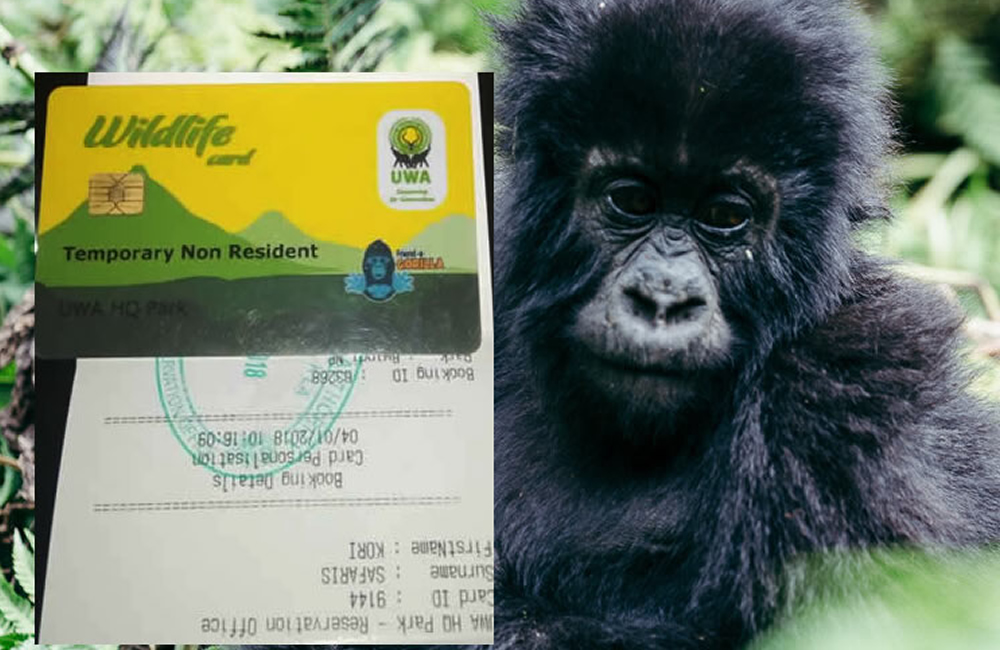
Why Gorilla Trekking Is Worth It
Gorilla trekking is worth it because it delivers a once-in-a-lifetime connection that no zoo or documentary can match. You stand metres from a 220 kg silverback whose calm gaze reveals intelligence and gentleness that reshapes your view of wildlife.
The experience supports measurable conservation success: mountain gorilla numbers have quadrupled since the 1980s. Every permit directly funds anti-poaching patrols, veterinary care, and community projects that improve local livelihoods.
Travelers return home as advocates, amplifying the impact far beyond their visit.
For many, the emotional reward — witnessing family bonds, hearing chest beats echo through the forest, and knowing you contributed to their survival — outweighs any cost or physical effort.
Best Time to See Gorillas in Africa
The best time to see gorillas in Africa aligns with the two dry seasons: June to September and December to February. Trails are firmer, visibility is clearer, and gorillas remain active at lower altitudes.
Shoulder months (March, October–November) offer lower rates and fewer crowds, though afternoon rains are common. April and May bring heavier rains but lush vegetation and excellent photographic conditions.
Gorilla trekking operates year-round. Wildlife in nearby parks (Queen Elizabeth, Akagera) also concentrates near water sources during drier periods, making combined safaris ideal.
Gorilla Behavior & Lifestyle
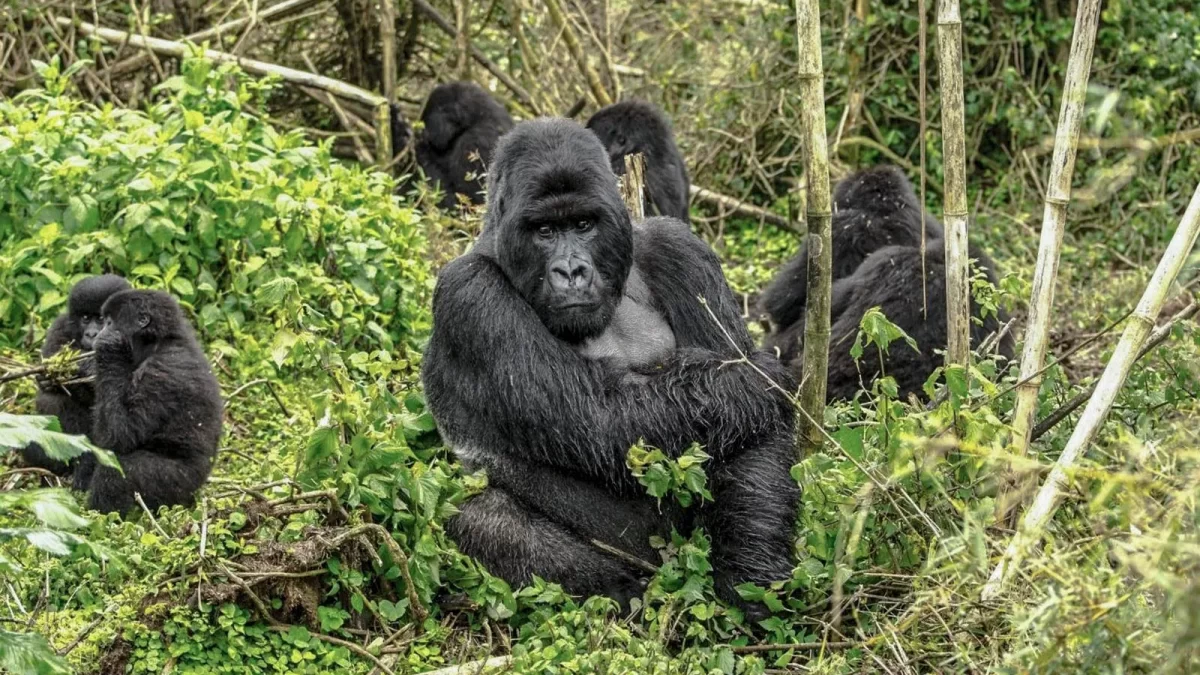
Gorilla behavior is peaceful and highly social. They live in stable family groups of 5–30 individuals led by a dominant silverback. Daily life revolves around foraging — up to 30 kg of vegetation per day — resting, and social bonding through grooming.
Nests are built fresh each night: silverbacks on the ground, females and infants in trees. Communication includes vocalizations, chest-beating, and subtle gestures. Despite their strength, serious aggression is rare; displays usually resolve conflicts without injury.
Mountain gorillas are more terrestrial than lowland subspecies, spending most time on the forest floor. Their lifestyle reflects a delicate balance between power and restraint — a key reason Africa gorilla encounters feel so safe and respectful.
Threats Facing African Gorillas
Threats facing African gorillas remain severe despite population gains.
Habitat loss from agriculture and logging fragments populations. Poaching for bushmeat and the illegal pet trade continues, especially for eastern lowland gorillas.
Disease — particularly respiratory infections from humans — poses the greatest risk to habituated groups.
Climate change alters food availability and increases human-wildlife conflict. In the Virunga region, political instability and cross-border insecurity disrupt patrols.
Cross River gorillas face extreme fragmentation, with fewer than 300 individuals in isolated pockets.
Without continued intervention, these pressures could reverse decades of progress.
Conservation Efforts in Africa
Conservation efforts in Africa have transformed gorilla fortunes. The International Gorilla Conservation Programme (IGCP) coordinates transboundary protection across Uganda, Rwanda, and DRC. UWA, RDB, and ICCN (DRC) manage daily patrols and monitoring.
Community revenue-sharing directs 20% of gorilla permit fees to local projects — schools, health clinics, and alternative livelihoods.
Gorilla Doctors provides free veterinary care, treating snare wounds and diseases.
The 2025 Bwindi-Sarambwe census and ongoing Virunga monitoring ensure data-driven management. These collaborative efforts have achieved the only great-ape population increase in Africa.
How Tourism Helps Protect Gorillas
How tourism helps protect gorillas is one of conservation’s greatest success stories. Permit revenue generates tens of millions annually, funding ranger salaries, equipment, and habitat expansion.
Tourism creates thousands of jobs — guides, trackers, porters, lodge staff — reducing poverty-driven encroachment. Communities near Bwindi and Volcanoes now view gorillas as economic assets rather than competitors.
Strict rules and habituation make gorillas easier to monitor and protect. Visitors become global ambassadors, raising awareness and donations far beyond the parks.
Responsible Africa gorilla tourism turns potential threats into sustainable protection.
Gorilla Trekking Rules & Safety Tips
Gorilla trekking rules & safety tips ensure both visitor enjoyment and gorilla wellbeing.
- Minimum age: 15 years.
- Group size: Maximum 8 trekkers per gorilla family.
- Distance: Maintain 7 metres at all times.
- Health: No trekking with flu-like symptoms; masks are mandatory in some parks.
- Behaviour: No flash photography, loud noises, or sudden movements.
- Fitness: Moderate to good physical condition required; porters available.
Safety is excellent when rules are followed. Rangers carry firearms only for rare wildlife threats. Pack waterproof gear, sturdy boots, binoculars, and insect repellent. Acclimatise to altitude in Rwanda’s higher sectors.

Why Book with GoSilverback Safaris
Why book with GoSilverback Safaris? Our decade-plus expertise guarantees 100% permit success, seamless logistics, and genuine conservation impact.
- We partner directly with UWA, RDB, and IGCP, ensuring every booking supports HuGo conflict teams and community projects.
- Our guides are former trackers with unmatched gorilla knowledge.
- We offer private or shared options, flexible pacing, and full transparency on costs.
- Travelers consistently rate us highest for safety, ethics, and personalised service across Uganda, Rwanda, and beyond.
Sample Gorilla Safari Itinerary (3–7 Days)
A well-designed Africa gorilla safari itinerary combines primate encounters, scenic landscapes, and cultural experiences. Below is a flexible 3–7 day example tailored for international travelers seeking a complete adventure.
Day 1: Arrival & Transfer
Arrive in Entebbe and transfer to your hotel or begin your journey toward Bwindi Impenetrable National Park. Enjoy scenic countryside views, local markets, and rolling hills. Overnight at a selected lodge (budget, mid-range, or luxury).
Day 2: Transfer to Gorilla Region
Drive or take a domestic flight to Bwindi. Relax at your lodge, prepare for trekking, and attend a pre-trek briefing by park rangers.
Day 3: Gorilla Trekking Experience
The highlight of your safari—track the endangered Mountain Gorilla through dense forest. Spend one unforgettable hour observing their behavior, family interactions, and natural habitat.
Day 4: Community & Cultural Tour
Visit nearby communities, engage with local traditions, and learn about conservation efforts supporting gorilla protection.
Day 5–6: Wildlife Safari Extension
Travel to Queen Elizabeth National Park for game drives and a boat safari on the Kazinga Channel, spotting elephants, lions, hippos, and diverse birdlife.
Day 7: Return & Departure
Return to Entebbe for your departure flight or extend your stay.
👉 This gorilla safari itinerary offers a perfect balance of wildlife, culture, and adventure—ideal for a once-in-a-lifetime African experience.
Custom Rwanda or cross-border versions are available. All include permits, full-board lodging, and expert guiding.
Frequently Asked Questions About Africa Gorilla
Are gorillas live in Africa?
Yes, gorillas live exclusively in Africa. They are found only on the African continent, with mountain gorillas in Uganda, Rwanda, and the Democratic Republic of Congo, and western gorillas across Central African countries like Cameroon, Gabon, and Republic of Congo. Africa is the sole natural home of all gorilla subspecies, making it the ultimate destination for gorilla trekking safaris. (68 words)
Which is better for gorillas, Uganda or Rwanda?
Uganda is generally better for most travelers seeking gorilla trekking. It offers a lower permit cost ($800 vs Rwanda’s $1,500), more habituated groups in Bwindi Impenetrable National Park, and easier combination with wildlife safaris in Queen Elizabeth National Park. Rwanda provides shorter treks, better infrastructure, and dramatic volcanic scenery, but Uganda delivers better value and a wilder forest experience.
How big is an African gorilla?
An adult male African gorilla (silverback) stands up to 1.8 metres (5 ft 11 in) tall when upright and weighs between 160–220 kg (350–485 lbs). Females are smaller, averaging 70–100 kg. Mountain gorillas are stockier with thicker fur, while western lowland gorillas are slightly smaller but still immensely powerful. Their impressive size and strength make them one of Africa’s most awe-inspiring primates.
What African country is known for gorillas?
Uganda and Rwanda are the two African countries best known for gorillas. Uganda’s Bwindi Impenetrable National Park and Rwanda’s Volcanoes National Park offer the world’s most reliable mountain gorilla trekking experiences. While the Democratic Republic of Congo also hosts gorillas, Uganda and Rwanda are the safest and most popular destinations for international visitors seeking close encounters with these endangered great apes.
How many gorillas are left in Africa?
Approximately 1,063 mountain gorillas, fewer than 6,000 eastern lowland, around 316,000 western lowland, and only 200–300 Cross River gorillas.
Where is the best place to see gorillas in Africa?
Bwindi Impenetrable National Park (Uganda) and Volcanoes National Park (Rwanda) offer the most reliable habituated mountain gorilla trekking.
How much does gorilla trekking cost in 2026?
Uganda: $800; Rwanda: $1,500; DRC: $400–$450 per person for the permit, plus safari package costs.
Is gorilla trekking safe?
Extremely safe when following rules. Serious incidents are rare over decades of regulated tourism.
What is the minimum age for gorilla trekking?
15 years. Children under 15 cannot participate due to disease transmission risks.
How long do you spend with the gorillas?
Exactly one hour at a 7-metre distance to minimise stress and disease risk.
Can you see gorillas year-round?
Yes. Trekking operates daily, though dry seasons (June–September, December–February) offer easier trails.
Do gorillas attack humans?
Extremely rare. Habituated gorillas view humans as neutral and rarely show aggression when rules are followed.
How does gorilla tourism help conservation?
Permit revenue funds patrols, veterinary care, and community projects that protect habitat and reduce poaching.
What should I pack for gorilla trekking?
Waterproof hiking boots, rain gear, layered clothing, binoculars, insect repellent, and a daypack. Porters carry extra weight.
Are there discounts for African citizens?
Yes. Uganda and Rwanda offer reduced rates for East African and African citizens/residents.
Which country is best for budget gorilla trekking?
Uganda offers the best value at $800 per permit with excellent infrastructure and habituated groups.
Conclusion
Africa gorilla represents one of the planet’s most powerful conservation successes. From the brink of extinction to 1,063 mountain gorillas today, these gentle giants remind us that responsible tourism can reverse decline.
Your journey to meet them — whether in Bwindi’s misty forests or the Virunga slopes — creates lasting memories while funding their future. Every trekker becomes part of the solution.
Secure your gorilla permit today through GoSilverback Safaris and experience Africa gorilla responsibly. Limited permits sell out months in advance.
Contact our expert team now to book your private or shared safari and join the growing community of travelers who protect these magnificent primates with every step they take in the forest. The gorillas of Africa are waiting — answer their call with GoSilverback Safaris.
Trek, Explore and Meet the African Gorillas