
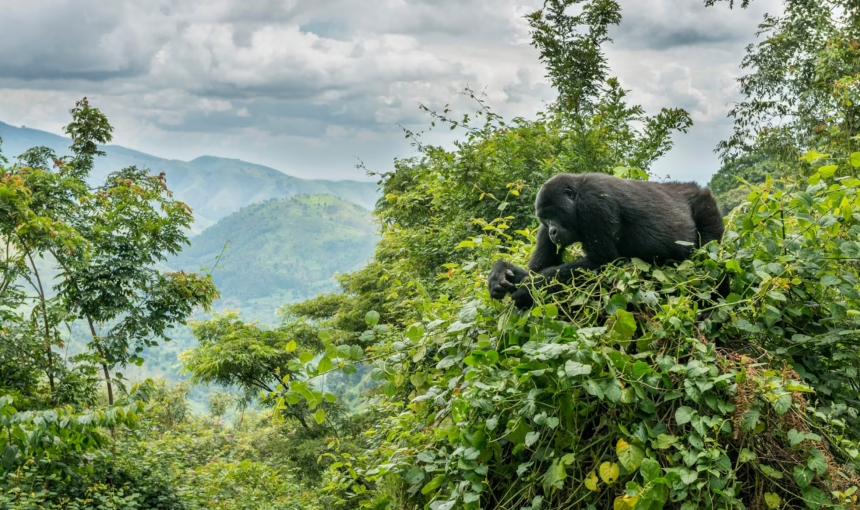
Where Do Gorillas Live? The Ultimate Complete Guide to Mountain Gorilla Habitats
Discover where gorillas live in the wild. Mountain gorillas are found only in Bwindi Impenetrable National Park (Uganda) and the Virunga Volcanoes (Rwanda, Uganda & DRC). Learn their habitat and how to see them responsibly.
Gorillas live exclusively in equatorial Africa, occupying a fragmented arc of tropical and montane forests that stretches from the Niger Delta in West Africa across Central Africa to the volcanic highlands of Uganda, Rwanda, and the Democratic Republic of Congo.
There are two species — the western gorilla and the eastern gorilla — each divided into two subspecies, each occupying distinct geographic ranges and habitat types across ten countries.
The mountain gorilla, the most celebrated of all, survives only in two isolated forest ecosystems in East Africa and numbers just over 1,000 individuals — making it one of the rarest large mammals on Earth.
Understanding where gorillas live is not a simple matter of pointing to a map. Their distribution is shaped by altitude, rainfall patterns, forest cover, food availability, and decades of human impact.
Gorillas are habitat specialists — they cannot survive outside dense, undisturbed forest. Every silverback-led family group depends on vast tracts of intact woodland, and the boundaries of gorilla range have contracted dramatically over the past century due to deforestation, agriculture, mining, and civil conflict.
For travellers planning a gorilla safari — whether from the United States, United Kingdom, Europe, Canada, the Middle East, or Asia — knowing exactly where gorillas live and why they live there transforms a wildlife encounter into a profound conservation experience.
Explore all our Gorilla Safaris here.
This guide, written by the specialists at GoSilverback Safaris, covers every dimension of gorilla habitat in the depth you deserve before booking the most remarkable journey of your life.
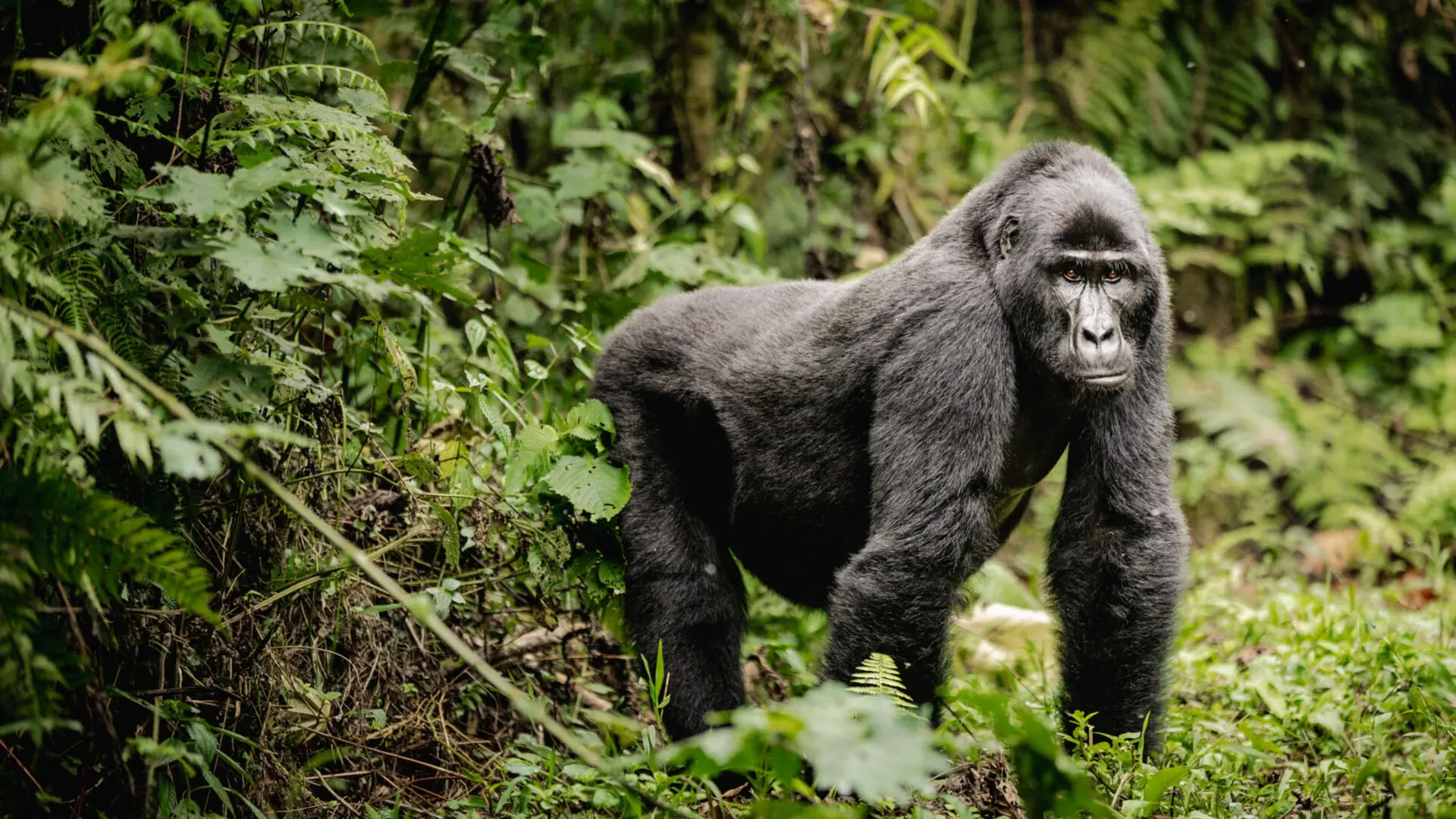
Types of Gorillas and Where They Live
Science recognises two species of gorilla, each comprising two subspecies.
The split between eastern and western gorillas is not merely taxonomic — the two species have been separated by the Congo River and its vast basin for at least two million years, resulting in meaningful genetic, behavioural, and ecological differences.
Knowing which subspecies occupies which region is fundamental to planning any gorilla trekking experience.
1. Mountain Gorilla
Gorilla beringei beringei — the most endangered and the most iconic. Found only in two ecosystems: the Virunga Massif (spanning Uganda, Rwanda, and DRC) and Bwindi Impenetrable National Park in Uganda. Lives at elevations of 1,500–4,000 metres in montane and bamboo forests.
2. Eastern Lowland Gorilla
Gorilla beringei graueri, also called Grauer’s Gorilla — the world’s largest primate. Endemic to the tropical forests of eastern DRC, particularly in and around Kahuzi-Biega National Park and the Itombwe Massif. Inhabits lowland and montane forests from 600 to 2,900m.
3. Western Lowland Gorilla
Gorilla gorilla gorilla — the most numerous subspecies and the one most commonly seen in zoos worldwide. Ranges across a vast but threatened swath of Central and West African rainforests including Cameroon, Gabon, Republic of Congo, CAR, Equatorial Guinea, and Angola.
4. Cross River Gorilla
Gorilla gorilla diehli — the rarest of all gorilla subspecies, occupying a tiny range of highland forest on the Nigeria–Cameroon border, specifically the Cross River headwaters region. Extremely shy and rarely photographed in the wild due to intense historical hunting pressure.
“Each gorilla subspecies is effectively a living testament to millions of years of forest evolution — losing any one of them is an irreversible unravelling of Africa’s ecological heritage.”
The most accessible subspecies for gorilla trekking tourists are the mountain gorilla and, increasingly, the western lowland gorilla in Republic of Congo and Central African Republic.
The eastern lowland gorilla is presently off-limits to most travellers due to ongoing insecurity in eastern DRC, though the situation continues to evolve. The Cross River gorilla is essentially inaccessible and exists primarily within a critical conservation framework.
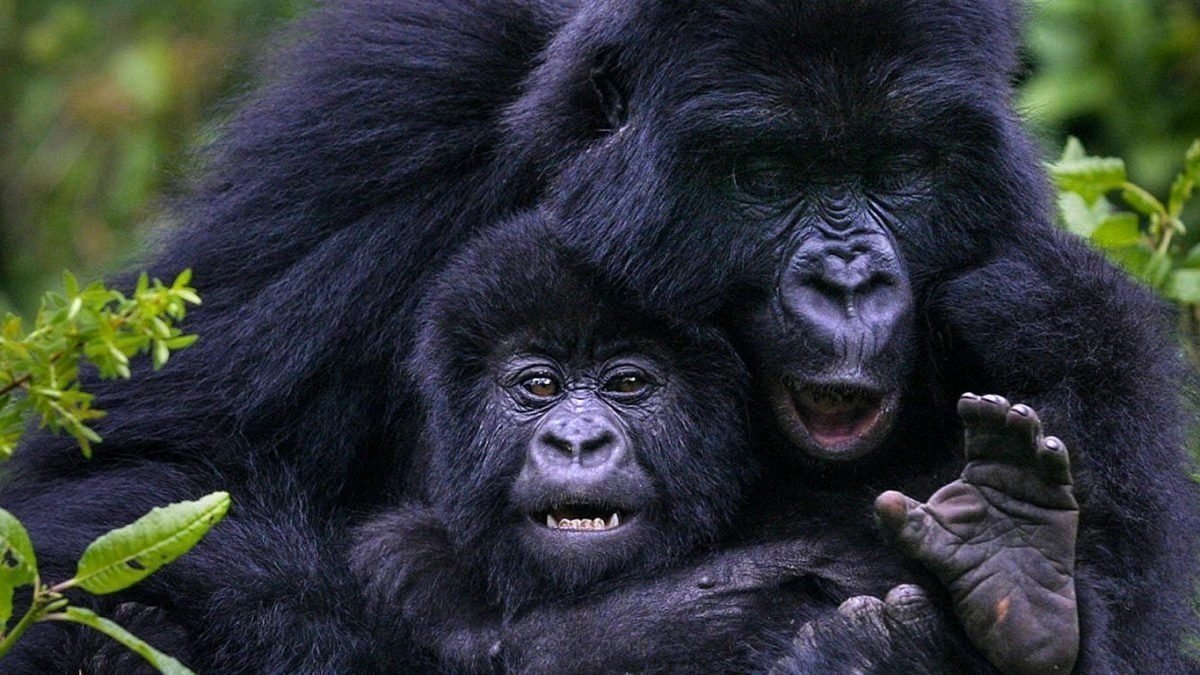
Countries Where Gorillas Live
Gorillas are found in ten African countries, all located within a tropical belt between approximately 7°N and 5°S latitude.
Their range is constrained by the availability of closed-canopy forest and, critically, by the degree to which human settlement, agriculture, and industrial development have encroached on natural habitat.
Below is a comprehensive breakdown of every country with a wild gorilla population.
| Country | Subspecies Present | Key Sites | Trekking Available? |
|---|---|---|---|
| 🇺🇬 Uganda | Mountain Gorilla | Bwindi Impenetrable NP, Mgahinga Gorilla NP | ✅ Yes — premier destination |
| 🇷🇼 Rwanda | Mountain Gorilla | Volcanoes National Park (Parc des Volcans) | ✅ Yes — premium experience |
| 🇨🇩 DR Congo | Mountain, Eastern Lowland | Virunga NP, Kahuzi-Biega NP | ⚠️ Limited — security concerns |
| 🇨🇲 Cameroon | Western Lowland, Cross River | Lobéké NP, Cross River (border region) | ⚠️ Specialist only |
| 🇬🇦 Gabon | Western Lowland | Lopé NP, Moukalaba-Doudou NP | ✅ Growing eco-tourism |
| 🇨🇬 Republic of Congo | Western Lowland | Odzala-Kokoua NP | ✅ Yes — specialist camps |
| 🇨🇫 Central African Republic | Western Lowland | Dzanga-Sangha Reserve | ✅ Yes — remote but accessible |
| 🇬🇶 Equatorial Guinea | Western Lowland | Monte Alén NP | ❌ Limited infrastructure |
| 🇳🇬 Nigeria | Cross River | Cross River NP | ❌ Not open to tourists |
| 🇦🇴 Angola | Western Lowland | Cabinda enclave forests | ❌ No established tourism |
1. Uganda: Africa’s Premier Gorilla Trekking Nation
Uganda is home to roughly half of the world’s remaining mountain gorillas and offers the most gorilla trekking permits of any country. Bwindi Impenetrable National Park — a UNESCO World Heritage Site in southwestern Uganda — houses more than 500 individual mountain gorillas across 22 habituated family groups.
A second, smaller population exists in Mgahinga Gorilla National Park, which shares the Virunga volcano chain with Rwanda and DRC.
Uganda’s gorilla permit costs $800 USD per person, making it significantly more affordable than Rwanda while offering an equally profound and intimate wildlife experience.
2. Rwanda: The Luxury Gorilla Capital
Volcanoes National Park in Rwanda’s northwest is one of Africa’s most celebrated wildlife destinations. The park gained global fame as the field site of primatologist Dian Fossey, whose work inspired the film Gorillas in the Mist.
Rwanda currently has twelve habituated gorilla groups open to visitors, and the permit price of $1,500 USD reflects the country’s premium positioning as a high-value, low-volume destination.
The park is easily accessible from Kigali within three hours by road — a major logistical advantage for international travellers.
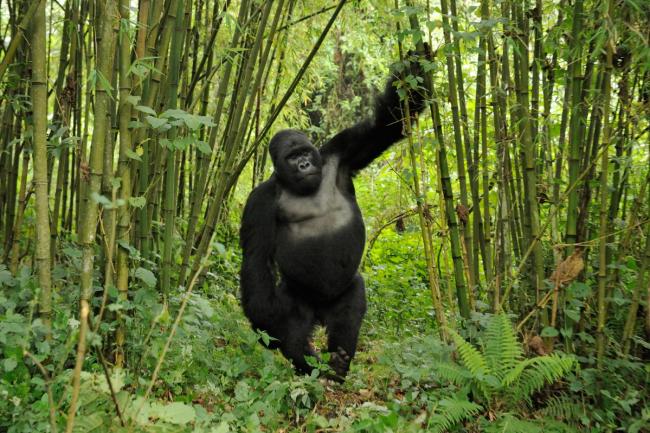
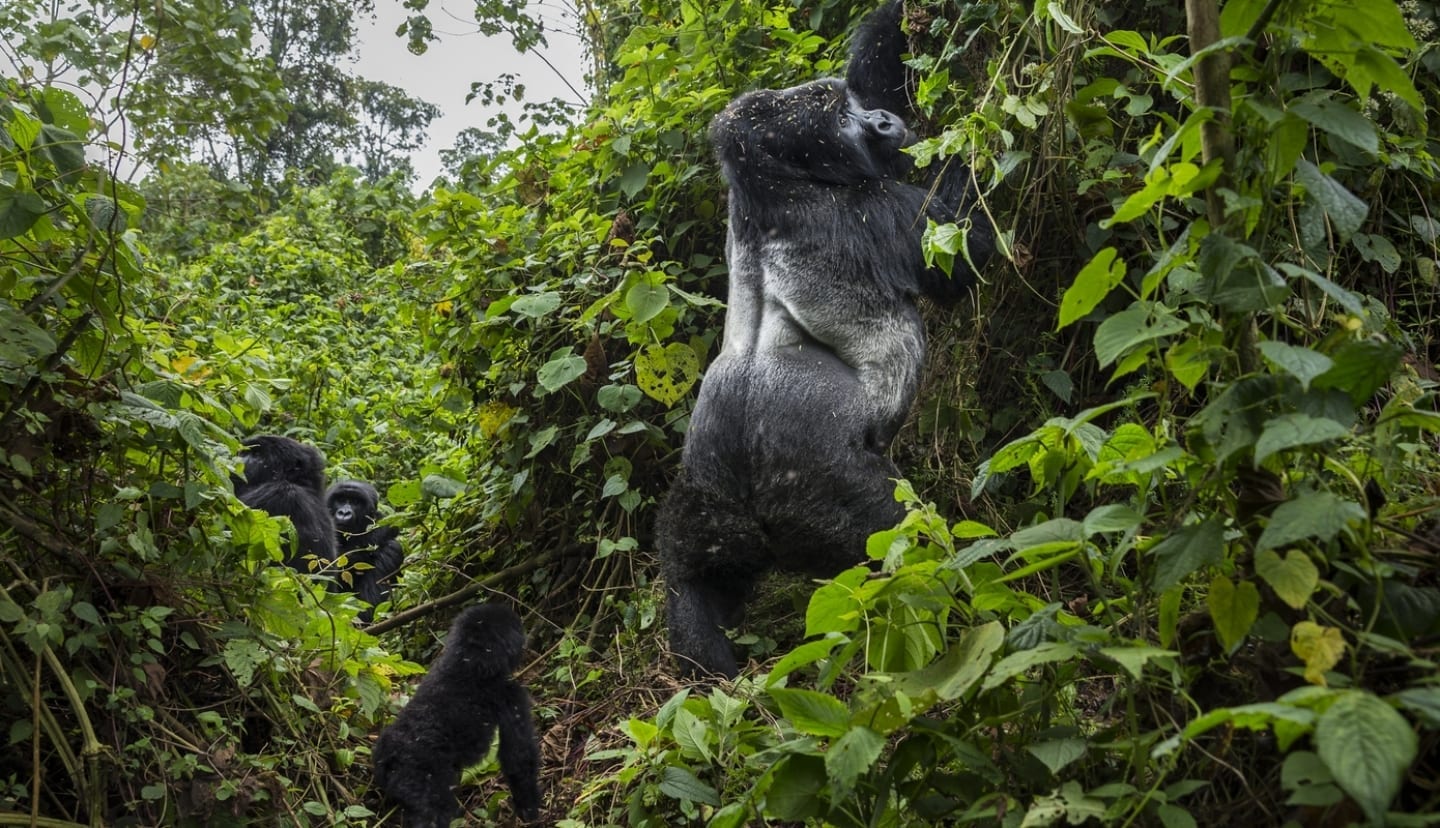
A silverback mountain gorilla leads his family group through the dense vegetation of Bwindi Impenetrable National Park, Uganda — home to over 500 wild mountain gorillas. © GoSilverback Safaris.
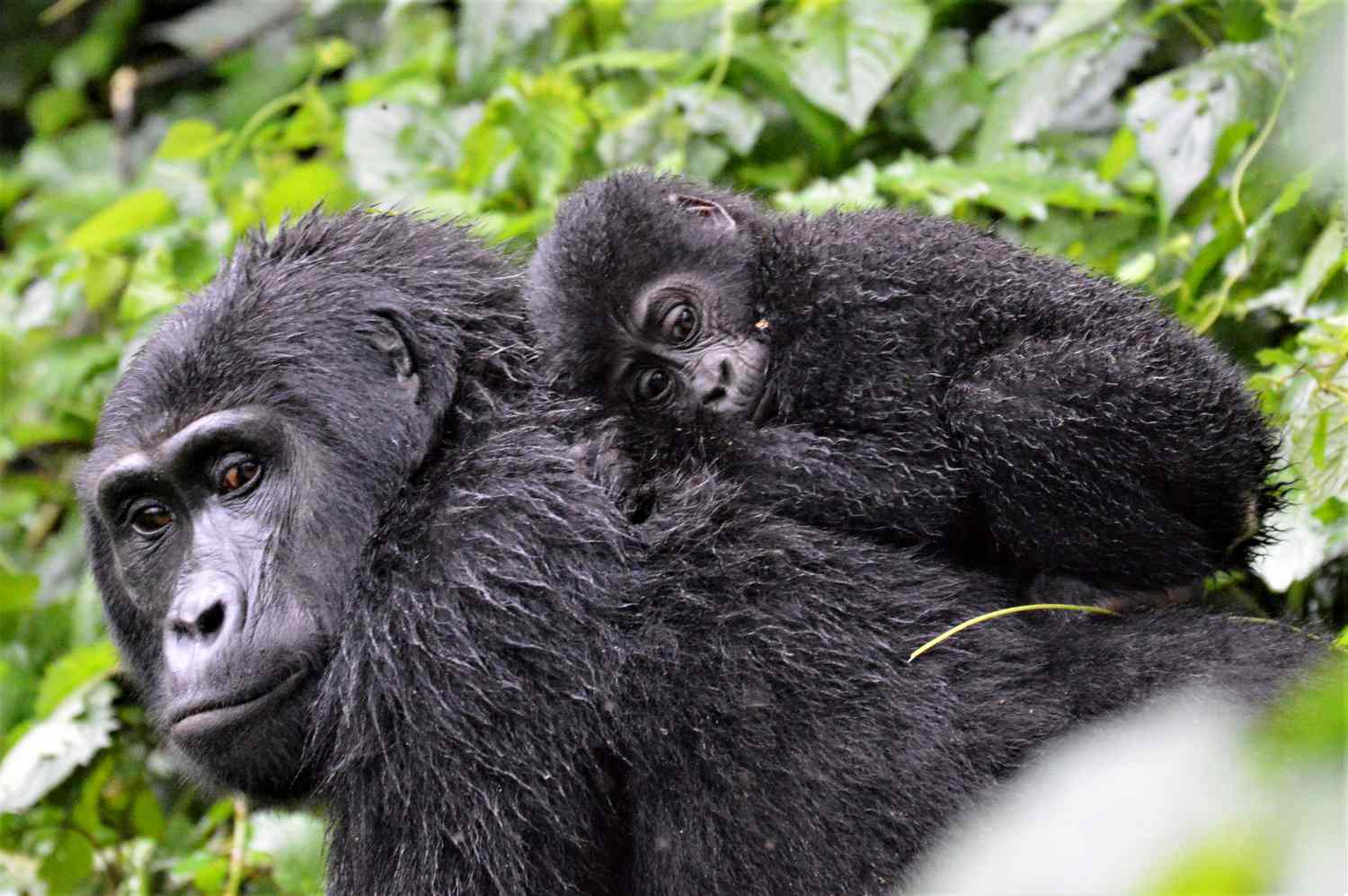
What Kind of Habitat Do Gorillas Live In?
Gorillas are forest-dependent primates with a range of habitat preferences that vary significantly between species and subspecies. No single forest type defines all gorillas — rather, each subspecies has evolved to exploit the specific forest resources of its particular range.
Understanding these habitat distinctions is critical to understanding gorilla ecology and the conservation challenges each subspecies faces.
1. Montane Forest — The Mountain Gorilla’s Domain
Mountain gorillas inhabit the Afromontane forests of East and Central Africa, a biome characterised by high altitude, cool temperatures, dense undergrowth, and frequent mist.
At Bwindi, the forest rises from 1,160 metres to 2,607 metres above sea level and contains over 1,000 plant species.
Mountain gorillas spend much of their time in bamboo zones (1,500–2,500m), gallery forest, and Hagenia-Hypericum woodland, depending on seasonal food availability.
Their extraordinarily thick, shaggy coats — often cited as a distinctive trait — are a direct adaptation to the cold montane environment, where temperatures can drop to near-freezing at night on the higher volcanic slopes.
2. Tropical Lowland Rainforest
The western lowland gorilla lives in the dense, humid lowland rainforests of the Congo Basin — one of the world’s largest continuous tracts of tropical forest.
These forests receive annual rainfall of 1,500–2,000mm, support extraordinarily high biodiversity, and provide gorillas with an abundant and varied diet of fruit, leaves, seeds, and aquatic vegetation.
Western lowland gorillas are notably more frugivorous than their mountain counterparts and are known to make seasonal movements following the fruiting cycles of key tree species — a foraging behaviour that requires large, connected forest territories to sustain.
3. Swamp Forest and Forest Clearings
Unique to western lowland gorillas is their use of bais — natural forest clearings and swamp meadows flooded with mineral-rich water and sedges.
Sites like Mbeli Bai in Republic of Congo and Dzanga Bai in CAR attract dozens of gorillas daily, offering researchers and tourists remarkable open-ground viewing opportunities that are impossible in dense forest.
The use of these clearings reveals gorillas’ nutritional need for aquatic vegetation rich in sodium and minerals not found in abundance on higher ground.
In all habitat types, one constant holds: gorillas require undisturbed, intact forest. Forest edges, secondary growth, and degraded woodlands cannot sustain viable gorilla populations.
This ecological dependency is the central reason why deforestation remains the gravest existential threat to every gorilla subspecies.
Why Gorillas Live in Forests
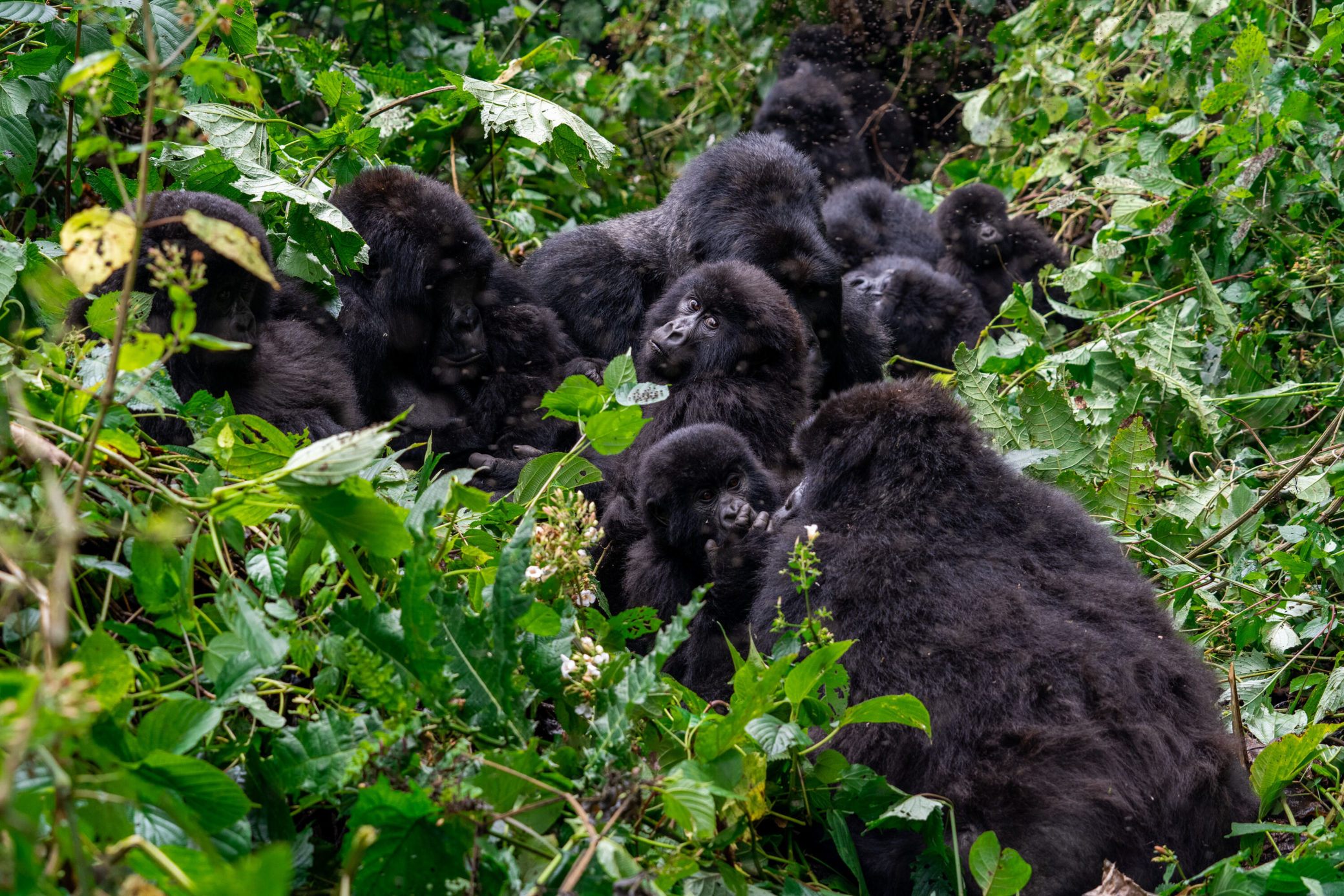
The relationship between gorillas and forest is not incidental — it is one of the most complete ecological dependencies in the animal kingdom.
Gorillas are obligate forest dwellers, meaning their survival, reproduction, diet, social structure, and every dimension of their biology is calibrated to forest life.
Removing a gorilla from the forest does not merely displace it — it terminates the ecological conditions upon which its entire existence depends.
The primary reason gorillas live in forests is food. A mature silverback male weighing up to 200 kilograms must consume between 18–30 kilograms of vegetation daily.
Forests provide the extraordinary density and diversity of plant matter — leaves, stems, bark, roots, fruit, wild celery, nettles, and bamboo shoots — necessary to sustain such caloric demands across a family group of 5–30 individuals.
No other African biome can provide this volume and variety of plant food year-round.
Forests also provide thermal regulation, safety from predators, and nesting material. Every evening, gorillas construct fresh nests from bent branches and foliage — a behaviour requiring a continuous supply of flexible vegetation.
Leopards, the gorilla’s primary natural predator, are themselves forest animals, but gorillas’ sheer size, social vigilance, and the silverback’s defensive capability make the forest a safer environment than open savannah, where the gorilla’s vegetative diet would also be unavailable.
“The forest is not merely where gorillas live — it is what gorillas are. Their bodies, their diets, their social bonds, and their survival are each an expression of ten million years of forest co-evolution.”
Perhaps most profoundly, forests provide the connectivity that allows gorilla populations to remain genetically viable. Isolated forest patches produce isolated gorilla groups.
Isolated groups face inbreeding, local extinction, and vulnerability to disease. This is why forest corridor conservation — linking protected areas through strips of intact habitat — is as important as the national parks themselves.
Best Places to See Gorillas in the Wild
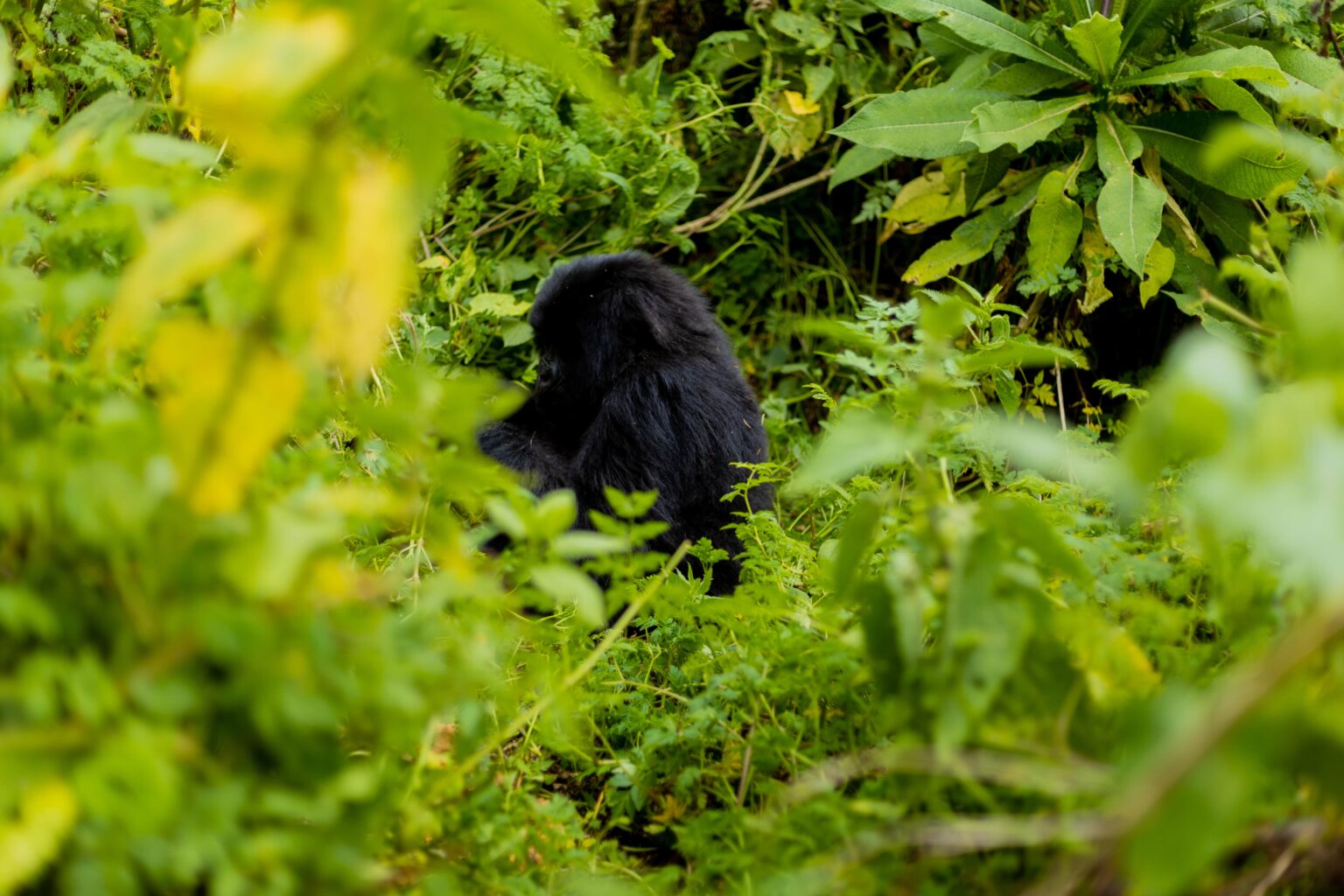
For travellers planning a gorilla trekking safari, the choice of destination is one of the most important decisions you will make — and it is more nuanced than simply choosing between Uganda and Rwanda.
Each destination offers a meaningfully different experience in terms of landscape, trek difficulty, permit cost, habituated groups available, and surrounding safari circuit.
Here are the world’s premier locations to encounter wild gorillas.
1. 🇺🇬 Bwindi Impenetrable NP, Uganda
Africa’s most biodiverse gorilla habitat. Four trekking sectors — Buhoma, Ruhija, Rushaga, and Nkuringo — each with a distinct character. Home to 22+ habituated groups. Treks range from 2 to 8 hours in genuinely wild, steep, cloud-forest terrain.
2. 🇷🇼 Volcanoes NP, Rwanda
The birthplace of gorilla conservation. Spectacular volcanic backdrop. 12 habituated groups including the famous Susa group. Shorter average trek times (2–4 hours). Premium lodges nearby. Easily combined with Akagera and Nyungwe NPs.
3. 🇨🇬Odzala-Kokoua NP, Republic of Congo
One of Africa’s last true wilderness experiences. Western lowland gorillas tracked to bais for open-ground viewing — a genuinely different spectacle to mountain gorilla encounters. Ultra-remote, ultra-exclusive camps by Wilderness Safaris.
4. 🇨🇫Dzanga-Sangha Reserve, CAR
World-renowned for Dzanga Bai, where western lowland gorillas and forest elephants gather in a Congo Basin clearing. A UNESCO World Heritage component site. BWA-Aka forest people guides add an extraordinary cultural dimension to the trek.
5. 🇬🇦Lopé National Park, Gabon
A UNESCO site combining forest and ancient savannah — a rare mosaic. Home to large western lowland gorilla populations alongside forest elephants, mandrills, and chimpanzees. Growing eco-tourism infrastructure makes it increasingly accessible.
6. 🇺🇬Mgahinga Gorilla NP, Uganda
Uganda’s smallest national park, shared with the Virunga volcanoes of Rwanda and DRC. Only one habituated group (the Nyakagezi group) but the volcanic landscape is spectacular. Combines beautifully with golden monkey tracking.
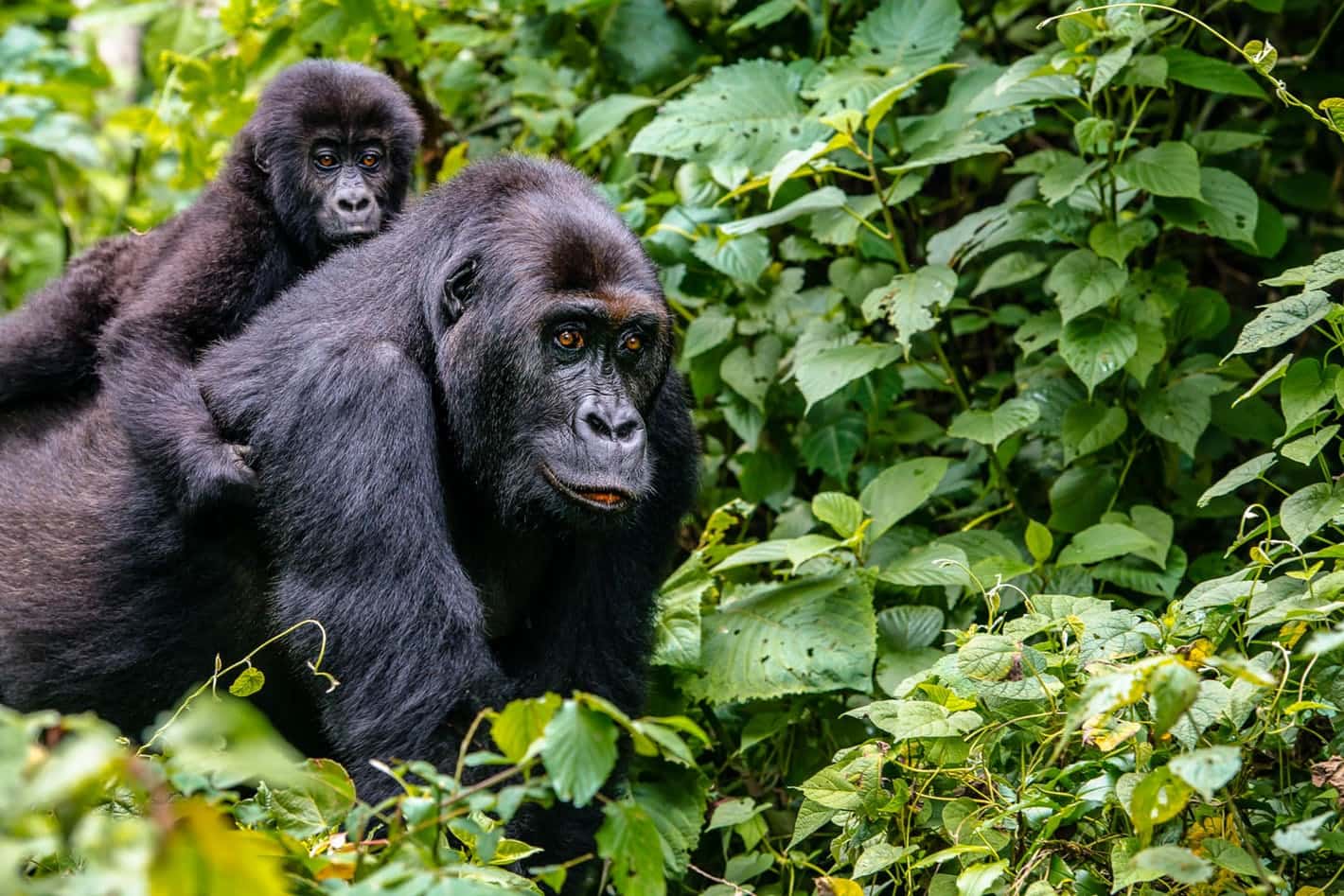
Trekkers navigate the steep, mist-shrouded terrain of Bwindi Impenetrable Forest — a trek that demands physical effort but rewards with one of the most profound wildlife encounters on Earth. © GoSilverback Safaris
Uganda vs Rwanda: Which Is Right for You?
This is the most common question our safari specialists receive.
The short answer: Uganda offers more gorilla groups, longer treks, and significantly lower permit prices, while Rwanda offers a more polished, shorter trek experience with superb luxury accommodation.
Experienced trekkers and budget-conscious travellers typically choose Uganda; first-timers seeking seamless luxury and shorter physical demands often prefer Rwanda. Both are exceptional — and both can be combined in a single itinerary across as few as five to seven days.
Gorilla Population Distribution
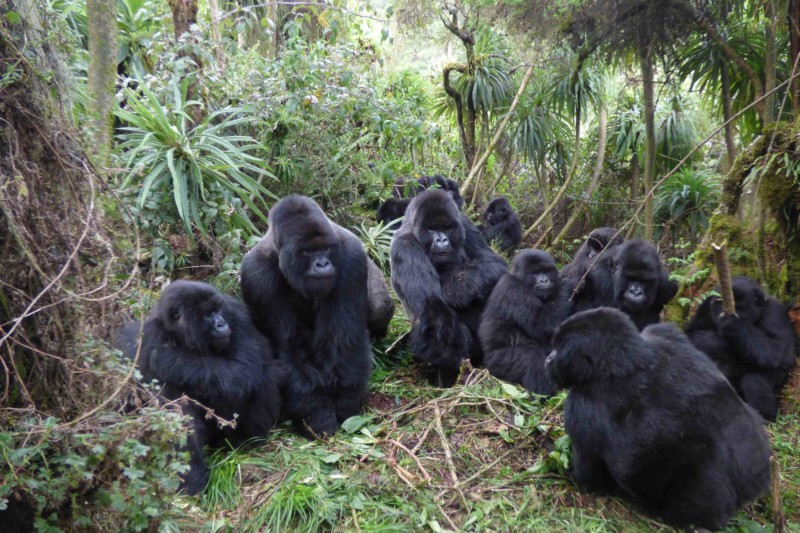
The global gorilla population — across all four subspecies — is estimated at approximately 100,000–105,000 individuals, but this number is profoundly misleading when taken without context.
The vast majority of this total is comprised of western lowland gorillas, whose remote range in the Congo Basin has made accurate population assessment extremely difficult.
The three remaining subspecies are in critical condition by any measure.
The mountain gorilla is the only great ape whose population is currently increasing — a remarkable conservation triumph attributable to sustained anti-poaching efforts, community conservation programs, and revenue generated by gorilla trekking tourism.
Both the Virunga Massif and Bwindi populations have grown steadily since the 1980s, when combined numbers fell below 300 individuals.
In contrast, the eastern lowland gorilla has suffered a catastrophic population decline of more than 70% since the 1990s, primarily as a consequence of armed conflict in eastern DRC, which has driven both direct killing and the collapse of conservation management.
The western lowland gorilla, while numerous relative to other subspecies, faces accelerating pressure from industrial logging, commercial bushmeat hunting, and Ebola virus outbreaks that have killed thousands of individuals in Gabon and Republic of Congo since the 1990s.
Conservation Milestone
The mountain gorilla is the only great ape to be downlisted from ‘Critically Endangered’ to ‘Endangered’ on the IUCN Red List — a direct result of sustained conservation investment, community benefit-sharing programs, and gorilla tourism revenue.
It stands as one of Africa’s greatest conservation success stories, and a model for how targeted intervention can reverse species decline.
Threats to Gorilla Habitats
Gorillas face a convergence of threats that are simultaneously ecological, political, and economic in origin.
No single threat operates in isolation — deforestation drives gorillas into fragmented patches where poaching pressure intensifies, while poverty and conflict undermine the governance structures needed to enforce protection.
Understanding these threats is essential context for every traveller who chooses to visit gorillas.
1. Deforestation and habitat loss
remains the primary long-term threat to gorilla survival across all subspecies.
Agricultural expansion — particularly smallholder farming, charcoal production, and commercial plantation development — continues to shrink and fragment gorilla range across Cameroon, DRC, and equatorial West Africa.
In the DRC alone, the country loses an estimated 500,000 hectares of forest per year.
2. Bushmeat hunting
affects gorillas across their entire range, but is most severe in West and Central Africa.
Gorillas are targeted both for subsistence and for commercial sale in urban markets.
In areas where legal protection and enforcement are weak — particularly in conflict zones — entire local populations can be eliminated within a few years of sustained hunting pressure.
3. Armed conflict and political instability
have been particularly devastating for gorillas in the DRC. Decades of civil conflict in Kivu province have made conservation management essentially impossible across large swaths of Virunga National Park.
Rangers have been killed in significant numbers defending gorilla habitat. The collapse of governance creates a vacuum in which poaching, illegal mining, and charcoal production accelerate simultaneously.
4. Disease transmission
presents a uniquely serious risk to gorillas because of their genetic proximity to humans — they share 98.3% of human DNA. Respiratory viruses, including human strains of rhinovirus and metapneumovirus, can be lethal in gorilla populations with no acquired immunity.
Strict health protocols — 7-metre minimum distance rules, mandatory face masks, and visitor health screening — are enforced at all gorilla trekking sites to minimise this risk.
5. Ebola haemorrhagic fever
has killed thousands of western lowland gorillas and chimpanzees in Gabon and Republic of Congo.
Some estimates suggest Ebola outbreaks between 1994 and 2003 killed more than one-third of the western lowland gorilla population in affected areas. Research into gorilla-specific Ebola vaccines is ongoing.
6. Climate change
is an emerging and increasingly serious threat to mountain gorilla habitat. Montane forest zones are sensitive to temperature and rainfall change, and shifting climate envelopes may compress suitable gorilla habitat at altitude while making lower elevations less hospitable.
Changes in bamboo and fruiting cycles directly affect gorilla diet and may force new — potentially dangerous — ranging patterns.
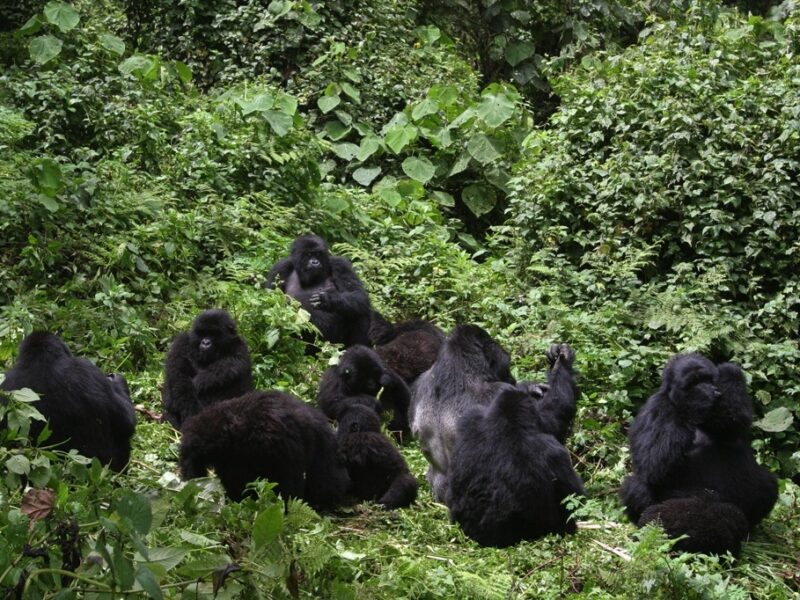
UWA rangers and trained gorilla trackers form the frontline of habitat protection in Bwindi Impenetrable National Park — their daily patrols are sustained in large part by gorilla trekking permit revenue.
Role of Conservation Organizations
The recovery of the mountain gorilla and the stabilisation of other gorilla populations would not have been possible without the sustained engagement of a network of international and regional conservation organisations working in partnership with African governments, local communities, and the tourism industry.
These organisations conduct research, train rangers, support community livelihoods, advocate for protective legislation, and mobilise funding — activities that are collectively the scaffold upon which gorilla survival rests.
The Dian Fossey Gorilla Fund, founded in 1978, maintains one of the longest-running gorilla monitoring programmes in the world, tracking more than 65% of all mountain gorillas on a daily basis in both Rwanda and DRC.
Gorilla Doctors provides veterinary intervention — a controversial but life-saving practice that has rescued individual gorillas from snares, respiratory illness, and injury.
The International Gorilla Conservation Programme coordinates transboundary conservation across Uganda, Rwanda, and DRC, ensuring that the Virunga population is managed as a single biological unit rather than three separate national concerns.
Community-based conservation programs — notably the IGCP’s Community Conservation Initiative and Uganda’s gorilla levy revenue sharing scheme, which returns a percentage of permit fees directly to villages surrounding Bwindi — have been transformative in converting local communities from poachers into protectors.
When local families receive tangible economic benefits from gorilla conservation, the incentive to tolerate gorillas on the forest boundary shifts decisively in favour of coexistence.
How Gorilla Trekking Tourism Helps
Gorilla trekking is not merely a spectacular wildlife experience — it is one of the most effective conservation financing mechanisms ever designed.
The model is elegantly simple: access to gorillas is strictly limited, permits are priced at a premium, and the majority of revenue is channelled into habitat protection and community benefit.
When you book a gorilla trekking permit, you are making one of the most impactful direct conservation contributions available to a private individual.
In Uganda, 20% of all Uganda Wildlife Authority gorilla permit revenue is distributed directly to communities surrounding Bwindi and Mgahinga.
This fund supports schools, health clinics, roads, and small enterprise development — creating a constituency for conservation among people who share their landscape with gorillas.
In Rwanda, the Virunga Revenue Sharing Program distributes a portion of Volcanoes National Park revenue to surrounding communities in a similar structure.
Beyond direct revenue sharing, gorilla tourism sustains ranger salaries, tracker employment, veterinary field operations, habitat monitoring, anti-poaching patrols, and park infrastructure — the full operational budget of protected area management in gorilla-range countries depends critically on the tourism economy.
Studies by the Wildlife Conservation Society estimate that each mountain gorilla generates approximately $3–5 million USD in tourism value over its lifetime — making every individual gorilla one of the most economically valuable wild animals on the planet.
The calculation is powerful and the message is clear: visiting gorillas in the wild is an act of conservation. Travellers who choose to trek are not observers of a conservation story — they are its financial authors.
How to Visit Gorillas: Step-by-Step Guide
Planning a gorilla trekking experience requires careful preparation. Gorilla permits are limited, frequently sell out months in advance, and the physical and logistical demands of trekking in remote forest parks are real.
The following guide will take you from initial decision to the moment you sit quietly in the presence of a wild gorilla family.
1. Choose Your Destination
Decide between Uganda (Bwindi or Mgahinga), Rwanda (Volcanoes NP), or a specialist destination like Republic of Congo.
Consider your budget — Uganda at $800 versus Rwanda at $1,500 per permit — trek difficulty preferences, broader safari interests, and how much time you have.
Our specialists at GoSilverback Safaris can help you compare all options in detail.
2. Book Your Permit Early
Gorilla permits must be booked well in advance — ideally 3–6 months before travel for peak season (June–September, December–February). Uganda’s Uganda Wildlife Authority (UWA) and Rwanda’s Rwanda Development Board (RDB) issue all permits.
GoSilverback Safaris handles all permit bookings on your behalf as part of your safari package, guaranteeing your permit and group allocation.
3. Obtain Your Visa and Travel Documentation
Both Uganda and Rwanda offer East Africa Tourist Visas that allow multi-country access (Uganda, Rwanda, Kenya) on a single application — excellent value at $100 USD.
Apply online well before departure. Check current yellow fever vaccination requirements; both countries require proof of vaccination. Travellers with health conditions should consult their physician regarding altitude and physical exertion.
4. Prepare Physically and Pack Correctly
Gorilla trekking in Bwindi can involve 2–8 hours of hiking on steep, muddy, forest terrain. Physical preparation matters: begin a modest walking and stair-climbing regime 4–6 weeks before departure.
Essential kit includes: waterproof hiking boots (ankle support essential), lightweight rain jacket, long-sleeved shirt and trousers (protects against nettles and insects), garden gloves, and a daypack. Walking sticks are provided at the trailhead.
5. Attend the Pre-Trek Briefing
All trekkers receive a mandatory pre-trek briefing from park rangers at the trailhead.
This covers gorilla encounter etiquette: maintain a minimum 7-metre distance, no flash photography, no eating or drinking near the gorillas, face masks to be worn at all times in the gorilla’s presence, and immediate withdrawal if you feel unwell.
Groups are limited to a maximum of 8 visitors per gorilla group per day. The hour you spend with the gorillas begins only when the rangers locate the family.
6. The Trek and Gorilla Encounter
Expert trackers locate the gorilla family using signs from the previous evening’s nest site. When your guide gives the signal, cameras are ready but voices are hushed.
You will spend exactly one hour with the gorilla family — a rule enforced strictly to protect the animals from stress.
During this time, you may observe silverbacks, mothers nursing infants, juveniles playing, and the full complex social tableau of wild gorilla life. This one hour is, for most travellers, among the most profound experiences of their lives.
7. Extend Your Safari
Gorilla trekking pairs magnificently with other East African experiences. In Uganda, combine with chimpanzee tracking in Kibale Forest, game drives in Queen Elizabeth National Park, or boat safaris on the Kazinga Channel.
Rwanda combines beautifully with golden monkey tracking, canopy walks in Nyungwe Forest, and cultural visits to Kigali.
GoSilverback Safaris designs bespoke multi-destination itineraries connecting all of these experiences in a seamless journey.
Do gorillas only live in Africa?
Yes, gorillas live only in Africa. They are native to the tropical forests of Central and East Africa. There are two species: Western gorillas (found in countries like Nigeria, Cameroon, Gabon, and Congo) and Eastern gorillas, which include the rare mountain gorillas. No wild gorillas exist outside Africa. All captive gorillas in zoos worldwide originally descend from African populations. This makes Africa the exclusive home of these powerful great apes.
Where do gorillas mostly live?
Gorillas mostly live in the dense rainforests of Central Africa. Western gorillas are concentrated in Gabon, Republic of Congo, and Cameroon. Eastern gorillas, including mountain gorillas, are found in the Albertine Rift highlands of Uganda, Rwanda, and the Democratic Republic of Congo. The majority of the world’s remaining mountain gorillas (over 1,063) live in Bwindi Impenetrable National Park (Uganda) and the Virunga Volcanoes. These remote, misty forests provide their last safe habitats.
Are gorillas 98% human?
Yes, gorillas share approximately 98.3% of their DNA with humans, making them one of our closest living relatives along with chimpanzees and bonobos. This genetic similarity explains many shared behaviors, emotions, and vulnerabilities to human diseases. However, the remaining 1.7% accounts for major differences in strength, anatomy, and intelligence. While genetically very close, gorillas are distinct species adapted for forest life. This close relation makes gorilla conservation and responsible gorilla trekking even more important.
Which country in Africa has gorillas?
Several African countries have gorillas, but the rare mountain gorillas are found in only three: Uganda, Rwanda, and the Democratic Republic of Congo. Uganda is home to the largest population in Bwindi Impenetrable National Park. Rwanda’s Volcanoes National Park and DRC’s Virunga National Park complete the Virunga Massif. Western gorillas are more widespread across Central Africa, including Gabon, Cameroon, and Congo. For mountain gorilla trekking, Uganda and Rwanda are the safest and most accessible destinations.
Frequently Asked Questions About Where Gorillas Live
Where do gorillas live in the wild?
What country has the most gorillas?
How many mountain gorillas are left in the world?
Do gorillas live in the jungle or the forest?
Can gorillas be found in Asia?
Where is the best place to see gorillas in the wild?
How much does a gorilla trekking permit cost?
Are gorillas dangerous to humans?
What altitude do mountain gorillas live at?
Do gorillas migrate or do they stay in one place?
How fit do I need to be to go gorilla trekking?
What is the best time of year to trek gorillas?
Conclusion: The Forest Is Waiting
Gorillas are among the most complex, charismatic, and evolutionarily significant animals on Earth. They live in the ancient forests of equatorial Africa because those forests made them — every aspect of their biology, behaviour, and social architecture is an expression of millions of years of forest co-evolution.
Understanding where gorillas live and why they live there transforms the act of visiting them from a wildlife tick-box into an act of witness: witness to the extraordinary beauty of intact African forest, and witness to the fragility of a system under sustained pressure.
The good news — and it is genuinely good news — is that gorilla conservation works. The mountain gorilla’s population recovery is proof. Gorilla trekking tourism is not a peripheral adjunct to conservation; it is one of its most powerful engines.
Every permit purchased, every lodge night spent in a gorilla-range community, every local guide and porter employed sustains the economic case for protecting the forest that sustains the gorillas.
Whether your journey begins in Bwindi’s cathedral of mist and ancient trees or on Rwanda’s volcanic slopes above the clouds, the encounter that awaits you — sitting metres from a wild silverback, watching a mother nurse her infant, hearing the forest settle around a family at rest — is one that reshapes perspective permanently.
It is the most profound wildlife experience Africa offers. And Africa offers a great deal.
Your Gorilla Encounter Awaits
GoSilverback Safaris is a specialist East African safari operator with deep expertise in gorilla trekking across Uganda, Rwanda, and beyond.
We handle everything — gorilla permits, park fees, lodge reservations, airport transfers, and full itinerary design — so that your sole responsibility is to arrive, trek, and be transformed.
Gorilla permits sell out. The best lodges book up. Don’t let timing be the thing that stands between you and one of the greatest experiences of your life.